 Ultimate guide
Dance Studio Flooring Requirements for Safety Explained
Last Updated: November 21, 2026
Quick Summary
Dance studio flooring must balance shock absorption, consistent traction and uniform surface quality to protect dancers' joints and prevent falls. Sprung and semi-sprung systems give controlled give, while Marley adds consistent glide, and the right mix depends on the styles taught. Installation checks and a regular inspection schedule keep the floor safe over time.
- Shock absorption, traction and surface consistency work together to reduce injury risk on a dance floor.
- Sprung floors suit high-impact classes, while semi-sprung systems offer a moderate middle option.
- Marley gives smooth, consistent glide but adds little shock absorption on its own.
- Performance standards like EN 14904 are voluntary and do not certify a floor as safe for dance.
- Pull any area from service if a seam lifts, a spot feels soft, or traction changes after cleaning.
Table of Contents
- Why Dance Studio Flooring Safety Matters
- Shock Absorption: How Much Give a Dance Floor Needs
- Dance Floor Slip Resistance and Traction Requirements
- Floor Types Compared: Sprung, Semi-Sprung, Marley, Vinyl and Wood
- Safety Compliance Checklist and Risk Assessment by Dance Style
- Installation, Acceptance Testing and Portable Dance Floor Safety
- Dance Studio Floor Maintenance and Inspection Schedule
- Choosing a Floor for Your Studio and Next Steps
- Frequently Asked Questions
Why Dance Studio Flooring Safety Matters
Dance studio flooring is one of the most consequential decisions a studio owner makes, because the floor sits underneath every jump, turn and landing a dancer performs. Glory and Power Enterprises manufactures sprung and Marley dance floors for studios, gyms and training spaces. A floor that is too hard increases joint stress, while one that is too slippery or too soft can cause falls and unstable landings.
Injury risk on a dance floor comes from three properties working together: how much the surface gives under impact, how much grip it offers the foot, and how consistent it is across the whole area. Weakness in any one of these shows up as strain, sprains or slips over time. Many studio owners only notice a problem after a dancer is hurt, which is why the requirements below are worth checking before installation rather than after.
Shock Absorption: How Much Give a Dance Floor Needs
Shock absorption describes how much of the force from a landing the floor absorbs before it reaches the dancer's body. Read the detailed guide to the benefits of Baltic birch gym floors.
There is no single correct amount of give. A floor that feels comfortable to a ballet student may feel too springy for a hip-hop class doing repeated jumps, and a beginner needs more cushioning than an advanced performer.
Dance Floor Slip Resistance and Traction Requirements
Traction is the balance between a dancer's foot grabbing the surface and releasing it smoothly. Too little grip causes slips during turns and pivots, while too much can catch the foot and stress the knee or ankle.
Surface friction changes with moisture, dust and wear, so a floor that meets requirements on installation day can drift over time. Studios should check traction at the same points where dancers pivot most, and clean surfaces on a regular schedule.
Floor Types Compared: Sprung, Semi-Sprung, Marley, Vinyl and Wood
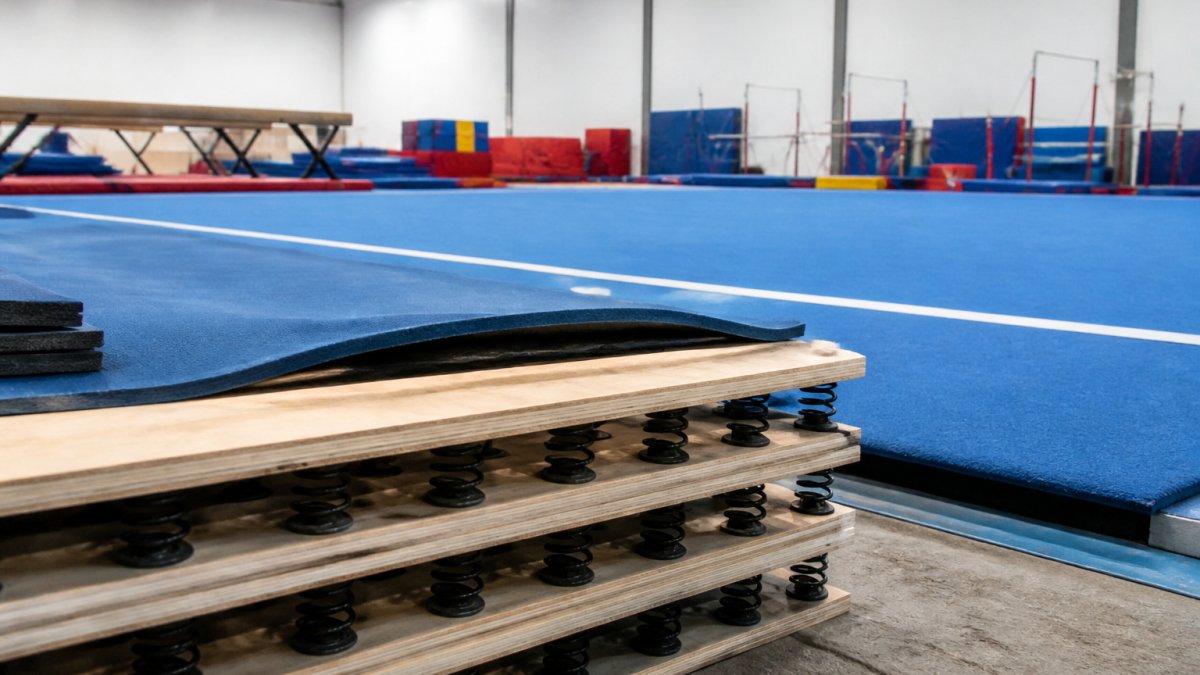
Each common flooring option has a distinct role. Sprung floors are commonly chosen for studios with high-impact classes. Semi-sprung systems are a practical middle option. Marley is a vinyl-based surface laid over a subfloor to give consistent glide and traction for dance, and it is often used as the top layer over sprung or cushioned bases. Vinyl and wood can work in lower-impact settings, though they usually need a cushioned subfloor to reduce joint stress.
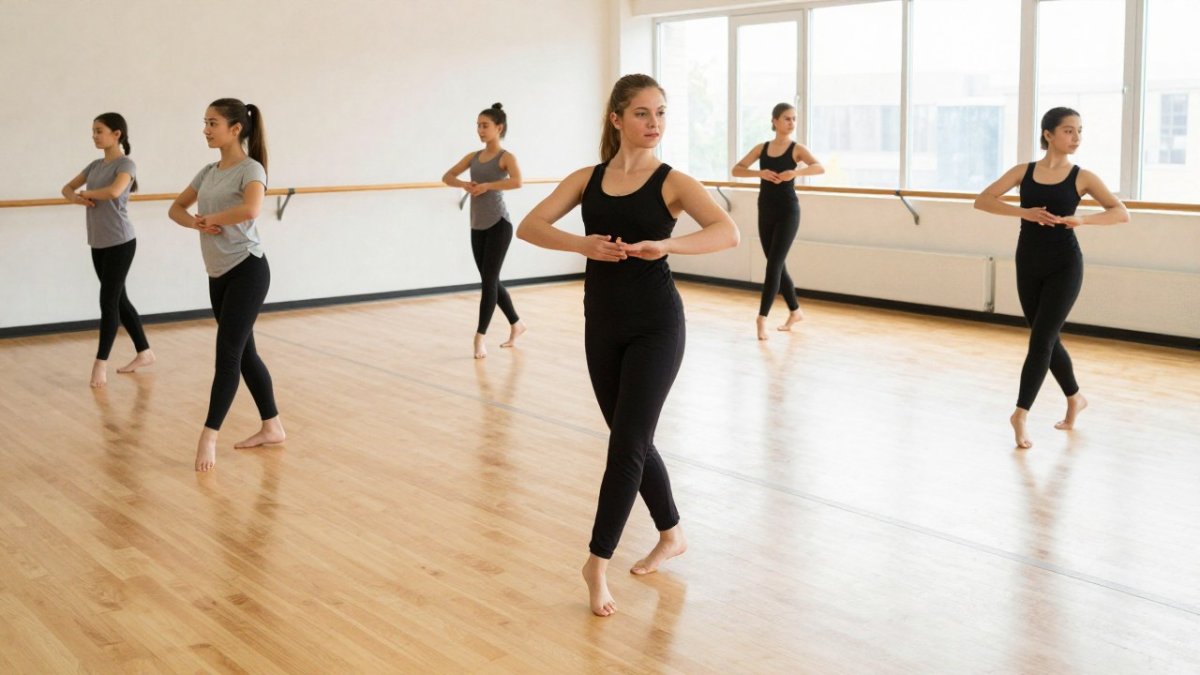
A comparison of the main options, based on typical use rather than fixed ratings:
| Floor Type | Shock Absorption | Traction Control | Typical Best Use |
|---|---|---|---|
| Sprung | High | Good with top layer | Ballet, jazz, high-impact classes |
| Semi-sprung | Moderate | Good | Mixed-style studios |
| Marley | Low on its own | Consistent glide | Top layer over a base |
| Vinyl | Low to moderate | Varies by product | Light-use rooms |
| Wood | Low on its own | Varies with finish | Rooms with a cushioned subfloor |
Pros and Cons of Each Flooring Material
- Sprung: Strong shock absorption and lateral support. Costs more to install and needs a qualified installer. See a direct side-by-side of Marley and sprung for dance safety.
- Semi-sprung: Good impact reduction at a lower installation cost. Less rebound than a full sprung system.
- Marley: Smooth, consistent surface for turns and footwork. Does not add shock absorption by itself, so it depends on the base beneath it.
- Vinyl: Easy to clean and widely available. Can feel hard without cushioning and varies in grip between products.
Safety Compliance Checklist and Risk Assessment by Dance Style
A dance floor can be perfectly legal and still be unsafe, because most of what makes a floor good for dancers is governed by voluntary performance standards rather than by law.
A measurable checklist. Use this to compare systems and to brief an installer.
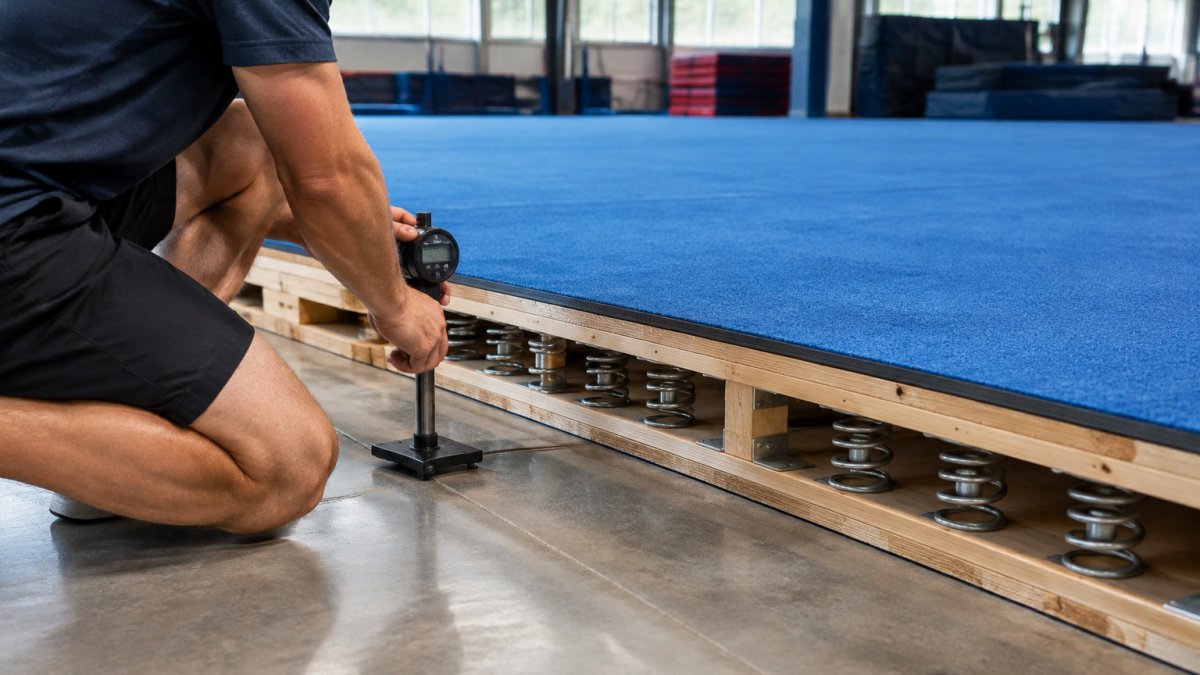
- Vertical deformation: Ask how far the floor deflects under a standard test load and whether that figure was measured at the spring points and between them.
- Friction: Ask for the friction test result and the test method, and confirm the value was measured dry and after cleaning, since residue changes grip.
- Surface uniformity: Ask for the flatness tolerance across the full area and at seams, and confirm how the installer checks it.
- Lateral support: Confirm how the system resists sideways movement at the edges and around the perimeter.
Risk assessment by dance style and user. The same floor is not right for every room. Build a short risk profile before you buy:
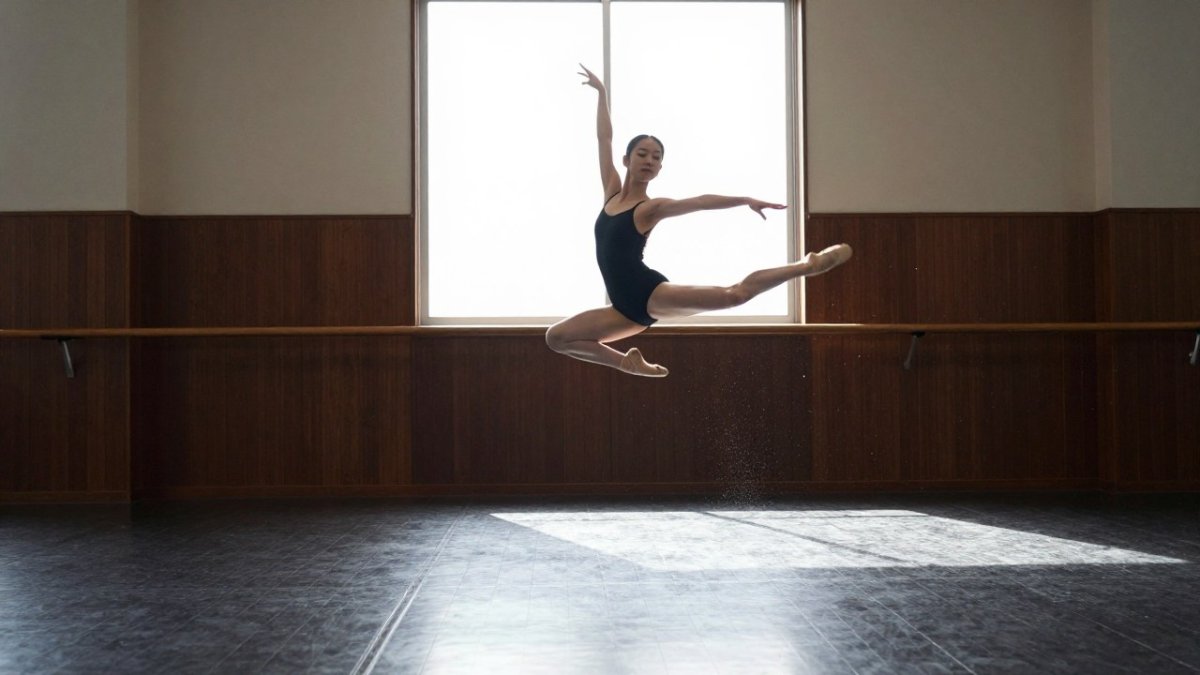
- Ballet and pointe: Turns and pointe work need consistent friction and firm support at the landing spots; too much give under pointe work can feel unstable.
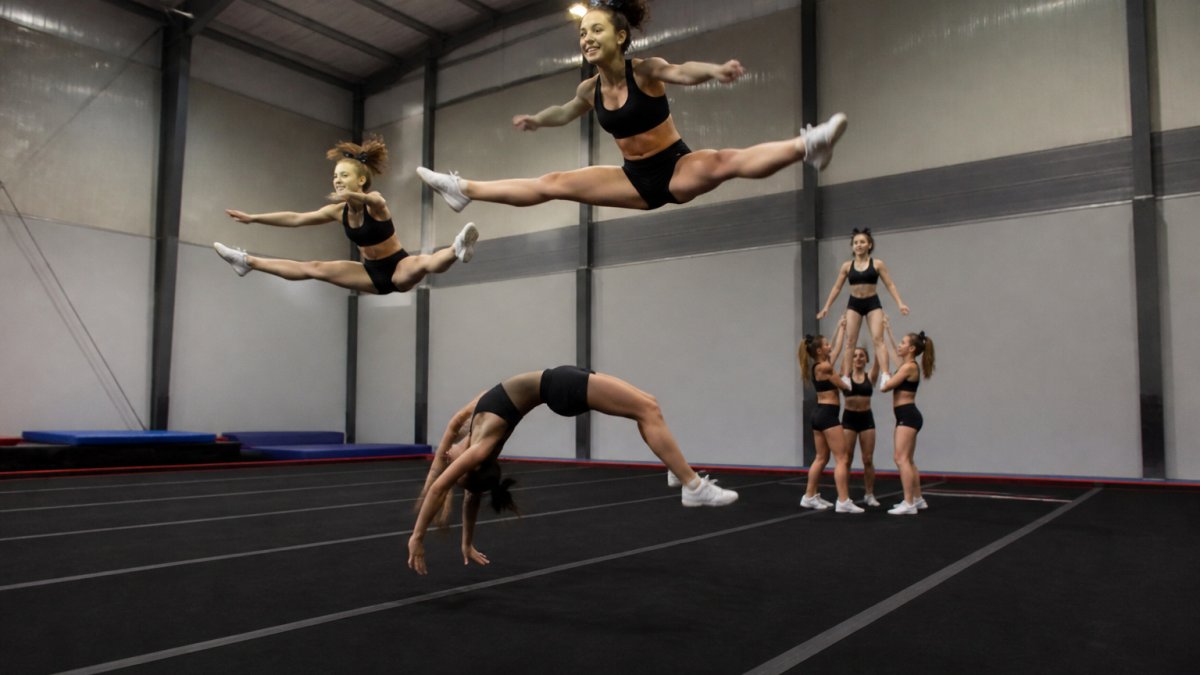
- Jazz, hip-hop, and high-impact classes: Repeated jumps and landings put the priority on shock absorption and lateral support.
- Tap and percussive styles: The surface needs to take repeated impact from shoes without denting or delaminating.
- Contemporary and lyrical: Mixed barefoot and shoe work means the top layer must suit both, and floor work (rolls, falls) raises the priority on surface uniformity and seam tightness.
- Children and beginners: More cushioning and gentler traction reduce the chance of a hard fall while skills develop.
Watch out: a supplier who quotes a single 'safety rating' without naming the test method or the standard is giving you a marketing number, not a specification, ask for the test report before you sign.
Installation, Acceptance Testing and Portable Dance Floor Safety
Installation quality determines how well the floor performs. Acceptance testing should happen before the floor is used for classes: walk the full area, test movement across the spring points, and check for flat spots or squeaks. Follow our step-by-step guide to installing sprung floors in gyms.
- Confirm the subfloor is level, clean and dry.
- Lay the base system and check spacing and fastenings.
- Install the top layer and confirm seams are tight.
- Walk and jump the full area to test for consistency.
- Record the results so you have a baseline for future inspections.
Glory and Power Enterprises uses secure fastening systems on its sprung floors. For current pricing or a quote on a specific installation, contact Glory and Power Enterprises directly, since costs depend on floor size, system type and delivery.
Dance Studio Floor Maintenance and Inspection Schedule
A floor's safety properties drift with use, moisture, and cleaning residue, so the schedule below is built around what you check, what you record, and when you take an area out of service.
Daily checks (before the first class).
- Sweep or vacuum the full area and remove debris, rosin chunks, and loose tape.
- Look for standing moisture, spills, or damp patches near doors and HVAC vents.
- Confirm no loose boards, lifted seams, or curled edges are visible in the traffic path.
- Confirm the floor is dry before barefoot classes.
Weekly checks.
- Walk the perimeter and press along seams and edges for lift or softness.
- Test traction at the pivot points where dancers turn most, dry and after cleaning.
- Check for cleaning-product residue (a slick film) and re-clean with the manufacturer's recommended product if found.
- Inspect portable floor connections and fastenings if the room uses a temporary system.
Monthly checks.
- Walk the full floor in a grid pattern and mark any soft spot, squeak, or hollow sound.
- Check for wear spots, discoloration, or compression marks under high-impact zones.
- Verify humidity and temperature in the room against the floor manufacturer's recommended range.
- Review the log for any recurring issue at the same location.
Annual checks (professional).
- Have springs, fastenings, and the subfloor inspected by a qualified installer.
- Re-check shock absorption and friction at representative points and compare to the installation baseline.
- Inspect the subfloor for moisture intrusion, especially after plumbing or roof work.
- Update the log with the results and any recommended repairs.
Watch out: cleaning products are a common cause of sudden traction loss. A floor that felt fine last week and feels slick this week is usually a residue problem, not a worn surface, re-clean before you assume the floor needs replacing.
Choosing a Floor for Your Studio and Next Steps
Start by listing the styles you teach, the ages of your dancers and the movements that stress the floor most. Glory and Power Enterprises manufactures competition spring floors and sprung dance floors for cheerleading, gymnastics, martial arts and dance, with two-layer Baltic birch construction and power springs secured with bolt and thread-locker. Browse the available sprung dance floor options and categories.
Choosing the right floor protects dancers today and keeps your studio safe for years to come.
Frequently Asked Questions
What floor do they use in dance studios?
Most professional dance studios use a sprung floor, which is a wood or engineered subfloor built on springs or resilient supports, topped with a surface layer such as hardwood or Marley vinyl. The sprung construction absorbs impact on the joints and gives dancers consistent rebound. Some studios use semi-sprung or cushioned floors where budget or room height limits a full sprung system. The right choice depends on the dance style, the number of hours used and how the floor is installed.
What type of flooring is best for a dance floor?
The best dance floor combines shock absorption, controlled surface friction and lateral stability. A sprung floor with a Marley or hardwood surface suits most dance styles. Ballet and contemporary often need a smoother surface with predictable glide, while hip hop and jazz need firmer traction for quick direction changes. Check that the surface gives enough grip for turns without sticking, and that the floor stays level across the whole room.
Does a dance studio need a sprung floor?
A sprung floor is strongly recommended for studios where dancers jump, land and perform repeated high-impact movement. It reduces stress on knees, ankles and hips compared with concrete or rigid wood over a hard base. Studios that mainly teach stationary or light-impact classes may manage with a cushioned floor. Ask any flooring supplier for measured impact and deflection data before deciding, rather than relying on a general claim.
Is Marley flooring safe for dance?
Marley is a vinyl surface widely used in dance studios because it offers a consistent, controlled friction level and is easy to clean. It is safe when installed over a suitable sprung or resilient subfloor, laid flat with tight seams, and kept free of moisture and debris. Problems arise when it is glued to a rigid base, when seams lift, or when the surface becomes too slick or too sticky. Regular checks keep it performing safely.
How do you maintain a dance studio floor safely?
Sweep or vacuum daily to remove grit, which wears the surface and can cause slips. Clean with a manufacturer-approved, pH-neutral product and avoid oil-based or wax products that change friction. Dry spills immediately. Inspect for loose boards, lifted seams and uneven spots at least monthly, and schedule a professional check of the sprung system each year. Keep a simple log so you can show a maintenance history if an incident occurs.
How can you tell if a dance floor is too slippery?
Test the surface with a dancer wearing their usual shoes or barefoot. If feet slide during basic turns, pivots or landings, or the dancer has to adjust grip constantly, the floor is likely too slippery. Wet or freshly polished areas that feel glassy are a warning sign. A floor that is too sticky is also unsafe, because it can strain knees and ankles during turns. Aim for a surface that allows controlled movement in both directions.
What should a portable dance floor do to be safe?
A portable dance floor should lie flat, interlock or fasten securely at every joint, and grip the base surface so it does not shift during movement. It should offer shock absorption and a consistent surface friction across all panels. Check panel edges and connections before each use, and keep the floor away from wet or uneven ground. Confirm the manufacturer's rated use, load and temperature limits before setting it up.