 Comparison
Marley vs Sprung Floor for Dance Safety: Which to Choose
Last Updated: November 17, 2026
Quick Summary
Marley vs sprung floor is a question about two different jobs, not two rival products. Marley is the vinyl surface that controls grip and movement, while a sprung subfloor supplies the cushioning and impact absorption that protects dancers' joints. Most dance professionals recommend using both together as a system.
- Marley is a surface layer that provides controlled traction and a consistent, smooth finish.
- A sprung subfloor provides cushioning and impact absorption beneath the surface.
- Marley laid directly on concrete transmits landing force almost unchanged.
- Check whether a quote covers the surface, the subfloor, or both before comparing.
- Test deflection, repeated landings, base condition and point loading before deciding.
Table of Contents
- Marley vs Sprung Floor: Surface and Subfloor Roles Explained
- How Marley and a Sprung Subfloor Work Together as a System
- Impact Absorption and Joint Protection: Comparing the Two Options
- Surface Traction, Slip Risk and Controlled Movement by Dance Style
- Installing Marley Over Concrete or Hard Subfloors: Compatibility and Failure Modes
- Marley Dance Floor for Home Use: Space, Budget and Maintenance
- Choosing the Right Dance Floor Setup for Your Studio or Home
- Frequently Asked Questions
Marley vs Sprung Floor: Surface and Subfloor Roles Explained
Choosing a dance floor for safety starts with understanding that the choice between marley vs sprung floor comes down to two different jobs. Marley is a surface layer, a vinyl performance covering that gives dancers a controlled amount of traction and a consistent, smooth finish. A sprung floor is the structure underneath, built to supply cushioning and impact absorption. The two are often sold as separate products, which makes the comparison look like a choice between two options. In practice, they answer different questions.
Many studios treat the surface as the safety feature. The surface shapes friction and slip, but it does not decide how much force reaches a dancer's joints on landing. That work belongs to the subfloor. Glory and Power Enterprises manufactures sprung dance floors for dance, cheerleading, gymnastics and martial arts, so the distinction matters to how buyers should evaluate any quote they receive.
Keep the two roles separate when you compare options. Ask what the surface does for grip and movement, and what the subfloor does for give and impact absorption. A studio that asks only "Marley or sprung?" may end up with a surface that feels right underfoot but offers little cushioning on a hard base.
How Marley and a Sprung Subfloor Work Together as a System
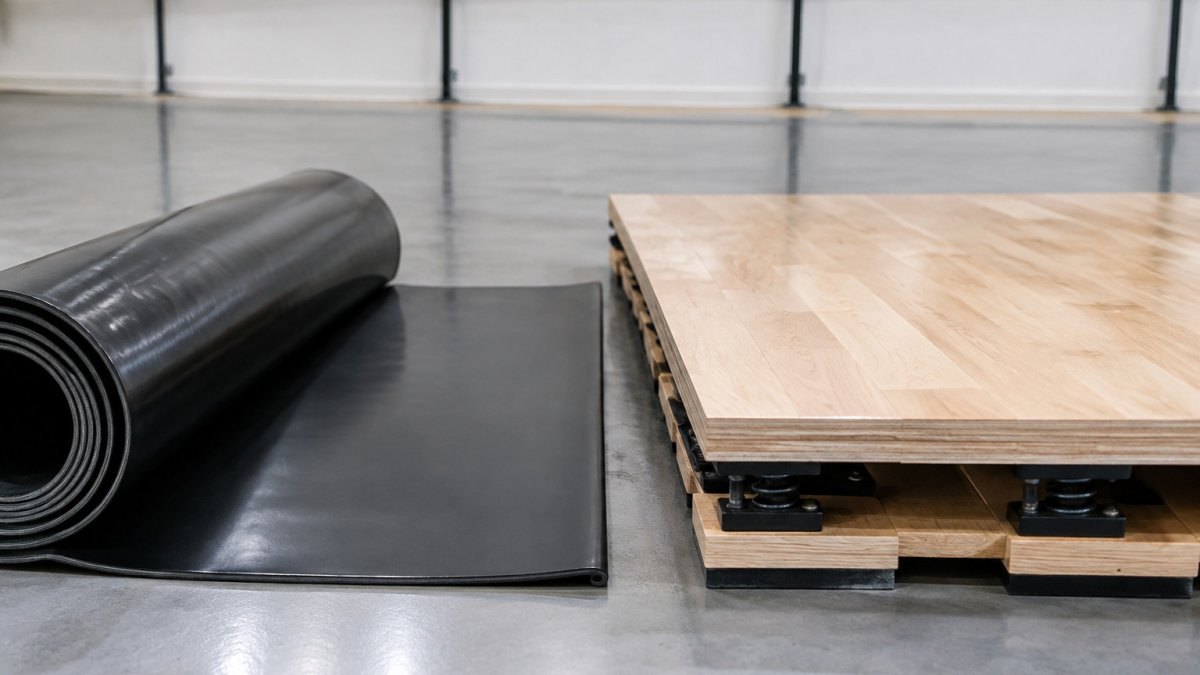
Marley installed over a sprung subfloor is the combination most dance professionals describe.
The surface and the subfloor each cover part of the job, so a complete system addresses both.
This system view changes what to check during a quote. Confirm whether the proposal covers the surface, the subfloor, or both. A bid for Marley alone over a hard base leaves the impact question open.
Impact Absorption and Joint Protection: Comparing the Two Options
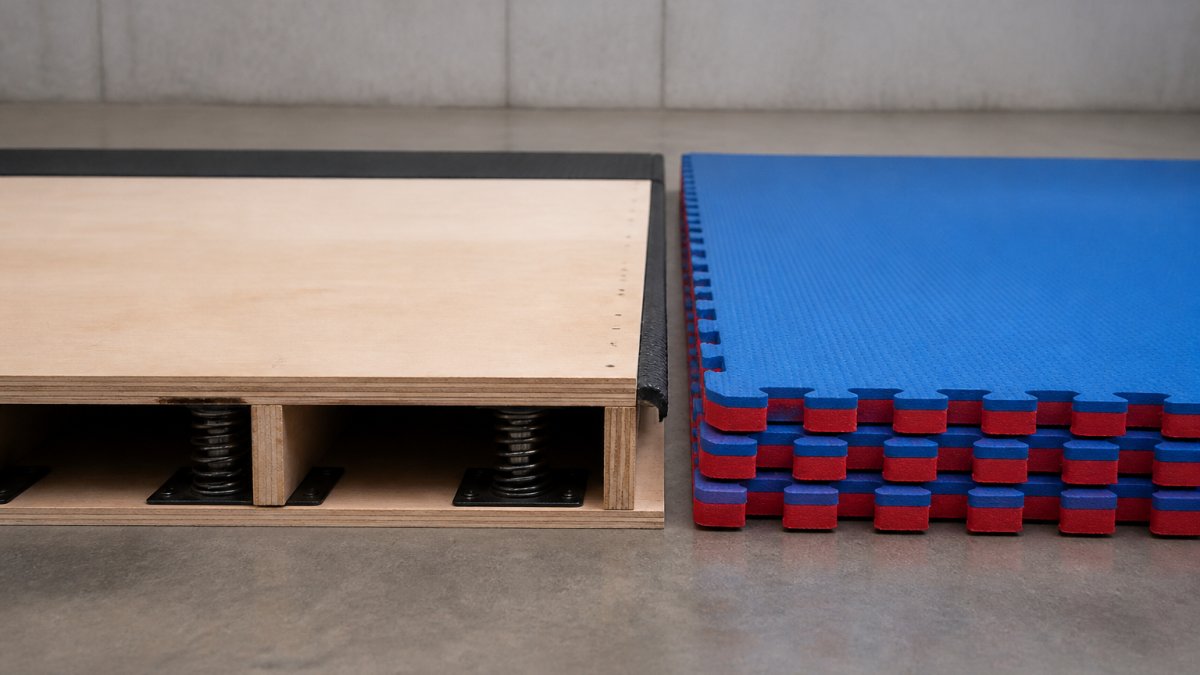
Impact absorption is the main reason studios choose a sprung subfloor, but the term is used loosely. A sprung system works as a spring-mass assembly: the surface layer spreads the load, an elastic layer (foam, rubber, or a battens-and-cradle system) deflects under the foot, and the base resists the load. Deflection lengthens the time over which a landing decelerates, which lowers the peak force a dancer's joints experience. That is the mechanism. It is not the same as a measured reduction in injuries.
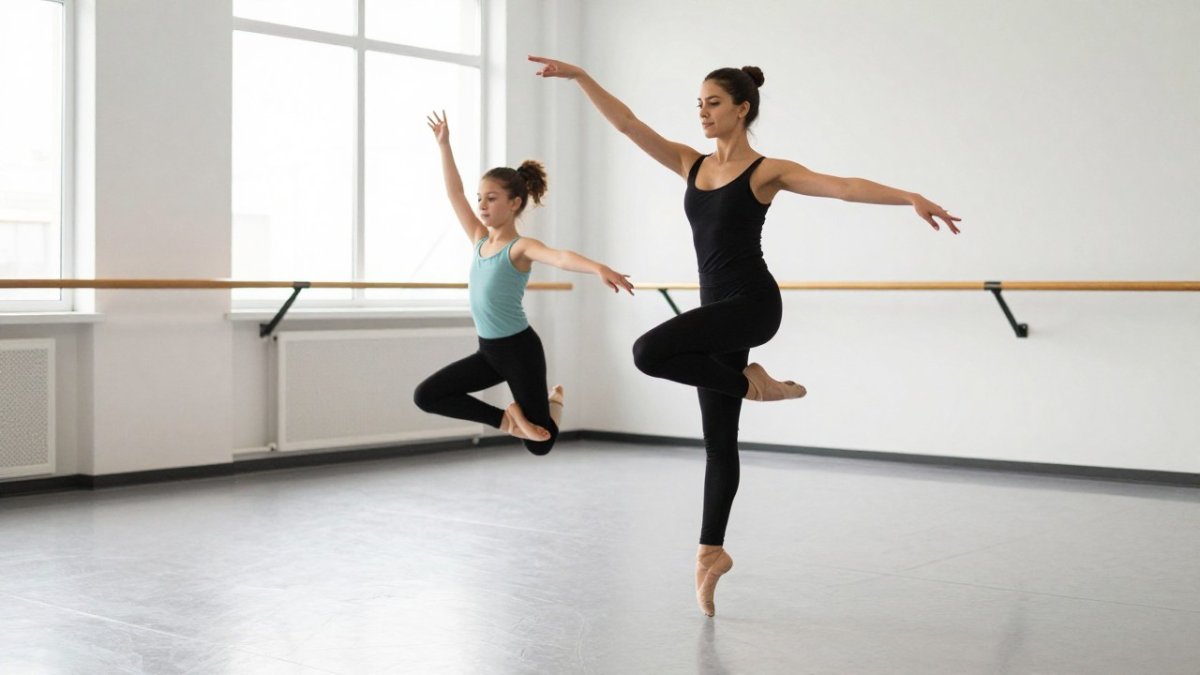
A Marley surface alone does not provide that mechanism. Vinyl is a thin, dense wear layer; laid directly on concrete it transmits landing force almost unchanged. Treat any claim that a surface layer alone protects joints with caution.
Manufacturer language is worth reading carefully. Independent evidence linking a specific floor construction to lower injury rates in dance is limited, so the honest comparison separates three questions: what the floor is designed to do, what it measurably does under load, and what injury data exists. Most buyers can answer the first, rarely the second, and almost never the third.
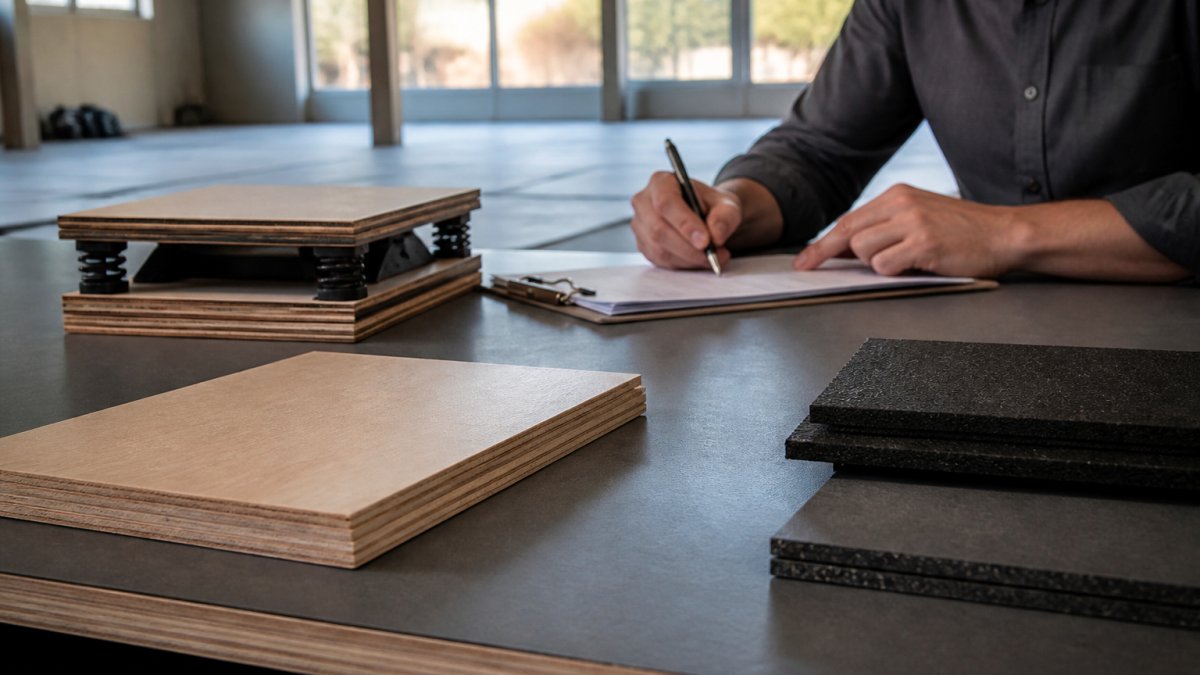
For a fair comparison, assess four things:
- Deflection under load. Ask the installer for the system's deflection or shock-absorption specification, and whether it was tested to a published standard. For keeping the floor and surface in good condition over time, see how to maintain sprung flooring. A floor that barely moves under a jump is a firm floor regardless of what the surface is called.
- Response on repeated landings. A sprung base returns some energy; a hard base returns almost none and the dancer absorbs the rest. Test with the jumps your classes actually do.
- Base condition. Concrete, wood, and an existing sprung floor behave differently, and the same Marley surface feels different on each.
- Point loading. Pointe work and tap concentrate force on a small area; a system that feels fine under flat-footed jumps may feel different under a pointe shoe.
Watch out: a hard base can make a Marley surface feel firm and fast, and dancers used to a sprung floor may underestimate landing forces on concrete, the surface gives no feedback that the base is unforgiving.
A practical field check: stand on the floor and bounce on both feet, then on one foot, then land from a small jump. Compare the feel at the center of the room and near the edges and seams. A floor that feels noticeably harder at the perimeter or over a seam is telling you something about the subfloor, not the surface.
The four checks below separate a floor's real shock absorption from what its name suggests.
| Check | What to look for | Why it matters |
|---|---|---|
| Deflection under load | Published spec, tested to a standard | A barely-moving floor is firm regardless of surface name |
| Repeated landings | Energy returned by the base | Hard bases return little, so the dancer absorbs the rest |
| Base condition | Concrete, wood or existing sprung | Same surface feels different on each base |
| Point loading | Pointe and tap under test | Concentrated force can feel different from flat-footed jumps |
Surface Traction, Slip Risk and Controlled Movement by Dance Style
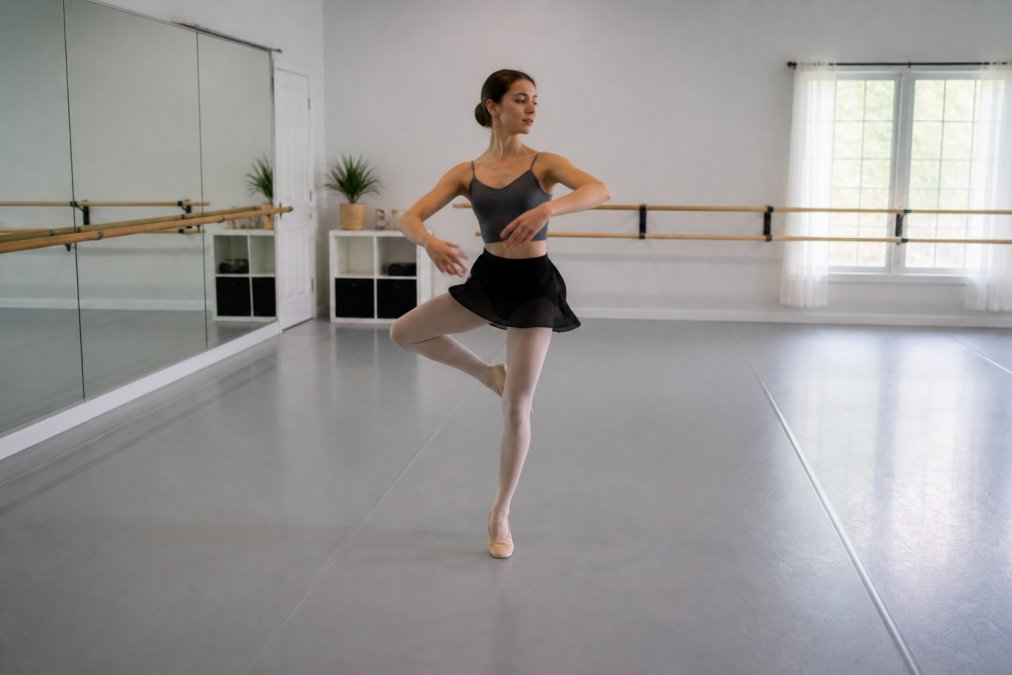
Different styles ask different things of a floor. Ballet and tap depend on controlled contact: the dancer needs enough grip to stop and pivot, and enough slide to turn smoothly. Hip-hop and contemporary work often add floor work and sudden changes of direction, which raises the stakes for both traction and slip resistance.
Marley is commonly chosen for its consistent surface. The right level of traction depends on the style and the shoes. Check with the installer how the surface performs in the footwear your students wear.
The subfloor shapes how the surface feels. A sprung base returns some energy and gives under the foot, which changes how a dancer adjusts a landing. Match the setup to the dominant styles in your space, rather than choosing one floor for every class.
Installing Marley Over Concrete or Hard Subfloors: Compatibility and Failure Modes
Installing Marley over concrete is possible when the surface is clean, flat, and dry, as Flooring Inc's guide notes. The failures that matter are predictable, and most trace back to preparation rather than the product.
Common failure modes and what causes them:
- Lifting and bubbling. Usually dust, curing compounds, or adhesive incompatibility. Concrete must be free of laitance and residue before any adhesive is applied.
- Seam separation. Often movement in the base or installation at the wrong temperature. Seams are the first place a floor shows stress.
- Telegraphing. Unevenness in the base shows through a thin vinyl surface as ridges or soft spots. A straightedge check across the room reveals it before installation.
- Moisture-related adhesion loss. Moisture vapor passing through a slab can break down adhesive. A moisture test before installation is cheaper than a replacement.
- Edge curl. Caused by inadequate acclimation or by leaving the perimeter unsecured.
When Marley can be laid over an existing floor:
Marley can go over a clean, flat, structurally sound base, including an existing hard floor, when the base does not move, is free of debris, and is compatible with the adhesive or loose-lay method specified. It should not go over a base that flexes, has failed seams, holds moisture, or is contaminated with oil or wax.
What makes a subfloor unsuitable:
- Deflection or bounce underfoot that the surface cannot correct.
- Unevenness beyond the manufacturer's flatness tolerance.
- Active moisture or a slab without a vapor barrier.
- Loose or failed existing flooring that will move under the new surface.
Pre-installation checklist:
- Confirm the base type: concrete, wood, or existing sprung floor.
- Check flatness with a straightedge and record the result.
- Test for moisture and confirm any vapor barrier.
- Confirm the room's temperature and humidity at installation.
- Get the subfloor requirements, preparation steps, and warranty terms in writing.
Hard subfloors also raise the comfort and joint-protection question discussed above. Where the base is hard, a sprung subfloor under the Marley surface is the option most sources recommend for dancers.
Marley Dance Floor for Home Use: Space, Budget and Maintenance
Home studios have different constraints from commercial spaces. Space is often limited, and the floor must fit a room that may serve other purposes. Measure the usable area first, including clearance around the edges, before comparing options.
Budget is best judged on the full setup, not the surface alone. Pricing for Glory and Power Enterprises depends on quantity, dates and delivery; contact the company or visit its website for a current quote.
Maintenance matters over the life of the floor. Ask how the surface is cleaned, what wears first, and what care the subfloor needs. A floor that is easy to keep in good condition costs less over time than one that needs frequent repair.
Choosing the Right Dance Floor Setup for Your Studio or Home
Start with the question the floor has to answer: how much impact protection do your dancers need, and what grip do your styles require? If the room has a hard base and regular jumping, a sprung subfloor under a Marley surface is the setup most sources describe as suitable for dancers. If the base is already sprung and the work is mainly controlled movement, the surface choice matters more.
Build your decision on a short checklist:
- Confirm whether the base is concrete, wood or an existing sprung floor.
- Check the surface's traction in the footwear your students use.
- Ask whether the quote includes the subfloor, the surface, or both.
- Request the subfloor requirements, installation steps and warranty in writing.
- Compare a full-system quote with a surface-only quote on the same basis.
Glory and Power Enterprises manufactures sprung dance floors and Marley dance floors for cheerleading, gymnastics, martial arts and dance. Visit the company's website to review its floors and request a quote tailored to your space.
Frequently Asked Questions
What is the difference between a Marley dance floor and a sprung floor?
Marley is a vinyl surface layer that gives dancers smooth, controlled movement and turns. A sprung floor is a subfloor system built with springs or resilient supports that absorb impact and return some energy to the dancer. Marley sits on top of the subfloor, so the two are complementary rather than substitutes. Studios that want both a dependable surface and cushioning typically install Marley over a sprung subfloor. Which combination fits depends on the dance styles taught, the existing floor, and the budget.
Which is safer for dance: Marley flooring or a sprung floor?
Neither product is safer on its own. A sprung floor contributes the impact absorption that helps reduce stress on joints during landings and jumps, while Marley provides the surface that controls slip and friction. Manufacturers and dance flooring suppliers generally present the combined surface-and-subfloor setup as the more dancer-safe option, but published guidance does not establish a precise reduction in injury rates. Assess the floor under your specific movement load before deciding.
Can you install Marley flooring over concrete?
Marley can be installed over a clean, flat concrete surface, but concrete is hard and offers little give. Installers commonly recommend adding a sprung subfloor over concrete for comfort and joint protection. The concrete must be level, dry and free of cracks or moisture problems before installation, or the vinyl surface can fail. Confirm the subfloor condition with your installer before ordering, since pricing and installation scope depend on the area, the existing floor and delivery requirements.
Is a sprung subfloor necessary for a small home dance space?
A sprung subfloor is not strictly required for light practice, but it becomes important for repeated jumps, landings and high-impact movement. Smaller spaces can use a scaled-down sprung system rather than a full studio installation. Check whether the chosen floor is designed for the dance styles you practice, and confirm dimensions, delivery and installation details directly with Glory and Power Enterprises for a current quote.