 ultimate-guide
How to Budget for Professional Gymnastics Flooring in 2026
Last Updated: November 1, 2026
Quick Summary
The cost of professional gymnastics flooring in 2026 ranges from $4 to $22 per square foot for materials, depending on the system: landing mats at $4-$9, carpet-bonded foam at $6-$12, Marley dance floor at $5-$10, and two-layer Baltic birch spring floor at $12-$22. Your total budget must also cover labor, freight, floor prep, and long-term maintenance, so ask vendors to break out fixed costs separately from material costs.
- Small facilities carry higher per-square-foot costs because fixed expenses spread across fewer square feet.
- A two-layer Baltic birch spring floor can last 15-25 years with re-decking.
- Carpet-bonded foam typically needs replacement in 8-12 years, landing mats in 5-10 years.
- Complexity drives installation labor more than square footage does.
- Compare quotes by total ownership cost, not sticker price or bottom line alone.
Table of Contents
- What Drives the Cost of Professional Gymnastics Flooring in 2026
- Comparing Gymnastics Flooring Systems and Their Cost Profiles
- What Goes Into Your Gymnastics Floor Cost
- Gymnastics Flooring Installation Cost: What the Labor Line Really Covers
- The Gym Flooring Quote Checklist Every Buyer Needs
- Gymnastics Flooring Maintenance and Long-Term Ownership Costs
- Request a Quote and Lock In Your 2026 Flooring Budget
- Frequently Asked Questions
What Drives the Cost of Professional Gymnastics Flooring in 2026
The cost of professional gymnastics flooring in 2026 depends on four variables: the flooring system you choose, the square footage you need to cover, the labor required for installation, and the long-term maintenance burden. This guide breaks down each variable so gym owners can build a defensible budget instead of guessing.
Flooring for gymnastics is not a commodity purchase. A competition spring floor, a carpet-bonded foam training surface, and a Marley dance floor solve different problems, and each carries its own material and installation profile. Buyers who treat all three as interchangeable usually overspend on one and underbuild another.
Below, we'll show you exactly how to evaluate system type, size, labor, and lifecycle costs, and how to read a quote line by line before you sign.
System Type and Construction
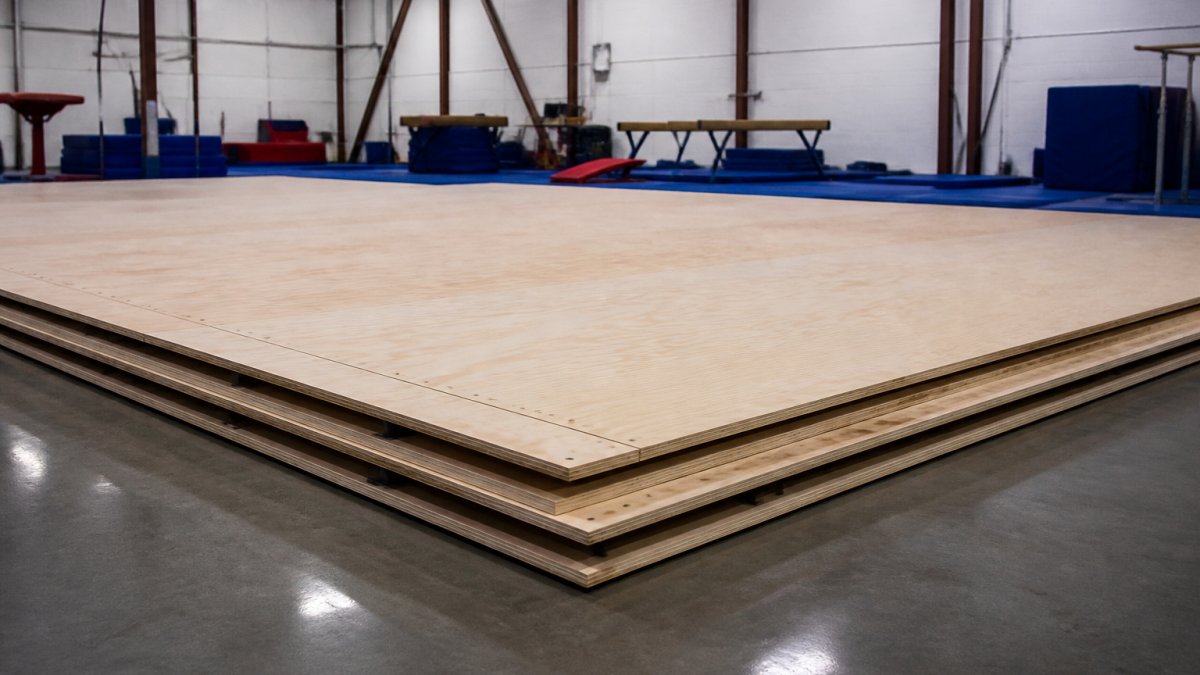
A two-layer Baltic birch spring floor built for competition use involves more material, more fastening hardware, and more installation labor than a foam training surface.
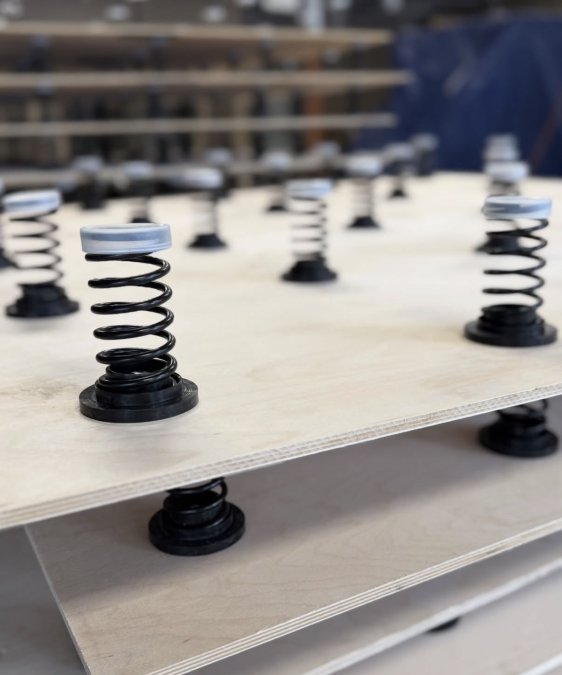
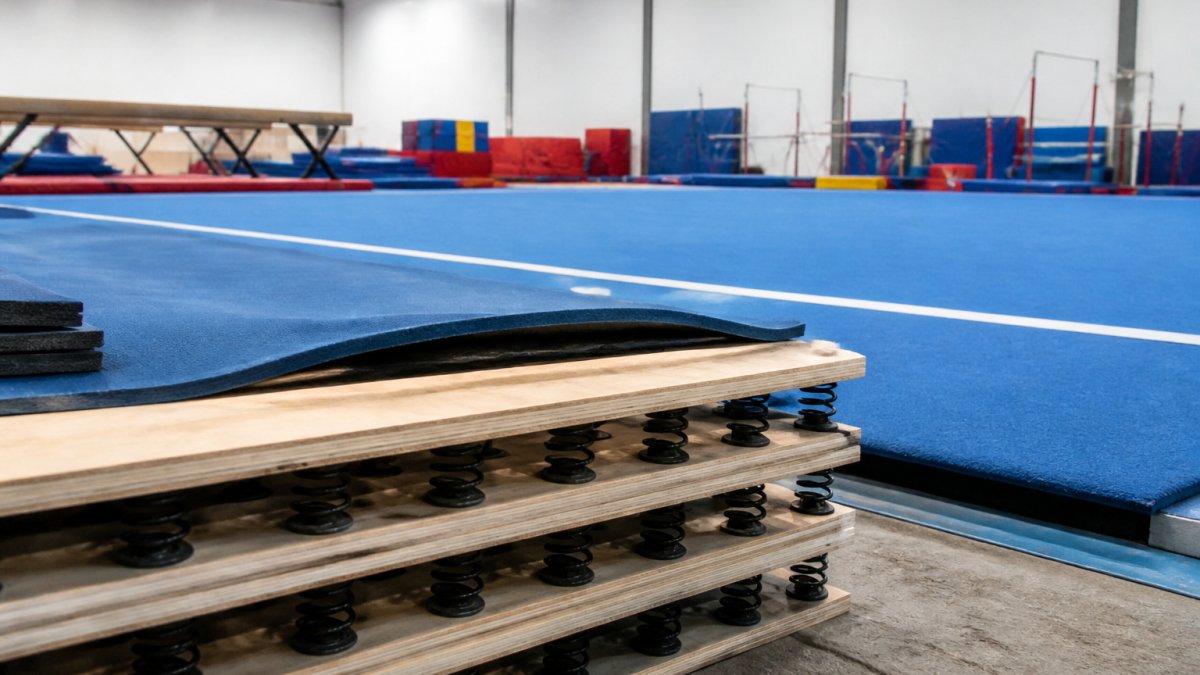
Spring floor construction typically includes a subfloor frame, spring elements, and one or more deck layers. Glory and Power Enterprises manufactures a two-layer Baltic birch spring floor with power springs secured by bolt and thread-locker, plus hook-and-loop fastener on every board.
Carpet-bonded foam and landing mats sit at a different point on the cost curve.
Square Footage and Facility Size
Cost scales with square footage, but not in a straight line. Small spaces typically carry higher per-square-foot costs because fixed expenses get spread across fewer square feet.
A 2,000-square-foot martial arts training room and a 12,000-square-foot competition gym both need a subfloor, an installation crew, and freight coordination. The larger facility absorbs those fixed costs across more area.
Watch out: quoting a small facility using the per-square-foot rate from a large project is one of the most common budgeting errors. Ask vendors to break out fixed costs separately from material costs so you can see what actually scales.
Comparing Gymnastics Flooring Systems and Their Cost Profiles
Each flooring system trades upfront material cost against performance, lifespan, and maintenance. Pricing depends on quantity, dates, and delivery. Request a quote from Glory and Power Enterprises for current prices.
| System | Best For | Material Profile | Typical 2026 Material Cost per Sq Ft | Maintenance Load | Lifespan Expectation |
|---|---|---|---|---|---|
| Two-layer Baltic birch spring floor | Competition gymnastics, cheer | High (wood, springs, hardware) | $12-$22 | Moderate | 15-25 years with re-decking |
| Carpet-bonded foam | Training areas, tumbling lines | Moderate | $6-$12 | Low to moderate | 8-12 years |
| Landing mats | Skill progression, fall protection | Lower | $4-$9 | Low | 5-10 years |
| Marley dance floor | Dance, studio work | Moderate | $5-$10 | Low | 10-15 years |

What the Price Bands Actually Buy
The spread inside each band comes down to construction specifics, not brand. A spring floor at the top of the range typically uses more deck layers, a denser spring grid, and heavier fastening hardware than one at the bottom. A carpet-bonded foam surface at the top of its band usually carries a higher-density foam core and a more durable bonded carpet face. When two quotes for the same system type land far apart, ask which of these specifications changed.
Performance and Safety Differences That Drive Cost
Gymnastics surfaces are specified for shock absorption, energy return, traction, and stability. Marley surfaces are used for dance and studio work.
Surface choice also varies by discipline and athlete level.
Where the Systems Diverge on Noise, Moisture, and Comfort
Noise insulation matters in shared buildings. Carpet-bonded foam and landing mats absorb impact sound better than a bare wood deck, and a spring floor's air gap can amplify sound transmission to the space below unless the subfloor assembly is designed to damp it. Water resistance favors foam and Marley surfaces; wood deck layers and springs need moisture control and a vapor barrier to avoid swelling and corrosion. Comfort is a function of shock absorption and energy return together, which is why athletes often describe a well-built spring floor as both softer and more responsive than a mat.
Residential Versus Commercial Use
A home training space and a commercial gym face different cost profiles. Residential installations usually cover a smaller area, so fixed costs like freight and crew mobilization weigh more heavily per square foot.
What Goes Into Your Gymnastics Floor Cost
Every gymnastics flooring quote should separate material cost from everything else. When vendors bundle line items, buyers lose the ability to compare bids fairly.
A well-structured estimate typically includes:
A common mistake is comparing two quotes by their bottom line alone. One bid may include freight and floor prep while another excludes both, making the "cheaper" quote more expensive once the gaps are filled.
Gymnastics Flooring Installation Cost: What the Labor Line Really Covers
Installation labor is the line item buyers understand least, and it is where budgets most often slip.
Complexity drives labor more than square footage does. A spring floor with hundreds of individually fastened springs takes longer per square foot than a rolled foam surface. If your facility has uneven concrete or moisture issues, prep work adds hours before installation even begins. Readers planning installation timing should also review the factors that affect gym flooring lead times.
The Gym Flooring Quote Checklist Every Buyer Needs
A gym flooring quote checklist turns a confusing bid into a comparable document. Use this list to evaluate every proposal you receive:
- System type and construction layers are named specifically
Gymnastics Flooring Maintenance and Long-Term Ownership Costs
Ongoing maintenance is a cost buyers should plan for. A gymnastics floor is a working surface that absorbs impact daily, and it benefits from inspection and care. The right way to compare systems is not by sticker price but by total ownership cost over the expected service life: routine maintenance, repairs, replacement cycles, and what the warranty actually covers.
Routine Maintenance by System
Routine upkeep generally includes sweeping and mopping the surface, checking spring fasteners for loosening, inspecting deck layers for wear, and keeping moisture away from wood components. Carpet-bonded foam needs vacuuming and periodic deep cleaning. Marley surfaces need appropriate cleaners and careful handling to avoid scuffs. The time commitment is modest for a well-built floor, but it is not zero. Gyms that skip fastener checks tend to discover problems through performance complaints rather than inspections.
Repair Versus Replacement Economics
A spring floor with replaceable components can often be repaired section by section rather than replaced whole. That modularity is a real financial advantage over surfaces that must be torn out entirely. In practice, the repairable items on a spring floor are the deck layers, individual springs, and fastening hardware; the frame and subfloor usually outlast them. Carpet-bonded foam and landing mats are harder to repair at the section level, so wear typically leads to full replacement of the affected area. Marley surfaces can be patched, but seams and color matching are the limiting factors.
Replacement Cycles and Lifecycle Cost
Replacement cycles vary by system and by traffic. A well-built spring floor can serve a facility for 15-25 years with re-decking, while carpet-bonded foam typically needs replacement in 8-12 years and landing mats in 5-10 years under heavy use. Marley surfaces commonly last 10-15 years. When you multiply those cycles by the material cost per square foot, the system with the higher upfront price can still win on lifecycle cost, especially in high-traffic competition facilities.
What a Warranty Should Cover
Warranty terms deserve particular attention because a warranty that excludes springs or deck layers offers little protection. Buyers should know what a sprung floor warranty should actually cover before comparing coverage between vendors. Look for written terms that name the covered components, the duration for each, and whether labor is included. Ask how a claim is handled: does the vendor ship replacement parts, send a crew, or prorate coverage by age?
Ownership Cost Questions to Ask a Supplier
- What is the expected service life under my facility's traffic pattern?
- Which components are replaceable individually, and which require full replacement?
- What does routine maintenance require, and how often?
- What does the warranty cover, for how long, and does it include labor?
- What is the typical replacement cycle for the surface I am considering?
Answering those questions turns a flooring purchase into a defensible lifecycle budget rather than a one-time line item.
Request a Quote and Lock In Your 2026 Flooring Budget
Budgeting for gymnastics flooring in 2026 comes down to matching system type to use case, measuring square footage honestly, and reading every quote line by line. Buyers who separate material, labor, freight, and maintenance costs make better decisions than those who compare bottom lines.
Glory and Power Enterprises manufactures competition spring floors and sprung dance floors for gymnastics, cheer, martial arts, and dance facilities, with two-layer Baltic birch construction, power springs secured by bolt and thread-locker, and hook-and-loop fastener on every board. Financing options are available to help facilities plan the purchase.
Get started with Glory and Power Enterprises and build a flooring budget that holds up through competition season and beyond. Visit the manufacturer's contact page to request a quote and current pricing for your facility.
Frequently Asked Questions
What factors affect the cost of a professional gymnastics floor?
The biggest drivers are system type (spring floor, carpet-bonded foam, or Marley), total square footage, subfloor condition, and installation labor. Freight distance and access to the building also affect the final number. A two-layer Baltic birch spring floor with power springs costs more up front than foam roll-out, but it delivers the energy return and shock absorption competitive athletes need. Get an itemized quote so you can see how each factor moves your total.
What should a gymnastics flooring quote include?
A complete quote should list the flooring system and materials, square footage, spring or foam specifications, fastener and hook-and-loop quantities, freight and delivery terms, installation labor, floor preparation, and lead time. Ask whether taxes, disposal of old flooring, and warranty coverage are included. Use our gym flooring quote checklist to compare bids line by line rather than on the bottom number alone.
How much does it cost to install a sprung gymnastics floor?
Installation cost depends on square footage, subfloor condition, and whether the installer travels to your site. Sprung floors take more labor than roll-out foam because the spring grid, boards, and fasteners must be set precisely. Ask for labor as a separate line item and confirm what floor preparation is covered. Glory and Power Enterprises can walk you through installation requirements and financing options when you request a quote.
What does gymnastics flooring maintenance cost over time?
Routine gymnastics flooring maintenance is mostly time, not money: sweeping, mopping with approved cleaners, checking springs and fasteners, and replacing worn hook-and-loop strips. Budget for periodic inspection and small part replacements rather than full resurfacing.