 ultimate-guide
How to Choose Cheerleading Gym Flooring: A 2026 Guide
Table of Contents
- Why Cheerleading Gym Flooring Matters for Safety and Performance
- Cheerleading Spring Floor Systems: Construction and Benefits
- Carpet Bonded Foam Flooring for Cheer Training
- Rubber and Foam Flooring: Impact Absorption and Durability
- Competition Cheer Mat Dimensions and Space Planning
- Cheerleading Floor Maintenance: Protecting Your Investment
- Key Factors in Selecting the Right Flooring for Your Facility
- Installation and Subfloor Considerations
- Frequently Asked Questions
Last Updated: October 15, 2026
Why Cheerleading Gym Flooring Matters for Safety and Performance
Selecting the right cheerleading gym flooring is one of the most consequential decisions a facility owner can make.
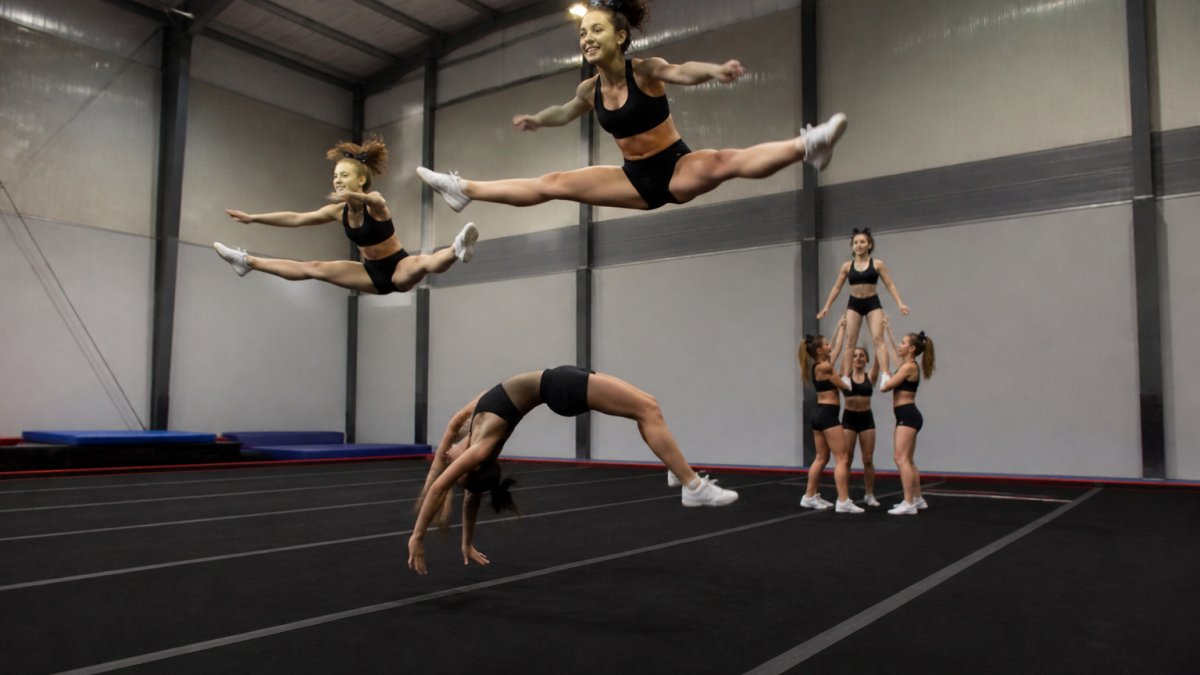
Cheerleading demands flooring engineered for impact absorption, consistent rebound, and grip during dynamic weight shifts.
According to research on athletic injury prevention from the American Academy of Pediatrics, impact-absorbing surfaces reduce lower-extremity injuries in young athletes by supporting proper landing mechanics.
Glory and Power Enterprises manufactures competition-grade spring floors designed for cheerleading environments.
Cheerleading Spring Floor Systems: Construction and Benefits
Spring floors are the gold standard for competitive cheerleading facilities, paying off through athlete confidence, fewer injuries, and facility longevity.
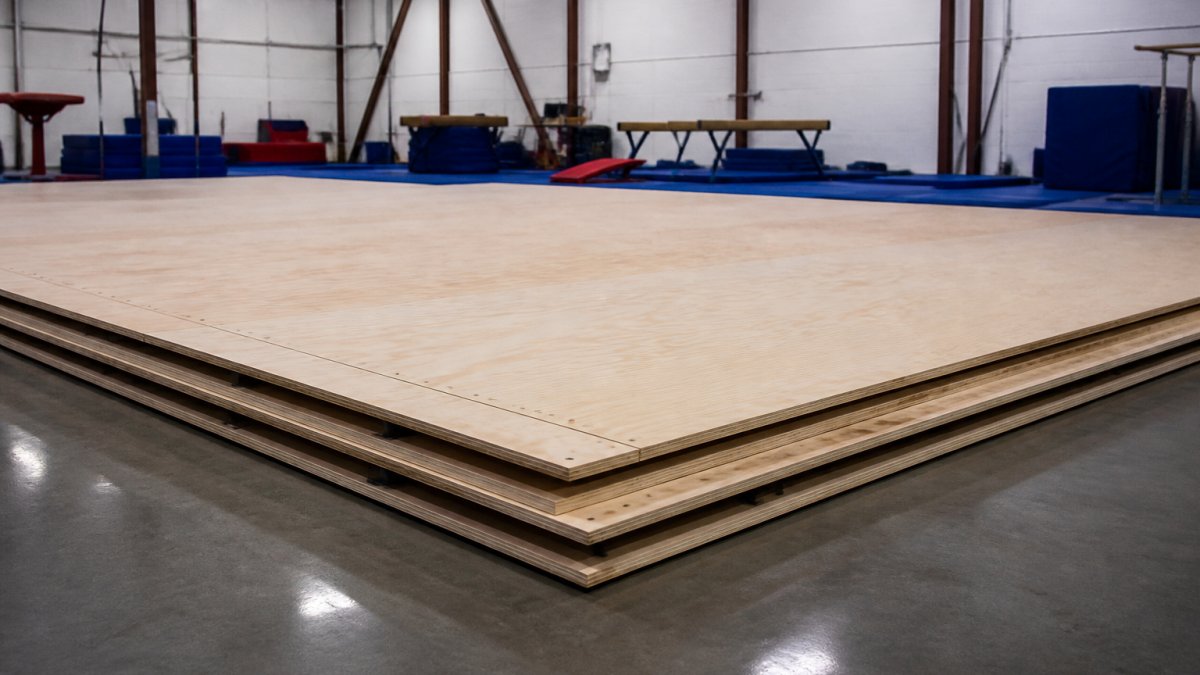
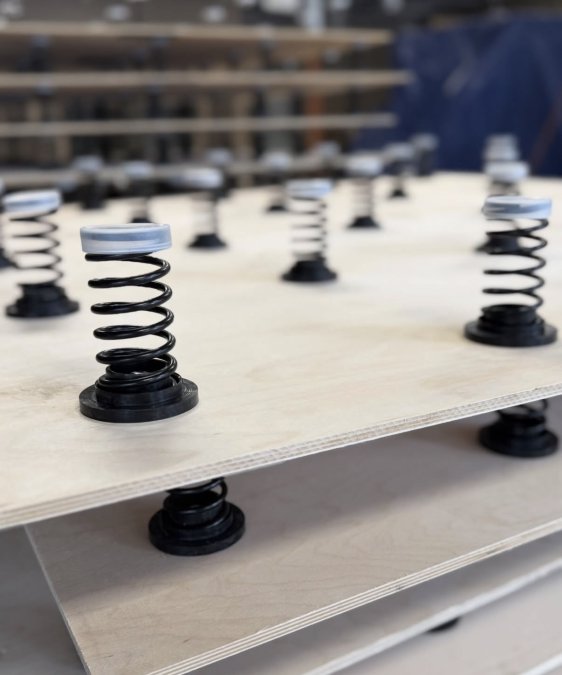
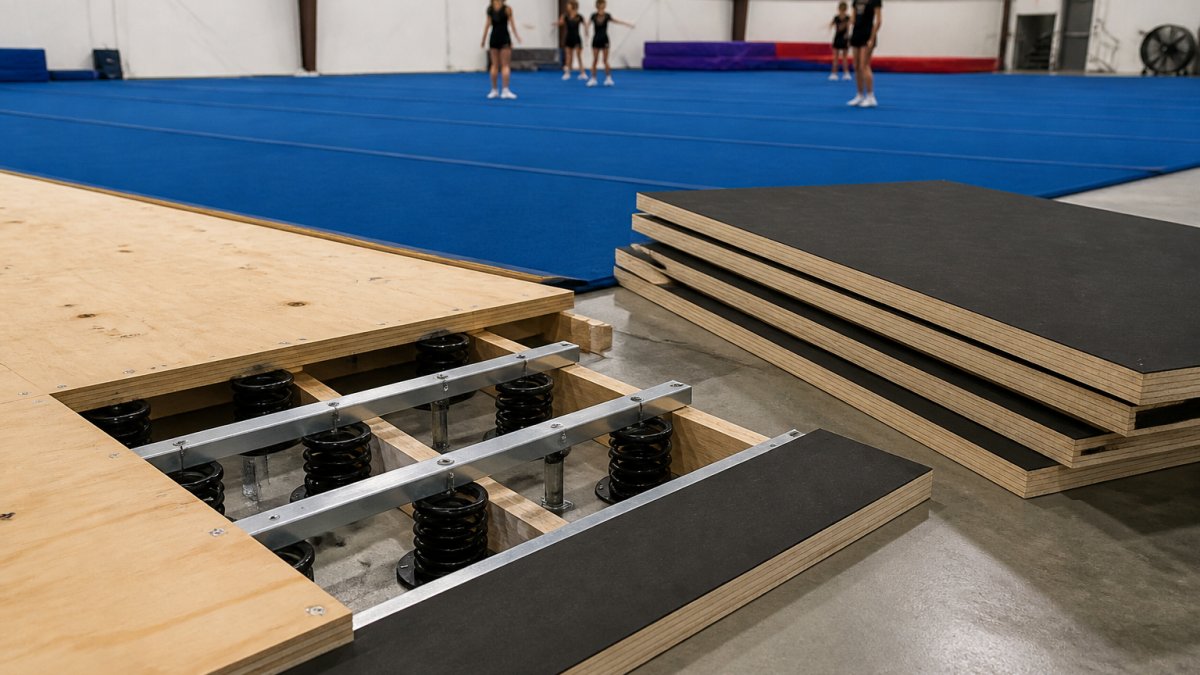
A spring floor system consists of a subfloor, support springs, and a wearing surface. The springs compress under athlete weight and release energy, reducing joint stress and letting athletes gain height with less effort.
How Spring Floors Differ from Non-Sprung Surfaces
Non-sprung flooring, foam mats, rubber tiles, carpet bonded foam, absorbs impact but returns no energy, so the athlete generates all rebound force independently, accumulating fatigue over a long training day.
Spring floors actively assist movement: when a cheerleader lands a backflip, the springs compress and release, contributing upward force for the next skill, letting athletes train longer and progress faster.
The trade-off is installation complexity: spring floors require professional installation, subfloor preparation, and ongoing maintenance, while non-sprung options are simpler for recreational programs.
Carpet Bonded Foam Flooring for Cheer Training
Carpet bonded foam combines a carpet layer with underlying foam, cushioning impact while providing adequate grip.
It works well for recreational cheer programs, schools, and martial arts facilities integrating cheer training. Thickness typically ranges from 1.5 to 2 inches, with denser foam absorbing more impact.
The primary limitation is rebound: carpet bonded foam does not return energy like spring systems, so athletes fatigue faster in extended sessions, acceptable for programs focused on skill development rather than high-level competition.
Rubber and Foam Flooring: Impact Absorption and Durability
Rubber and foam flooring offers excellent durability and impact resistance for high-traffic training environments, using interlocking tiles or roll goods that install quickly and replace individually.
Rubber provides superior traction and weather resistance, ideal for heavy use or humid climates.
Interlocking rubber tiles allow customized layouts and easy replacement: if one tile is damaged, only that tile is replaced, extending lifespan and reducing maintenance costs.
Rubber flooring lacks the rebound of spring systems but offers reliable impact protection and exceptional durability.
Competition Cheer Mat Dimensions and Space Planning
Space planning means matching your practice surfaces to the dimensions, seams, and performance characteristics athletes will encounter at competition. Get it wrong and athletes train on a floor that feels different from the one they compete on.
Practice Floors Versus Competition Floors
Competition and practice floors serve different purposes and are not always the same size.
A standard competition cheer mat is 42 feet by 32 feet. Many facilities cannot dedicate that footprint permanently, so they build a practice floor approximating competition conditions in the dimensions that matter most, tumbling run length and stunting clear height.
Size the primary practice area to at least the competition footprint so athletes never shorten a pass or adjust a formation. If space is tight, prioritize tumbling run length first, that is where athletes most often run out of room.
Dimensions That Drive the Layout
Plan the room from the activities outward:
- Tumbling run. Allow a clear run of roughly 40 feet or more so athletes can complete a full pass without decelerating, often the single largest space driver in the gym.
- Stunting and pyramid area. Plan for at least 30 feet of clear space, and check overhead clearance, many facilities target a minimum of 16 feet for advanced stunts and pyramids. Low ceilings limit what skills athletes can safely train.
- Competition footprint. If you can accommodate the full 42-by-32-foot competition mat, do it. It lets athletes rehearse formations and transitions at regulation size.
Subfloor, Moisture, and Levelness
The subfloor is the foundation of every flooring decision. Concrete and wood subfloors behave differently and need different preparation.
Concrete subfloors should be tested for moisture before flooring goes down. Excess moisture degrades adhesives and feeds mold; high readings usually require a moisture barrier or sealer first.
Levelness matters for every system, especially sprung floors: an uneven subfloor creates inconsistent rebound and uneven seams.
Seams, Anchoring, and Transitions
Seams are where competition floors are inspected and practice floors fail. Plan how your surface will be seamed, anchored, and transitioned:
- Seams. Seams should sit flush and stay put under dynamic loading. Ask how the system handles seams at the edges and in the middle of the mat.
- Anchoring. Sprung systems and some modular surfaces need anchoring or fastening that matches your subfloor. Loose or improperly anchored surfaces shift under athletes and create dead spots.
- Transitions. Where one surface meets another, tumbling zone to stunting zone, mat to hard floor, transitions must be flush and secure. A raised lip or gap is a trip hazard.
Storage and Reconfiguration
If your facility shares space or reconfigures often, storage and setup time become part of the plan. Roll-out and modular surfaces need a clean, dry storage area and a setup routine that keeps seams aligned; sprung floors are typically permanent.
Verifying Requirements Before You Buy
Before committing to a layout, confirm the specifications your athletes will actually face. Event organizers publish mat dimensions, seam requirements, and inspection criteria that vary by event and level. Build your practice space to meet or exceed the competition footprint, and when in doubt, design to the stricter standard.
Cheerleading Floor Maintenance: Protecting Your Investment
Proper maintenance extends flooring lifespan and preserves performance, and each flooring type requires specific care.
Spring floors need regular inspection of springs and fastening systems.
Carpet bonded foam requires regular vacuuming to prevent dirt and odor.
Rubber and foam tile flooring should be swept and mopped regularly, with attention to interlocking seams that trap dirt and moisture.
All flooring types benefit from climate control.
Key Factors in Selecting the Right Flooring for Your Facility
Generic buying guides list the same six criteria, impact absorption, rebound, traction, durability, installation, maintenance, and leave you to guess how they apply to cheerleading. But cheer is not one activity: a tumbling pass, stunt cradle, jump sequence, and conditioning circuit place different demands on the same surface. The most useful framework maps surface characteristics to the activities your athletes actually perform.
Match the Surface to the Training Zone
Most competitive gyms end up with more than one surface because no single floor optimizes every activity, so they divide the facility into zones:
- Tumbling zone. Rebound and shock absorption matter most here. A sprung surface with consistent energy return supports repeated back handsprings, tucks, and fulls without accumulating joint stress. Length matters as much as surface: a tumbling pass needs a clear run of roughly 40 feet or more so athletes can complete a pass without decelerating early.
- Stunting and pyramid zone. Stability and traction dominate here. Bases need a surface that will not slide under a loaded foot, and flyers need consistent grip for balance and rewinds. A slightly firmer surface than the tumbling zone reduces the mushy, unstable feeling that makes stunting harder. Clear height is the other constraint, advanced stunts and pyramids need generous overhead clearance, and many facilities target at least 16 feet.
- Dance and motion zone. Turns, leaps, and choreography reward a surface with predictable, moderate slip, enough grip to push off, enough glide to pivot without catching. Carpet bonded foam and rubber both work, but a surface that is too grippy can torque knees during turns.
If your program runs everything on one surface, you are accepting a compromise. Optimize for the activity that dominates your training hours, then add mats or a secondary zone for the rest.
Evaluate the Surface Against Cheer-Specific Criteria
When you walk a floor or request samples, test against cheer-specific criteria rather than general gym claims:
Shock absorption. Ask how the system attenuates landing impact, not just whether it feels soft. Too soft is as problematic as too hard, destabilizing landings. Look for cushioning consistent across the entire surface.
Rebound and energy return. The clearest divider between sprung and non-sprung surfaces.
Traction and slip resistance. Test grip dry and after a light mist of water, since sweat and humidity change how a surface behaves.
Seam stability and surface consistency. Seams are where floors fail: a seam that lifts or separates creates a trip hazard and a dead spot in the rebound.
Rebound consistency across the mat. Walk the full length and width. A floor lively in one area and dead in another teaches inconsistent timing.
Weigh the Trade-Offs Honestly
Every surface trades something. Sprung floors deliver the best rebound and shock absorption but demand professional installation, a sound subfloor, and ongoing inspection.
The right answer depends on your training philosophy. A competitive program that lives on tumbling and stunting will feel the limits of a non-sprung surface within a season; a recreational program may get more value from a durable, low-maintenance modular floor.
Installation and Subfloor Considerations
Proper installation determines flooring performance and lifespan, and subfloor quality is the foundation.
Concrete subfloors must be tested for moisture using calcium chloride or relative humidity testing.
Spring floor installation requires precision leveling and proper spring spacing; uneven installation creates performance inconsistencies and safety hazards.
Modular tile installation is more forgiving: the interlocking system accommodates minor subfloor irregularities.
Selecting appropriate cheerleading gym flooring requires evaluating safety, performance, durability, and budget against your facility's training philosophy.
Frequently Asked Questions
What type of flooring is best for a cheerleading gym?
The best cheerleading gym flooring depends on your facility's focus and budget. Spring floors deliver maximum impact absorption and athlete confidence for competitive programs. Carpet bonded foam offers solid shock absorption at a lower cost for training facilities. Rubber flooring works well for general conditioning areas. Most serious cheer programs use a combination: sprung surfaces for tumbling and stunts, foam for conditioning zones, and rubber for warm-up areas.
What are the standard dimensions for competition cheer mats?
Competition cheer mat dimensions typically measure 42 feet long by 32 feet wide for full-size competition surfaces, though training areas may be smaller. Check your local competition rules and facility space before purchasing.
How does a spring floor differ from foam or rubber flooring?
Spring floors feature a subfloor with springs or shock-absorbing systems beneath the surface, reducing impact force on joints and improving rebound, critical for tumbling and stunts. Foam and rubber flooring absorb impact through material density alone, offering less rebound and more static feel. Spring floors cost more but deliver superior performance and durability for high-impact activities. Foam suits lighter training; rubber works for conditioning and general use.
What maintenance does cheerleading flooring require?
Regular maintenance protects your flooring investment. Sweep or vacuum regularly to remove sweat and debris. Mop with pH-neutral cleaner, avoid harsh chemicals that damage surfaces. Check seams and fasteners for wear. Spring floors require inspection of springs and fastening systems. Carpet bonded foam may need occasional deodorizing. Address spills immediately to prevent staining. Proper maintenance maintains shock absorption performance.
Can cheerleading flooring be installed over an existing floor?
Yes, many flooring systems install over existing surfaces if the subfloor is level, stable, and moisture-free. Spring floors typically require a solid, even base. Foam and rubber tiles often work over concrete or wood with minimal preparation. Marley and other roll surfaces need a clean, dry foundation. Uneven subfloors can cause seam separation and reduce shock absorption. Professional installation assessment ensures your existing base supports the new flooring properly.
What should you look for in durable commercial gym flooring?
Prioritize impact resistance, traction, and wear resistance. Look for materials rated for heavy use, Baltic birch spring floors, high-density foam, and commercial-grade rubber handle thousands of athlete hours. Verify seam construction and fastening systems prevent separation. Consider noise reduction and temperature insulation for year-round comfort.
How much space do you need for a cheerleading floor?
Full competition floors require 42 feet by 32 feet. Training facilities can operate effectively with smaller layouts. Account for clearance around the floor for safety. If space is limited, use different zones, spring floor for stunts and tumbling, foam for conditioning, rubber for warm-up.