 ultimate-guide
Benefits of Baltic Birch Gym Floors: A 2026 Guide
Table of Contents
- Why Baltic Birch Dominates Competitive Gym Flooring
- Sprung Gym Floor Benefits: How Two-Layer Construction Works
- Gym Floor Shock Absorption: Protection for High-Impact Training
- Birch Plywood Advantages and Disadvantages for Athletic Spaces
- Durability Under Competitive Loads and Heavy Use
- Gym Floor Maintenance: Keeping Your Surface Game-Ready
- Baltic Birch vs. Other Gym Flooring Materials
- Conclusion
- Frequently Asked Questions
Last Updated: October 9, 2026
Why Baltic Birch Dominates Competitive Gym Flooring
Baltic birch gym floors represent a deliberate engineering choice for facilities that demand consistent performance under extreme athletic loads. The material's origin, harvested from northern European forests where growth rings are tightly spaced, creates wood with exceptional density and uniform grain structure.
The appeal of Baltic birch gym floors extends beyond raw material quality. Facilities using this construction report that athletes feel confident executing high-risk movements, tumbling passes, heavy lifts, explosive landings, because the floor responds predictably to impact. That confidence matters.
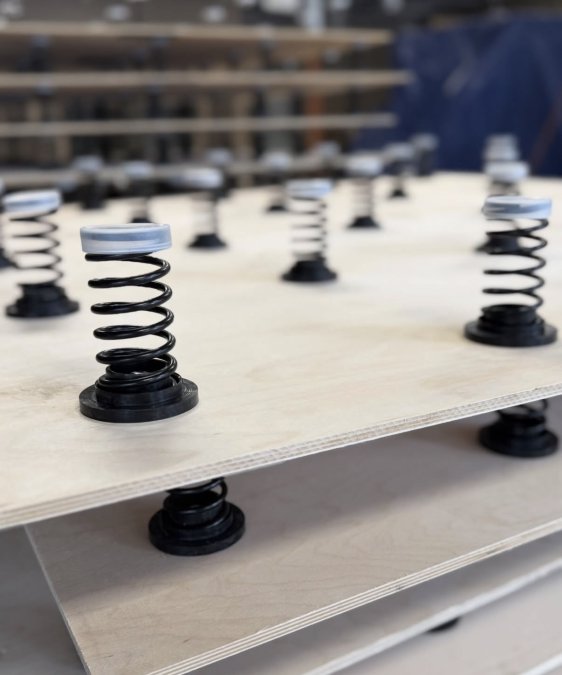
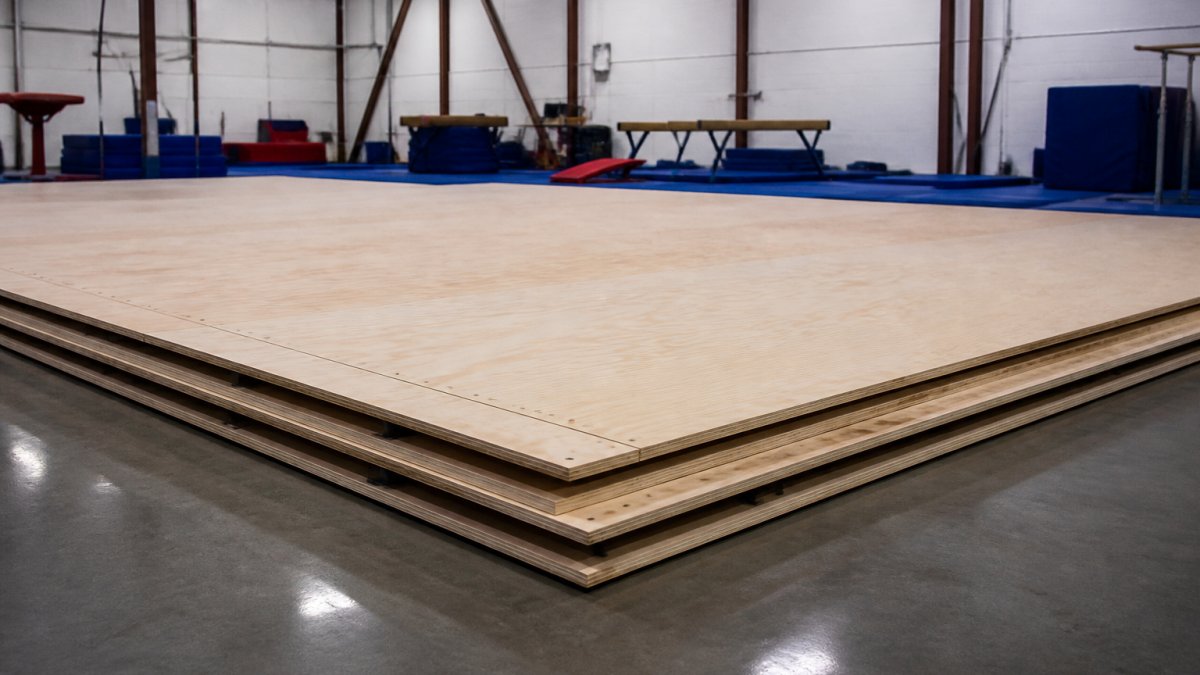
Glory and Power Enterprises manufactures two-layer Baltic birch spring floors specifically engineered for competitive environments. The construction combines Baltic birch plywood with power springs secured via bolt-and-thread-locker fastening, creating a system designed to absorb shock while maintaining structural integrity across years of heavy use.
The competitive advantage of Baltic birch becomes apparent when comparing it against budget alternatives. While cheaper flooring may feel acceptable during initial installation, the material's lower density means it compresses under repeated loading. Indentations from equipment legs, subtle surface softening from moisture exposure, and accelerated wear in high-traffic zones all compound.
Sprung Gym Floor Benefits: How Two-Layer Construction Works
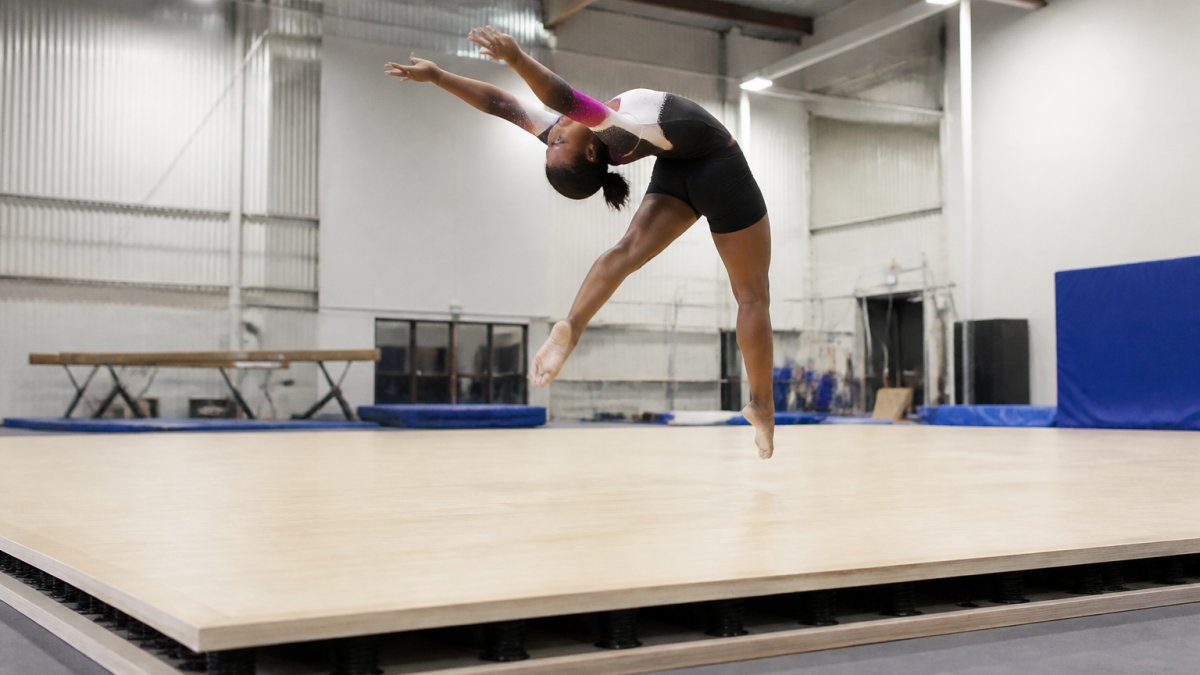
A sprung gym floor operates on a fundamental principle: distribute impact force across a larger surface area and time window, reducing the peak stress on joints and connective tissue. The two-layer system that defines professional Baltic birch gym floors achieves this through deliberate material pairing.
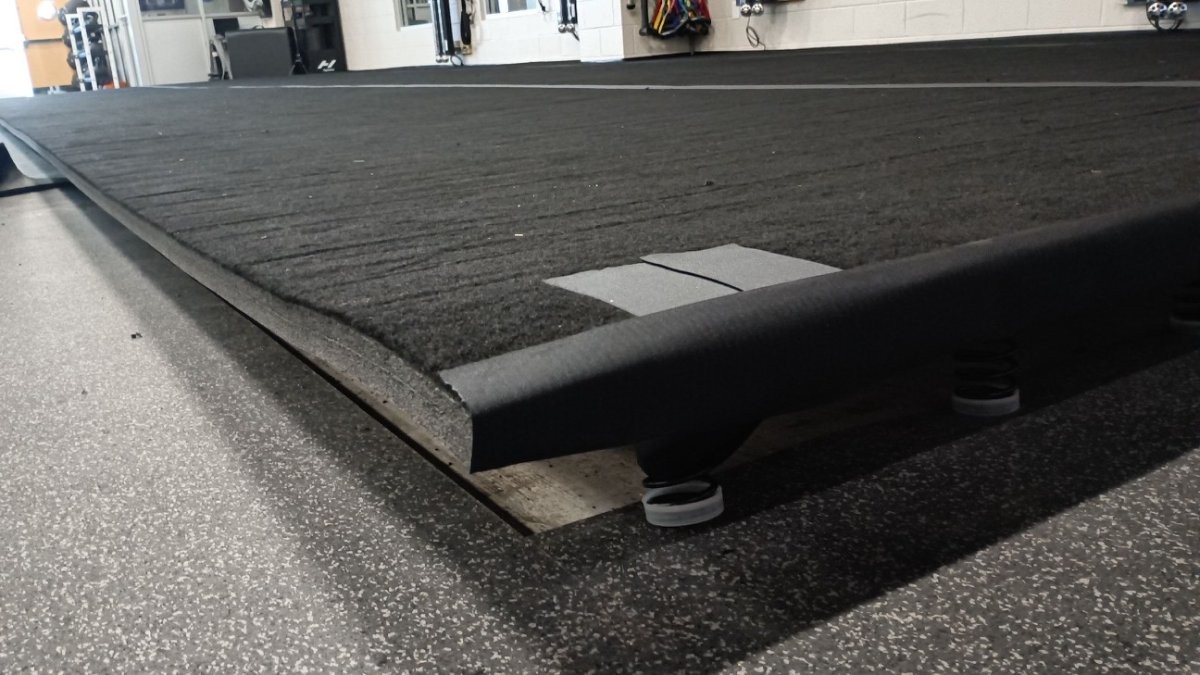
The top layer consists of Baltic birch plywood, typically 3/4 inch thickness, that provides the wearing surface. Below sits a spring system, usually engineered coil or elastomeric springs, that compresses under load and rebounds. This compression-rebound cycle is what differentiates a sprung floor from rigid concrete or laminate.
The practical benefit emerges over time. Facilities with proper sprung construction report that athletes train longer without fatigue-related form breakdown. The floor's shock absorption reduces the cumulative impact stress that accumulates during multi-hour training sessions.
Glory and Power Enterprises's two-layer construction incorporates power springs secured with bolt-and-thread-locker fastening. This approach prevents spring loosening over time, a common failure mode in budget systems where fasteners gradually work free under repeated impact. The 1 linear foot of hook-and-loop fastener per board ensures consistent board-to-spring coupling, eliminating movement and creep that degrade performance.
The durability advantage of sprung construction extends the facility's return on investment. A properly engineered sprung floor, maintained appropriately, can perform reliably for many years.
Gym Floor Shock Absorption: Protection for High-Impact Training
Shock absorption in gym flooring directly correlates with injury prevention. When an athlete lands on unforgiving surfaces, the deceleration force travels through feet, ankles, knees, and hips.
Baltic birch gym floors reduce this injury risk through material properties and engineered construction. The wood's density provides structural support while the spring layer beneath absorbs energy that would otherwise transmit to the athlete's body. This dual mechanism, support plus absorption, is why competitive facilities standardize on this approach.
The shock absorption performance of birch plywood advantages becomes clearer when examining the material's cellular structure. Baltic birch contains fewer air pockets than lower-grade plywood, meaning the wood itself is denser and more resilient.
Facilities transitioning from budget flooring to professional Baltic birch gym floors often report immediate feedback from athletes. Coaches notice improved landing mechanics because athletes no longer compensate for floor uncertainty. Trainers observe that athletes can execute higher training volumes before fatigue-related form breakdown occurs.
The protection extends to equipment longevity as well. When dropped weights, barbells, and impact equipment land on inadequately cushioned floors, both the equipment and floor sustain damage. A properly shock-absorbing surface distributes impact force, reducing equipment wear and floor surface degradation.
Birch Plywood Advantages and Disadvantages for Athletic Spaces
Birch plywood advantages for gym flooring center on three properties: density, stability, and workability. The density of Baltic birch means it resists denting and compression from equipment and foot traffic. A dropped barbell bell on Baltic birch leaves minimal impression.
Stability refers to the material's resistance to warping, cupping, and movement. Baltic birch's tight grain structure means it remains dimensionally stable across humidity and temperature changes. This matters because gym environments experience temperature and humidity fluctuations, from athlete perspiration, ventilation systems, and seasonal variation.
Workability describes how the material responds to fastening and assembly. Baltic birch accepts screws, bolts, and fasteners reliably without splitting or stripping. This property is critical because gym floors require consistent fastening to prevent movement and creep over time.
The disadvantages of birch plywood deserve equal attention. The material requires proper sealing to resist moisture penetration. In humid gym environments, or facilities with inadequate ventilation, unsealed or poorly sealed birch can absorb moisture, leading to swelling, warping, and mold growth.
Cost represents another consideration. Baltic birch plywood costs more than domestic alternatives or lower-grade materials. For budget-constrained facilities, this initial investment may feel prohibitive. However, the longer service life and reduced replacement frequency often justify the higher upfront cost when calculated over a 15-year facility lifecycle.
| Advantage | Benefit | Consideration |
|---|---|---|
| High density | Resists denting and compression | Requires proper installation |
| Dimensional stability | Maintains surface integrity across seasons | Needs humidity control |
| Fastener retention | Supports secure bolting systems | Regular inspection required |
| Workability | Enables precise assembly | Initial cost is higher |
Durability Under Competitive Loads and Heavy Use
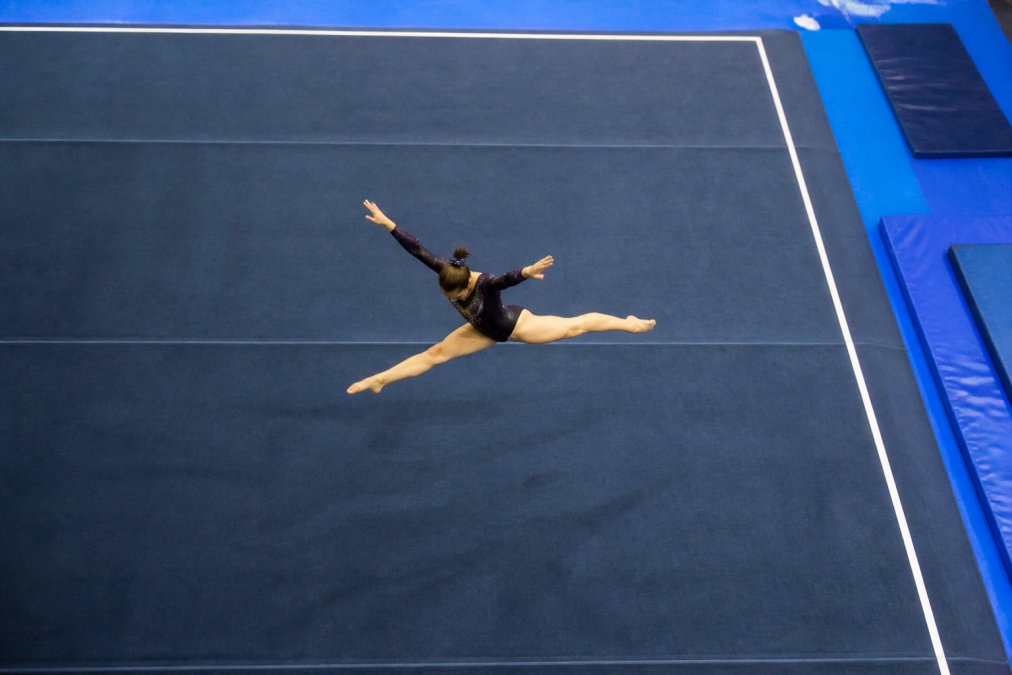
Competitive gym environments impose loads that exceed typical commercial flooring specifications. A 150-pound gymnast landing from a 10-foot height generates impact forces of 4-6 times body weight, 600-900 pounds concentrated in a small landing zone.
Baltic birch gym floors withstand this stress because the material and construction system distribute force rather than concentrating it. The spring layer spreads the impact across a larger area and time window. The dense birch plywood resists permanent deformation. Together, they maintain performance consistency across years of heavy loading.
Durability testing of professional-grade Baltic birch floors reveals specific performance characteristics. Under simulated competitive loading, repeated impacts equivalent to years of training use, properly installed systems show minimal surface degradation, no fastener loosening, and stable spring response.
The fastening system significantly impacts durability. Glory and Power Enterprises's bolt-and-thread-locker approach prevents the gradual fastener loosening that undermines budget systems. As fasteners work loose, boards shift slightly under load. This movement accelerates wear at fastener points and creates stress concentrations that lead to cracking and splitting.
Environmental factors also influence durability. Facilities with inadequate ventilation or chronic moisture issues experience accelerated deterioration regardless of flooring quality. Conversely, facilities that maintain proper humidity levels, temperature stability, and regular cleaning extend the service life of even moderately-priced flooring.
Gym Floor Maintenance: Keeping Your Surface Game-Ready
Maintenance protocols determine whether a floor reaches its potential service life or deteriorates prematurely. Baltic birch gym floors require regular attention to preserve both appearance and performance.
Daily maintenance involves sweeping to remove dust, chalk, and debris that can scratch the surface or trap moisture. Many facilities use microfiber dust mops that capture particles without spreading them.
Weekly cleaning typically involves damp mopping with water and a pH-neutral cleaner. The key is moisture control, excessive water causes swelling and warping.
Monthly inspection involves checking fasteners for looseness, examining the surface for damage or wear patterns, and assessing the finish condition. Loose fasteners should be tightened immediately because movement accelerates damage. Visible wear or damage should be documented to track deterioration patterns.
Seasonal maintenance includes finish evaluation and potential resealing. Resealing protects the wood from moisture penetration and UV degradation while restoring the protective layer that prevents scratches and stains.
Avoid practices that damage floors: never use abrasive cleaners or steel wool that scratch the finish, never allow standing water that promotes swelling, never use oil-based products that create slippery surfaces, and never drag heavy equipment without protective sliders that distribute pressure.
Baltic Birch vs. Other Gym Flooring Materials
Comparing Baltic birch to alternative gym flooring materials reveals distinct trade-offs in cost, performance, and maintenance.
Rubber gym flooring offers excellent shock absorption and durability for weightlifting areas. Rubber resists damage from dropped weights and requires minimal maintenance. However, rubber offers less aesthetic appeal and may off-gas volatile compounds in poorly ventilated spaces.
Maple flooring, traditional in basketball and volleyball facilities, provides excellent durability and a professional appearance. Maple is harder than birch and resists scratching effectively.
Laminate and vinyl flooring represent budget alternatives with lower installation costs. These materials are easy to clean and maintain. However, they offer minimal shock absorption, degrade quickly under heavy athletic loads, and can become slippery when wet. For serious competitive training, laminate and vinyl are inadequate.
Concrete with foam mats provides a low-cost baseline solution. Foam mats add some cushioning but lack the engineered spring response of professional systems. Concrete is difficult to clean, cold to the touch, and provides no aesthetic appeal.
The choice depends on facility purpose and budget. For competitive gymnastics, cheerleading, martial arts, and dance, Baltic birch gym floors with professional spring construction represent the performance standard. For strength training supplemental areas, rubber flooring adds durability.
Conclusion
Baltic birch gym floors deliver measurable advantages for competitive athletic training: superior shock absorption that protects joints, exceptional durability under extreme loading, and consistent performance across years of heavy use. The material's density, stability, and responsiveness make it the standard in facilities where athlete safety and performance matter.
Glory and Power Enterprises manufactures two-layer Baltic birch spring floors engineered specifically for competitive environments. The combination of dense birch plywood with power springs secured through bolt-and-thread-locker fastening, plus 1 linear foot of hook-and-loop fastener per board, creates a system designed to withstand the rigorous demands of serious training. Facilities investing in professional-grade Baltic birch gym floors gain a floor system that supports competitive excellence while minimizing injury risk and maintaining performance consistency with proper maintenance. American Academy of Pediatrics guidance on sports injury prevention emphasizes the role of proper equipment in reducing overuse injuries in young athletes, a principle that extends to facility infrastructure. Discover how Glory and Power Enterprises's engineered flooring system supports your competitive training environment.
Frequently Asked Questions
What makes Baltic birch plywood suitable for gym floors?
Baltic birch is engineered with multiple plies (typically 9-13 layers) that distribute loads evenly and resist warping. Its tight grain structure and dense wood composition provide natural resiliency and strength. When combined with power springs in a two-layer system, Baltic birch creates a surface that absorbs impact while maintaining consistent performance under repeated heavy use. The wood's ability to hold fasteners securely and resist splitting makes it ideal for sprung flooring systems used in gymnastics, cheerleading, and martial arts training.
Does a sprung gym floor help with shock absorption?
Yes. Sprung gym floors with Baltic birch and power springs significantly reduce impact shock compared to solid concrete or standard wood. The springs compress when athletes land, dissipating force gradually rather than transmitting it directly to joints and bones. This joint-friendly design reduces injury risk during high-impact activities like tumbling, vaulting, and heavy lifting. The shock absorption also improves athlete confidence and performance, allowing for more aggressive training without pain or fatigue from impact stress.
How should a Baltic birch gym floor be maintained?
Regular maintenance preserves both the surface finish and spring performance. Sweep or vacuum frequently to remove dust and debris that can scratch the wood grain. Wipe spills immediately to prevent moisture from penetrating the sealing finish. Avoid using excessive water or harsh chemicals; use pH-neutral cleaners designed for wood floors. Periodically inspect fasteners and springs for looseness, and check for signs of splintering or surface damage. Proper humidity control prevents warping. Annual professional cleaning and occasional refinishing extend the floor's service life and maintain its traction and appearance.
What are the downsides of plywood flooring in a gym?
Plywood can be sensitive to moisture and humidity fluctuations, which may cause warping or swelling if the environment isn't climate-controlled. Without proper sealing, it can absorb sweat and water, reducing surface durability. Standard plywood lacks the impact resistance of Baltic birch and doesn't hold fasteners as securely, risking loosening over time. Cheaper plywood grades may splinter or delaminate under heavy loads. Plywood also requires more frequent maintenance and refinishing than premium alternatives. However, Baltic birch specifically addresses many of these limitations through its superior ply count, density, and grain structure, making it a more reliable choice for competitive athletic environments.