 comparison
Sprung Floor vs Foam Mats: Comparison Guide
Table of Contents
- Sprung Floor vs Foam Mats: Key Differences
- How Sprung Floors Work: Construction and Layers
- Foam Mats for Gymnastics: Structure and Performance
- Sprung Dance Floor Systems for Professional Training
- Dance Subfloor Requirements and Installation
- Gymnastics Landing Mats: Portable vs Permanent
- Choosing the Right Floor for Your Facility
- Frequently Asked Questions
Last Updated: October 20, 2026
Sprung Floor vs Foam Mats: Key Differences
A sprung floor vs foam mats comparison reveals two fundamentally different approaches to impact protection. Sprung floors use mechanical spring systems beneath wooden surfaces to absorb force and return energy, while foam mats rely on material density and compression to cushion landings. The choice depends on training intensity, budget, space, and the activities your athletes perform.
Glory and Power Enterprises manufactures professional-grade sprung dance floors and specialized landing mats for competitive gymnastics, cheerleading, martial arts, and dance training. Understanding how each system works helps facility owners make an informed investment.
What Each System Does
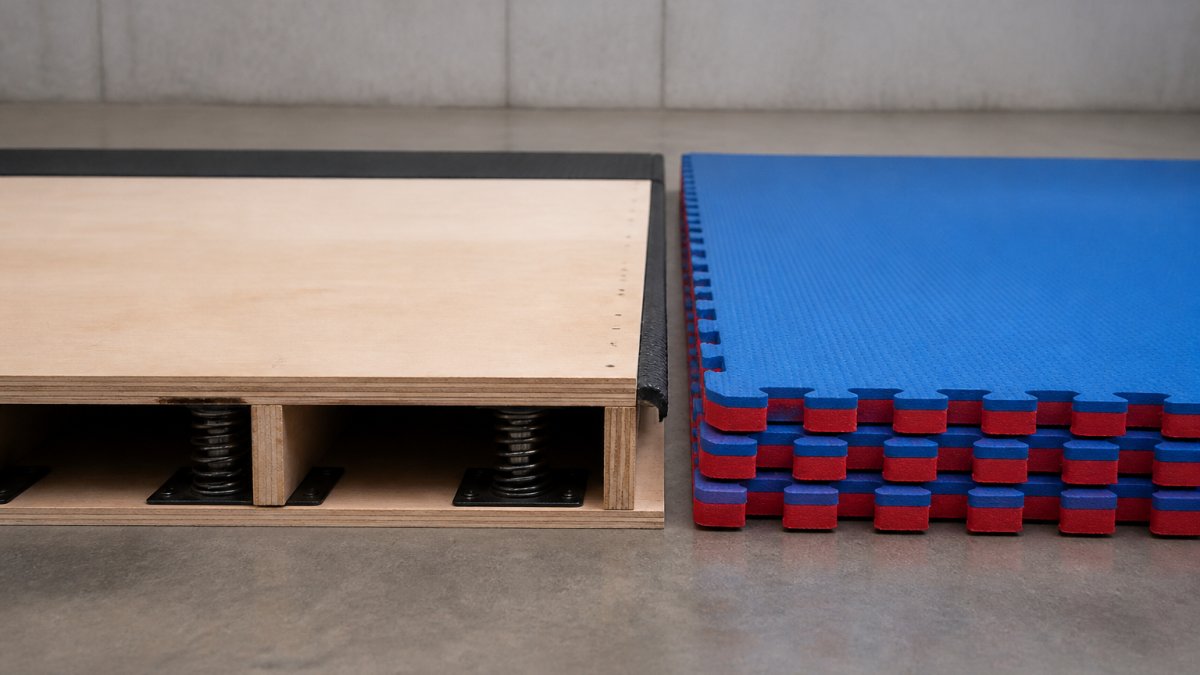
A sprung floor combines wooden boards, mechanical springs, and resilient surfaces into a responsive training environment. The springs compress under an athlete's weight, then push back, returning energy to the jumper or dancer. This counterforce reduces joint stress while improving performance.
Foam mats absorb impact through material compression: when an athlete lands, the foam cells collapse, dissipating force gradually. They come as interlocking tiles, rollout mats, and folding gym mats, each offering portability that fixed sprung floors cannot match.
The core trade-off: sprung floors deliver superior performance and durability but require permanent installation and significant upfront investment. Foam mats are affordable, portable, and easier to set up, but they compress over time and cannot match the energy return of an engineered spring system.
How Sprung Floors Work: Construction and Layers
Sprung floors operate on a principle of mechanical resilience. The system stacks multiple layers, each serving a specific function: support, shock absorption, and surface performance.
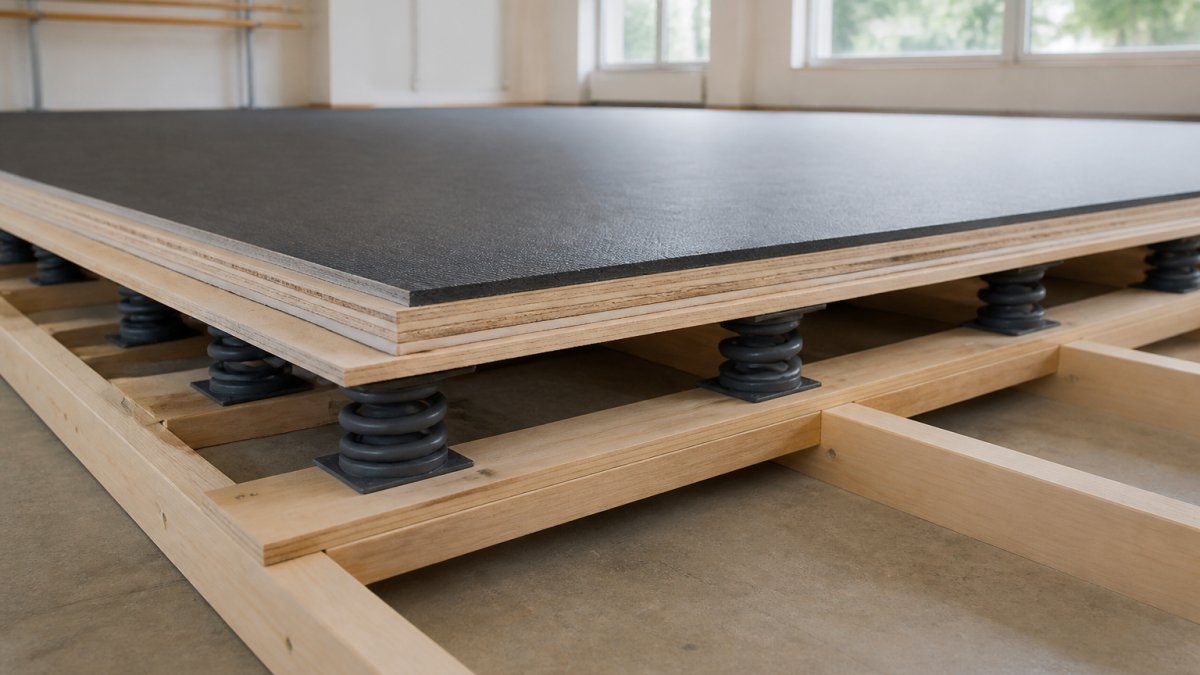
Spring Floor Mechanics
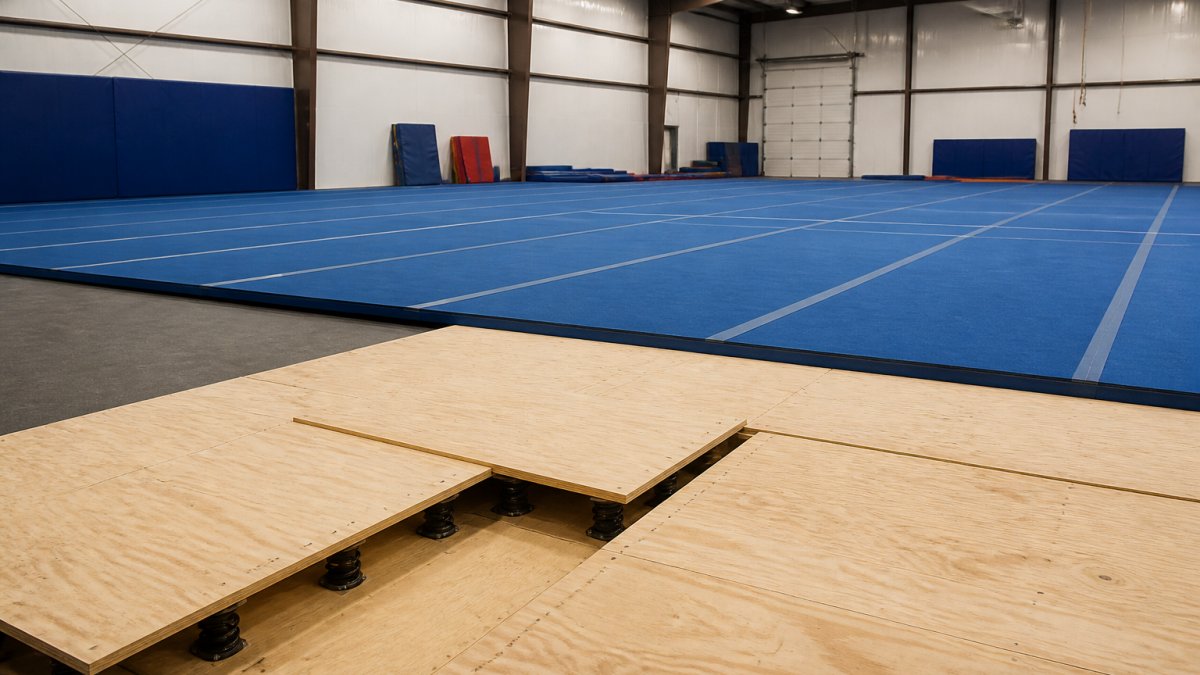
A typical sprung floor rests on a subfloor of concrete, wood, or engineered flooring. Above that sits a layer of springs that compress under weight and rebound, creating the distinctive "bounce" dancers and gymnasts feel.
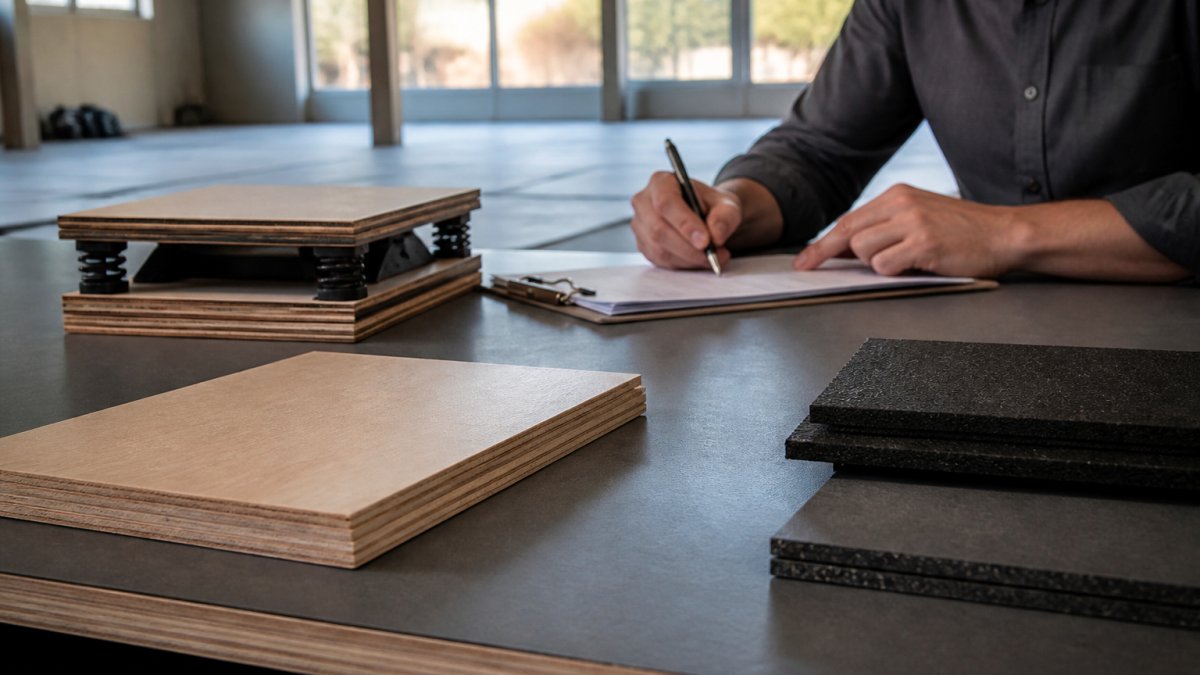
Glory and Power Enterprises floors use two-layer Baltic birch construction with power springs secured by bolt and thread-locker fastening, which keeps springs stable under repeated, intense use and prevents loosening over time.
The wooden surface layer must be smooth enough for sliding movements (essential in dance) but textured enough to prevent slipping. It also protects the spring mechanism and distributes force evenly.
Energy Return and Resilience
Energy return separates a sprung floor from a static surface. When an athlete lands, the springs compress and store mechanical energy; as they rebound, they release it back into the athlete's body, propelling them higher and reducing muscular effort for subsequent jumps.
This resilience matters most in high-intensity disciplines. A dancer performing 20 consecutive jumps fatigues faster on a flat surface but stays consistent on a sprung floor. Gymnasts landing tumbling passes benefit from reduced joint stress, as the floor absorbs part of the landing force rather than transferring it all to ankles, knees, and hips.
Foam mats cannot replicate this energy return. Once foam compresses, it stays compressed until the athlete lifts their weight, absorbing energy without returning it. That makes foam better suited to controlled, low-velocity movements than high-impact jumping and flipping.
Foam Mats for Gymnastics: Structure and Performance
Foam mats are built from compressed foam materials, typically closed-cell foam, which resists moisture and maintains structural integrity. The density of the foam determines how much force it can absorb and how quickly it recovers.
Foam Types and Cushioning
Interlocking foam tiles are the most common format for permanent or semi-permanent gym setups. They lock together edge-to-edge to create a continuous surface that prevents gaps and shifting, though tiles can move if the subfloor is uneven.
Rollout mats are continuous sheets that unroll across the floor, simple to set up but requiring careful alignment to prevent wrinkles and tripping hazards. Folding gym mats, typically 4 feet by 8 feet and 2-4 inches thick, offer maximum portability and stack for storage.
Cushioning depends on foam density. Higher-density foam absorbs more force but feels firmer; lower-density foam feels softer but compresses faster and may not protect against high-impact activities.
Impact Absorption vs Stability
Foam excels at impact absorption. It compresses on contact, slowing deceleration and spreading landing force across a larger surface area, which reduces peak impact on any single joint.
However, foam mats sacrifice stability for softness. An athlete landing on foam feels the surface shift beneath their feet, which is problematic for balance-dependent activities like gymnastics floor routines or martial arts forms. Dancers often find foam surfaces "spongy" and precise footwork difficult.
Foam also compresses permanently over time: a mat that feels right when new may feel uncomfortably soft after six months of regular use as the foam cells collapse and lose their rebound.
Sprung Dance Floor Systems for Professional Training
Professional dance studios and competitive gymnastics facilities typically invest in complete sprung floor systems. These systems integrate the subfloor, spring layer, and surface material into a cohesive package designed for specific activities.
Marley Surfaces and Subfloor Integration
Marley is a brand name for vinyl dance flooring, a smooth, slightly textured surface that reduces friction for sliding while providing enough grip to prevent slipping. It is standard in professional dance studios and often paired with sprung subfloors for ballet, contemporary, and jazz.
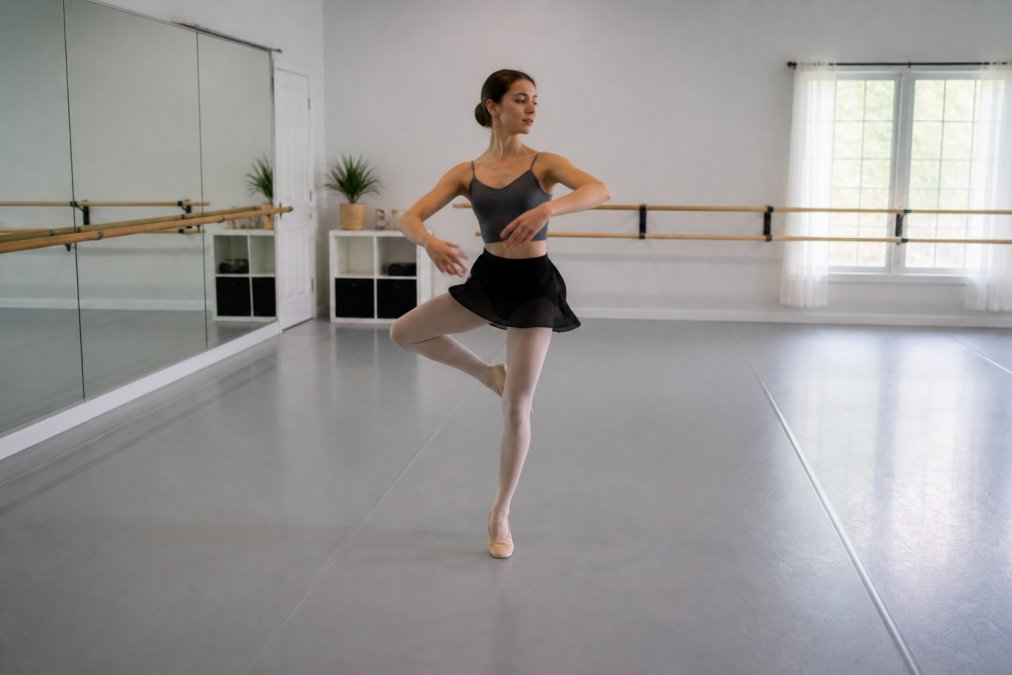
A Marley surface on a sprung subfloor combines the energy return and joint protection of the spring system with the slide and grip dancers require, distinguishing professional sprung dance floors from simple foam mats.
Glory and Power Enterprises provides Marley dance floors integrated with their two-layer Baltic birch sprung system, so the surface, spring layer, and fastening system are engineered to work together and the surface cannot shift or separate from the subfloor.
Dance Subfloor Requirements and Installation
The subfloor beneath a sprung floor system is as critical as the springs themselves. A poor subfloor leads to uneven spring performance, premature wear, and safety issues.
Subfloor Material Options
Concrete is the most common subfloor in gymnastics facilities and dance studios. It provides a solid, stable base but must be level within a quarter-inch over 10 feet, and because it wicks moisture that can damage wooden components, moisture barriers are essential.
Engineered wood subfloors suit facilities with existing wooden structures. They are lighter than concrete and easier to modify but require careful assessment for level and stability, since any flexing translates directly to inconsistent spring performance.
Some facilities use a floating subfloor: plywood or engineered flooring resting on resilient pads rather than being permanently fastened. This isolates the sprung floor from vibration and movement in the underlying structure, improving performance and durability.
Installation Complexity and Timeline
Foam mats are the simplest to install. Interlocking tiles can be laid in a few hours. Rollout mats require alignment and may need adhesive or tape to prevent shifting. Folding mats require only unfolding and positioning.
Sprung floors demand more preparation. The subfloor must be inspected, leveled if necessary, and treated for moisture protection. The spring system is then installed to specification, the wooden surface layer secured, and the final surface (Marley, paint, or carpet bonding) applied.
Glory and Power Enterprises provides guidance on installation requirements and can coordinate with contractors familiar with their system design.
Gymnastics Landing Mats: Portable vs Permanent
The decision between portable and permanent flooring depends on facility size, usage patterns, and budget.
Standalone Mat Options
Portable foam mats suit small facilities, home gyms, and martial arts studios with limited space. Folding mats cover a training area, store away, and travel if the facility relocates. Initial cost is low, and worn-out mats can be discarded and replaced without major renovation.
Permanent sprung floors suit dedicated gymnastics facilities, dance studios, and large training centers with consistent, high-intensity use. The higher upfront cost is justified by superior performance, durability, and the professional environment.
Durability and Long-Term Performance
Foam mats typically last with regular use before significant compression and degradation from UV exposure, moisture, repeated impact, and age. Replacement means buying new mats and disposing of old ones.
Sprung floors, properly installed and maintained, last 15-20 years or longer. The wooden surface may need refinishing or replacement and springs occasional adjustment, but the core system remains functional.
Choosing the Right Floor for Your Facility
The right choice depends on your specific situation. This section outlines the key decision factors.
Activity Level and Training Goals
High-intensity sports, gymnastics, cheerleading, and competitive dance, benefit most from sprung floors. The energy return and consistent performance support skill progression and reduce injury risk during advanced techniques.
Martial arts schools, yoga studios, and beginner-level programs get good results with quality foam mats; lower cost and simpler setup make foam practical for these applications.
Home training for recreational athletes often uses foam mats. A small set in a garage or basement provides adequate cushioning for basic practice without the expense and space requirements of a full sprung floor system.
Space Constraints and Budget Considerations
Foam mats work well in tight spaces. A 500-square-foot room can hold folding mats stored when not in use, or interlocking tiles that create a semi-permanent training area without major renovation.
Sprung floors require more planning: a permanent installation needs subfloor preparation, proper ventilation, and access for maintenance. Even a 1,000-square-foot training area benefits from the system, but the investment is significant.
Budget is often the primary constraint. Foam mats represent a lower entry cost, making them accessible to new facilities and those with limited capital. Sprung floors require more substantial investment but deliver performance and durability that justify the cost in high-use environments.
Maintenance Requirements and Total Cost
Foam mats require minimal maintenance. Regular cleaning with mild soap and water keeps them hygienic. Worn areas can be patched, though full replacement is often more practical than repair.
Sprung floors need more attention. The wooden surface should be cleaned regularly and springs inspected periodically for loosening or degradation.
Despite higher maintenance, sprung floors' long lifespan and consistent performance.
| Factor | Foam Mats | Sprung Floors |
|---|---|---|
| Initial Cost | Lower | Higher |
| Installation Time | Hours to days | Weeks to months |
| Performance for High-Impact Activities | Adequate for beginners | Optimal for competitive athletes |
| Energy Return | Minimal | Significant |
| Joint Protection | Good cushioning | Superior protection + energy return |
| Durability | 3-5 years typical | 15-20+ years |
| Maintenance | Minimal | Regular inspection and refinishing |
| Portability | High (especially folding mats) | Fixed installation |
| Space Flexibility | Easy to reconfigure | Permanent layout |
| Suitable for Skill Progression | Limited | Supports advanced techniques |
The choice between a sprung floor and foam mats is ultimately between investment and flexibility, performance and affordability.
Glory and Power Enterprises specializes in professional-grade sprung dance floors and specialized landing mats for competitive gymnastics, cheerleading, martial arts, and dance.
For more information on sprung floor systems and customized solutions for your facility, visit Glory and Power Enterprises flooring solutions to explore options and request a consultation tailored to your space and training goals.
Frequently Asked Questions
What is the main difference between a sprung floor and foam mats?
A sprung floor features mechanical springs beneath wooden slats that absorb impact and return energy, making it ideal for high-impact training and competitive use. Foam mats provide cushioning through compressed foam material and are generally more portable and affordable. Sprung floors offer superior resilience and durability for intensive, repetitive training, while foam mats work well for supplemental cushioning and portable setups.
Are foam mats suitable for gymnastics and dance training?
Foam mats for gymnastics can support training and skill progression, especially for beginners and intermediate athletes. However, they lack the consistent energy return and force distribution of a sprung dance floor. For higher-level competitive training and daily practice, a sprung floor system provides better joint protection and surface stability. Foam mats are best used alongside sprung floors or in supplemental training areas.
How long does a sprung floor last compared to foam mats?
Sprung floors with proper construction, such as two-layer Baltic birch with secured power springs, can last with routine maintenance. Foam mats typically have a shorter lifespan, as foam degrades under repeated impact and heavy use. The durability difference reflects the mechanical complexity and materials used, springs maintain consistent performance, while foam gradually loses cushioning properties over time.
Can I use foam mats instead of a sprung floor in a small training space?
Foam mats work in smaller spaces where budget and portability are priorities, such as home training areas or supplemental practice rooms. However, if you're running competitive training or multiple athletes practice daily, the reduced impact absorption and deflection of foam mats increases injury risk over time. A scaled sprung floor system or professional-grade foam backing may be better long-term investments even in compact facilities.