 comparison
Is Sprung Flooring Worth the Investment in 2026
Table of Contents
- What Sprung Flooring Is and How It Works
- Sprung Flooring vs Standard Flooring: Performance and Safety Differences
- Spring Floor vs Sprung Floor: What's the Difference
- Sprung Floor Installation: What to Expect
- Sprung Floor Maintenance: Ongoing Costs and Effort
- Total Cost of Ownership: Is Sprung Flooring Worth It
- Who Should Invest in Sprung Flooring and Who Should Wait
- Frequently Asked Questions
Last Updated: October 12, 2026
What Sprung Flooring Is and How It Works
Sprung flooring is a floor system engineered to absorb impact and reduce joint stress during athletic and dance activities, but whether is sprung flooring worth the investment depends on your facility's specific needs and usage patterns.
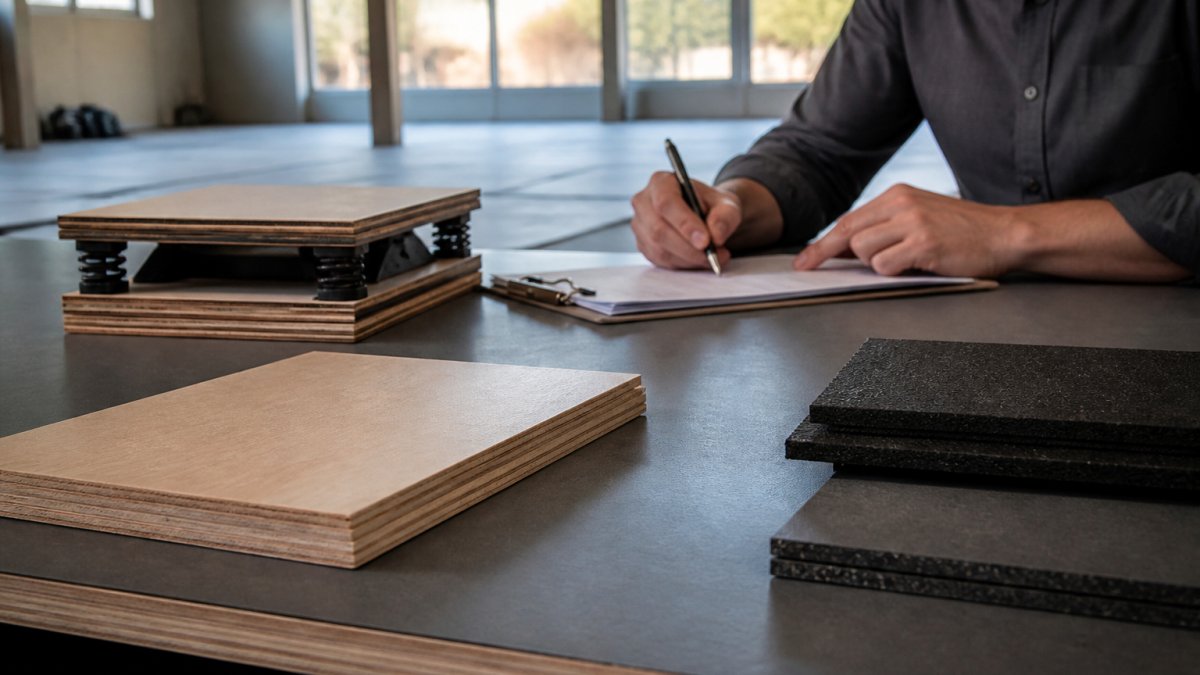
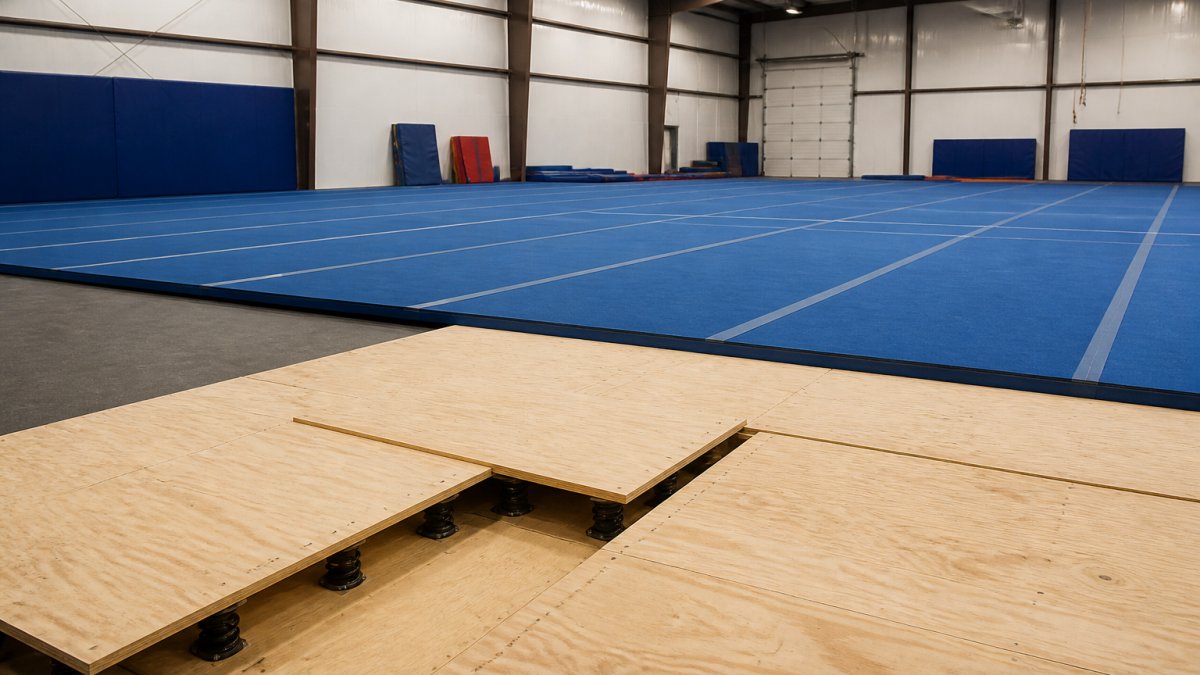
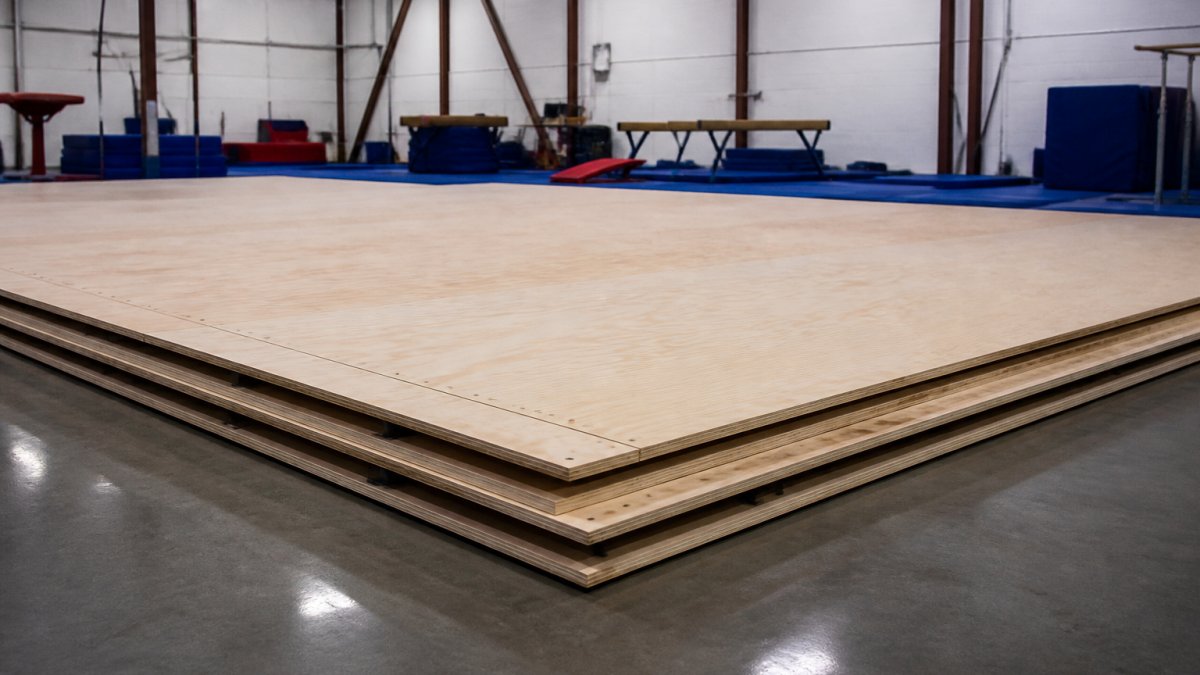
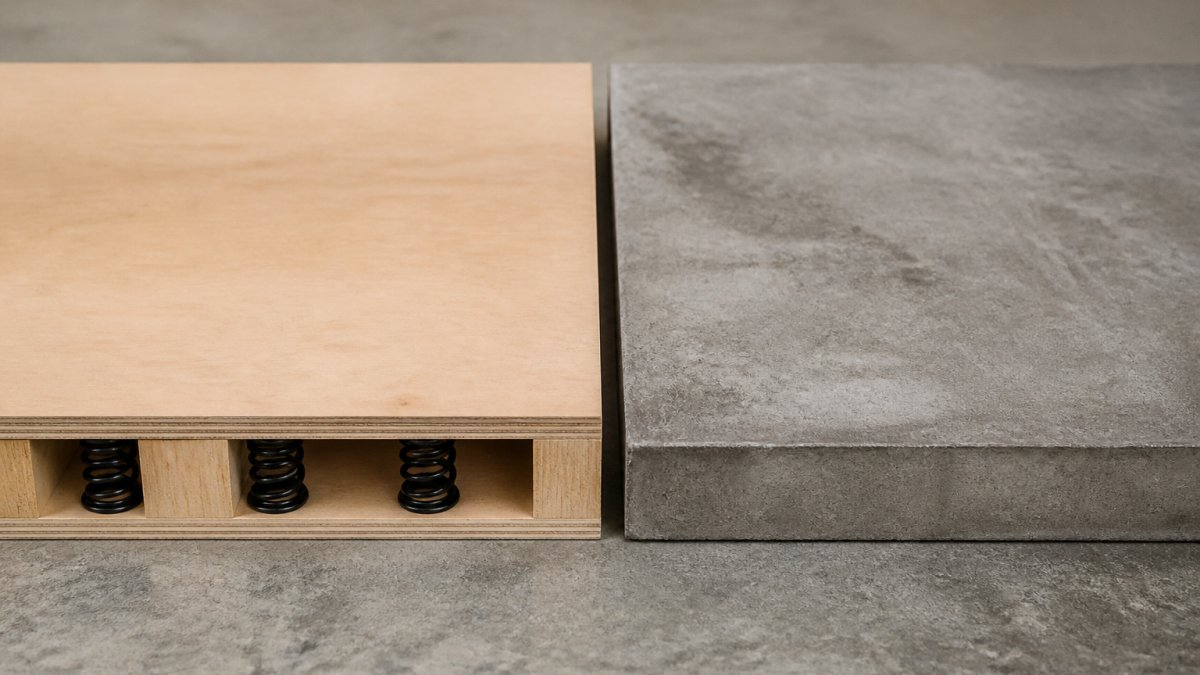
A standard installation includes a concrete or wooden base, an isolation layer, power springs or foam padding, and the finished surface. Glory and Power Enterprises manufactures two-layer Baltic birch spring floors with power springs secured by bolt and thread-locker fastening systems, built for competitive gymnastics, cheerleading, martial arts, and dance.
This layered construction reduces the shock traveling up through the legs, knees, hips, and spine during repetitive jumping, tumbling, or high-impact training, a measurable difference in both performance and injury prevention for facilities hosting serious athletes.
Sprung Flooring vs Standard Flooring: Performance and Safety Differences
Shock Absorption and Joint Protection
The core distinction is energy management. A standard concrete or basic wood floor absorbs virtually no impact, so landing force travels directly into the athlete's joints.
Repeated impact loading is cumulative: dancers, gymnasts, and martial artists land hundreds or thousands of times during training, and joint stress compounds over weeks and months.
Be clear about what sprung flooring does and doesn't do.
Durability and Lifespan
Standard flooring and sprung flooring have very different lifecycle profiles. A standard wood gym floor or concrete surface is durable and relatively inexpensive to install, but offers no shock absorption or performance advantage.
Sprung flooring systems are engineered for durability under heavy use: power springs and fastening systems withstand thousands of landings without degradation, and a well-maintained sprung floor can remain functional for 15-20 years or more, depending on usage intensity and maintenance.
Spring Floor vs Sprung Floor: What's the Difference
The terms "spring floor" and "sprung floor" are often used interchangeably, but they can refer to slightly different systems.
In practice, the distinction matters less than the specific construction: what matters is whether the system effectively absorbs impact and maintains performance over time.
When evaluating options, focus on construction details: the resilient layer type, fastening system, wearing surface, and warranty.
Sprung Floor Installation: What to Expect
Installation is where a sprung floor either delivers its rated performance or quietly fails to. Two things matter more than the sequence itself: the performance specifications the finished floor must meet, and the retrofit constraints that determine whether your space can accept a sprung system.
Performance specifications to request from suppliers
Sprung floors are evaluated against measurable criteria. Ask any supplier to state these in writing for the system they are proposing:
- Shock absorption / force reduction, the percentage of impact force the floor absorbs compared to a rigid reference surface. Higher values mean a softer, more forgiving floor.
- Vertical deformation, how far the surface deflects downward under a standardized impact. Too little and the floor feels hard; too much and it feels unstable and can impair push-off.
- Area deflection, how much the floor deflects at a point away from the impact. This governs whether a landing in one spot destabilizes an athlete standing nearby, which matters for group activities.
These criteria are the language sports-surface standards bodies use, and they are the numbers a serious buyer should compare across proposals.
Subfloor requirements and floor construction
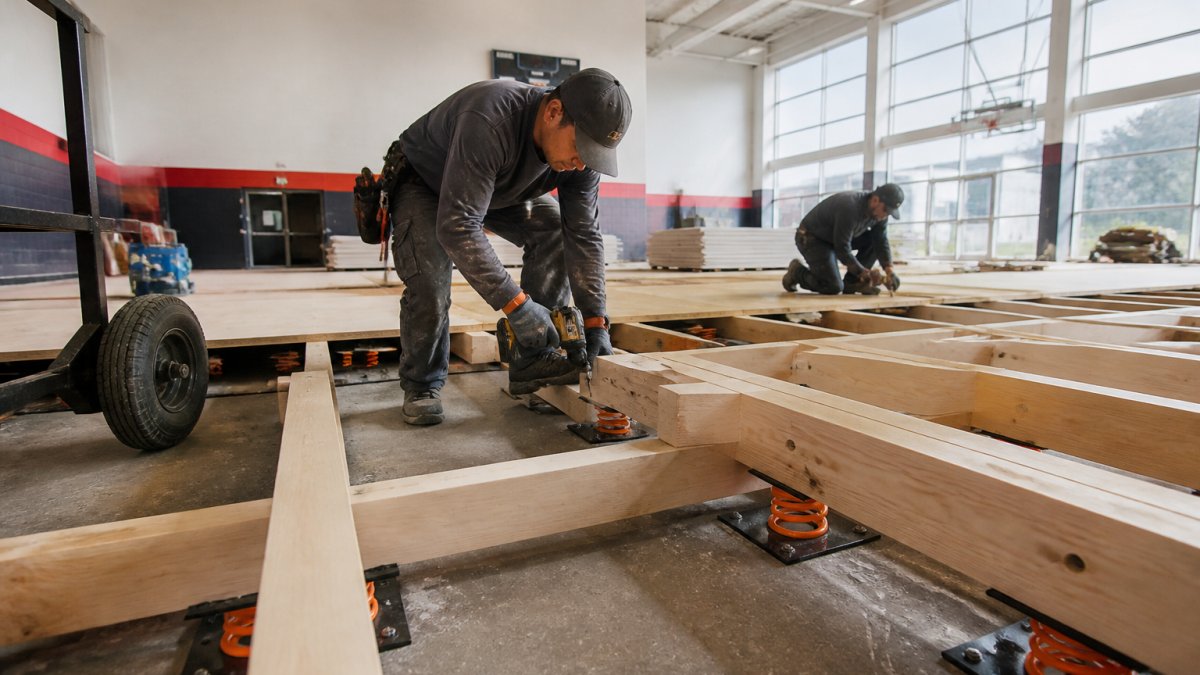
The subfloor supports the entire system. For new construction it should be concrete or engineered wood that is level, dry, and structurally sound; moisture or unevenness translates directly into inconsistent performance and premature wear above.
The construction sequence is fixed:
- Subfloor preparation and inspection, leveling, moisture testing, and structural verification.
- Isolation layer, installed to control moisture transmission and provide a consistent bearing surface.
- Resilient layer, power springs, foam, or rubber, secured to specification.
- Wearing surface, hardwood, vinyl, or a specialized dance surface, fastened on top.
Precision at each step determines whether the finished floor hits its rated shock absorption and deformation values.
Retrofit feasibility: can your existing room take a sprung floor?
This question sinks more projects than budget does. Have the space evaluated against these constraints:
- Ceiling height. A sprung system adds thickness, commonly in the range of a few inches, on top of the existing floor. Rooms with low ceilings may not have the clearance for overhead activity once the system is in.
- Subfloor condition and load capacity. The existing slab or deck must support the added dead load of the system plus the dynamic loads of activity. Structural reinforcement, if needed, adds both time and cost.
- Moisture. Slab moisture is the most common cause of premature failure in resilient layers. It must be measured and mitigated before installation.
Timeline expectations
For a new facility, installation commonly runs several weeks depending on size and layout complexity. A retrofit runs longer because it includes demolition, subfloor remediation, and transition work before the sprung system goes down.
Sprung Floor Maintenance: Ongoing Costs and Effort
Sprung flooring requires regular maintenance to perform optimally: cleaning, periodic rescreening (tightening the fasteners), and inspection of the springs or resilient layer.
Rescreening involves checking and tightening the fasteners holding the wearing surface to the subfloor, annually or more often under heavy use.
The springs or resilient underlayment should be inspected periodically for degradation.
Basic maintenance takes minimal time, perhaps 30 minutes per week for cleaning and inspection.
Total Cost of Ownership: Is Sprung Flooring Worth It
Most guides answer whether is sprung flooring worth the investment with a single per-square-foot number and stop there. That number tells you almost nothing, because purchase price is only the first of six cost events in the life of a floor. A transparent total-cost-of-ownership (TCO) comparison over a stated period is the honest way to decide whether sprung flooring is worth it.
The six cost events to model
- Purchase of the system, the resilient layer, the wearing surface, and any fastening hardware.
- Subfloor preparation, leveling, moisture mitigation, and any structural work needed before the system can be installed.
- Installation labor, higher for sprung systems because the layers must be sequenced and secured to specification.
- Routine maintenance, cleaning, inspection, and periodic rescreening of fasteners.
- Refinishing and repair, surface refinishing on a cycle, plus replacement of degraded springs or foam sections.
- Replacement, the full system at end of life.
A standard floor skips events 1 (partially), 2 (usually), and 5 (mostly), but carries a hidden cost event sprung-floor guides rarely name: athlete attrition and injury-related downtime. Treat it as a qualitative tiebreaker rather than a line item.
How to build the comparison
Pick a stated period, 10 years is a common planning horizon. For each floor option, list every cost event above with a realistic estimate for your facility size and usage, then divide the total by years and square footage to get an annual cost per square foot, the only apples-to-apples number in the decision.
What actually moves the break-even point
Three variables dominate the math:
- Usage intensity. A floor that sees 2,000 athlete-hours per year wears and refinishes on a very different schedule than one that sees 200.
- Refinish cycle. A hardwood wearing surface typically needs refinishing on a multi-year cycle depending on traffic; each refinish is a recurring cost that a rubber or vinyl surface does not carry in the same way.
- Replacement timing. A well-maintained sprung system can remain functional for 15-20 years, but the resilient layer may need partial replacement sooner. Model a mid-life repair, not just a single end-of-life replacement.
When the math favors sprung flooring
Sprung flooring tends to win the TCO comparison when usage intensity is high, the facility plans to stay in place for the full planning horizon, and the floor is a marketed part of the training experience. In those cases the annual cost per square foot can compare favorably to a standard floor.
When it does not
Sprung flooring rarely wins the TCO comparison when usage is light, the facility may relocate or close inside the planning horizon, or the space cannot accommodate the added floor thickness without costly structural work. In those cases a resilient surface over a prepared subfloor delivers most of the comfort benefit at a fraction of the lifecycle cost.
Who Should Invest in Sprung Flooring and Who Should Wait
Invest in sprung flooring if:
- Facility hosts competitive athletes (gymnastics, cheerleading, dance, martial arts) training multiple hours per week
- Current injury rates are high or athlete complaints about joint pain are common
- Facility revenue is strong enough to absorb the upfront cost or financing payments
Wait or consider alternatives if:
- Facility serves casual or recreational users with light training volume
- Budget is severely constrained and financing is not viable
- Facility may relocate or close within 5-10 years
- Current injury rates are low and athletes are satisfied with existing flooring
For facilities in the middle, moderate usage, decent budget, uncertain long-term plans, the decision requires careful analysis of your specific numbers: current injury costs, athlete retention rates, revenue per square foot, and realistic usage projections.
Glory and Power Enterprises works with facility owners to evaluate whether sprung flooring makes financial sense for their situation. The two-layer Baltic birch construction and power spring system are engineered for durability and performance, supporting competitive training environments.
Frequently Asked Questions
What is the difference between a spring floor and a sprung floor?
A spring floor uses individual springs mounted beneath flooring boards, while a sprung floor typically refers to a complete system with springs and a resilient layer designed for shock absorption. Spring floors are often modular and portable, whereas sprung flooring systems are typically permanent installations. Both reduce impact and protect joints, but sprung floors generally offer superior performance for high-impact activities like gymnastics, cheerleading, and competitive dance.
How does sprung flooring help absorb impact and protect joints?
Sprung flooring reduces the force transferred to your body during high-impact movements by distributing energy through a multi-layer system. The springs compress when you land, slowing the deceleration of your body and reducing stress on ankles, knees, hips, and the spine. This shock absorption significantly decreases fatigue during long training sessions and lowers the risk of repetitive-strain injuries common in gymnastics, dance, and martial arts.
What activities benefit most from a sprung floor?
Sprung flooring is ideal for gymnastics, cheerleading, competitive dance, martial arts, and high-intensity fitness training. Any activity involving jumping, tumbling, rapid direction changes, or sustained high-impact movements benefits from the injury-prevention and performance-enhancement properties of sprung flooring. Athletic facilities, dance studios, and training gyms see the greatest return on investment when their primary activities involve these types of movements.
How much maintenance does a sprung dance floor require?
Sprung floor maintenance includes regular cleaning with approved products, periodic rescreening of the surface layer, and inspection of fastening systems and springs. Most facilities perform routine cleaning weekly and schedule deeper maintenance annually. The specific upkeep depends on usage intensity and the flooring material (Marley, wood, or carpet-bonded foam). Professional guidance from your flooring manufacturer ensures your system maintains performance and durability over its lifespan.
The decision to invest in sprung flooring hinges on one core question: Does your facility's usage intensity and revenue model justify the upfront cost and ongoing maintenance? For competitive athletic facilities, the answer is often yes. For casual recreational spaces, it's often no. The right choice depends on your athletes, your budget, and your long-term vision for the facility. Glory and Power Enterprises provides the equipment and expertise to help you make that decision with confidence.