 how-to
How to Maintain Sprung Flooring: A Complete Guide
Table of Contents
- Understanding Your Sprung Flooring System
- Daily and Weekly Sprung Floor Cleaning Schedule
- Deep Cleaning and Degreasing Sprung Floors
- Best Floor Cleaners for Dance Studios and Gyms
- How to Inspect Sprung Floor Springs and Detect Wear
- Humidity Control and Environmental Maintenance
- Spill Management, Stain Removal, and Protective Coverings
- Repair and Refinishing Techniques for Long-Term Durability
- Frequently Asked Questions
Last Updated: September 28, 2026
Understanding Your Sprung Flooring System
To maintain sprung flooring, you need to understand that a sprung flooring system is a multi-layer construction designed to absorb impact while providing athletes with responsive support during training and competition. The core of a quality sprung floor includes power springs secured beneath a wooden playing surface, typically made from two-layer Baltic birch. This engineered design reduces stress on joints and muscles during high-impact activities like gymnastics, cheerleading, dance, and martial arts.
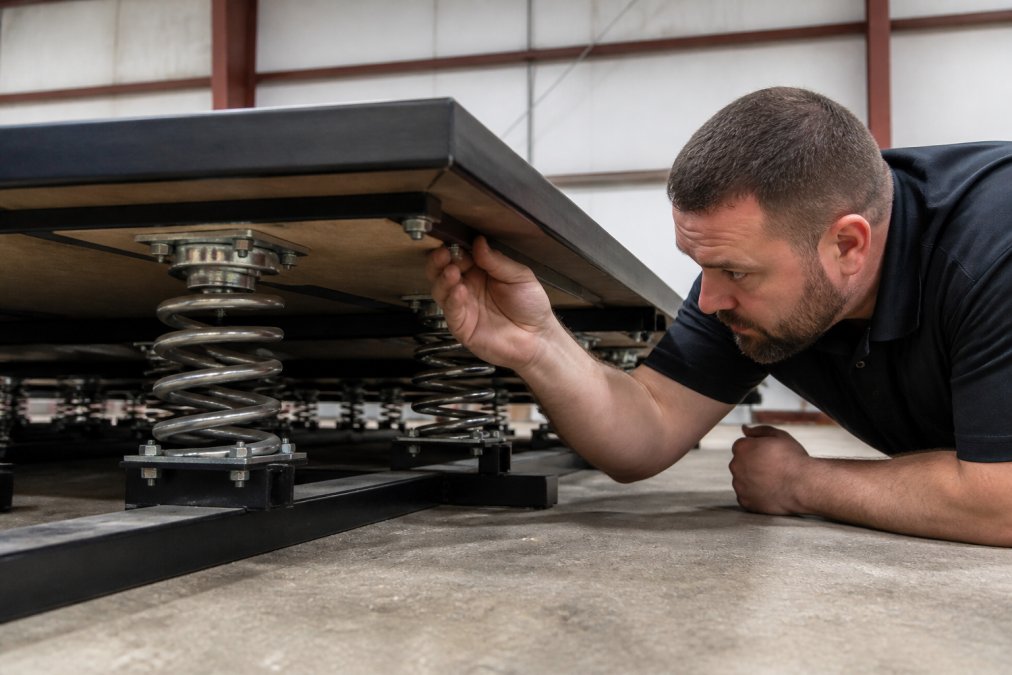
The basic anatomy matters. Beneath the visible wood surface sits a subfloor layer. Below that are the power springs, the critical component that gives sprung flooring its shock-absorbing properties. These springs are secured with bolt and thread-locker fastening systems to ensure they stay in place through years of intense training. When maintained properly, a sprung floor can support competitive athletes reliably for well over a decade.
Understanding this structure is essential before diving into maintenance. Each layer plays a role in the floor's performance and longevity. The wood surface can develop damage if exposed to excessive moisture. Proper maintenance addresses all components systematically.
Daily and Weekly Sprung Floor Cleaning Schedule
Daily Cleaning Routines
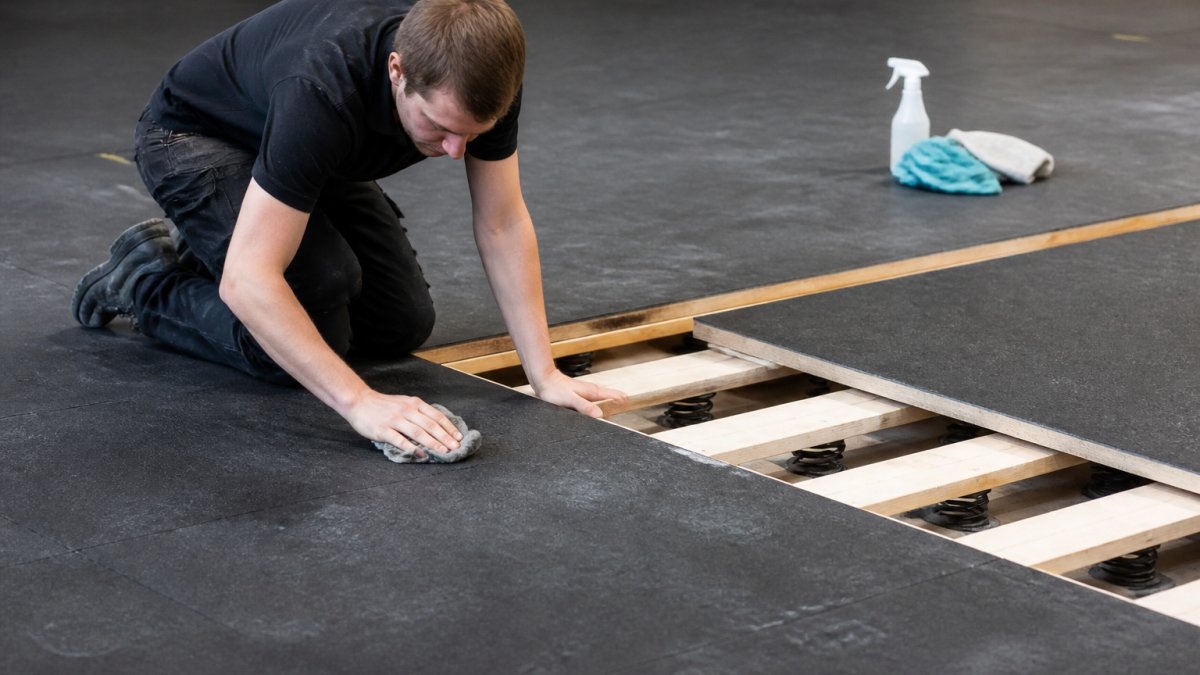
Start each day with dry mopping using a microfiber dust mop. This removes loose debris, sweat residue, dust, hair, and chalk, that accumulates overnight. Dry mopping prevents dirt from being ground into the wood grain.
After dry mopping, inspect the floor visually for spills or stains that need immediate attention. Fresh spills are far easier to clean than dried ones. Wipe any wet spots with a lint-free cloth to prevent moisture from seeping into the wood or subfloor.
For gyms and studios with heavy daily use, a second light dry mop mid-day keeps the surface clean and reduces slip hazards. This is especially important in spaces where athletes train multiple times per day.
Weekly Maintenance Tasks
Once per week, perform a deeper clean using a wet mop with a pH neutral cleaner specifically formulated for wood floors. The key word here is pH neutral.
Apply the cleaner diluted according to the product instructions. The goal is a barely damp mop, not a soaking wet one. Excess water is the enemy of sprung flooring. Moisture can seep through the wood surface and into the subfloor.
Weekly maintenance also includes checking all visible fasteners and hardware. Look for any bolts that appear loose or any areas where the wood is separating from the subfloor. Tighten fasteners as needed using the appropriate tools.
| Cleaning Task | Frequency | Time Required | Tools Needed |
|---|---|---|---|
| Dry mopping | Daily | 5-10 minutes | Microfiber dust mop |
| Spot cleaning spills | As needed | 2-5 minutes | Lint-free cloth, pH neutral cleaner |
| Wet mopping | Weekly | 15-20 minutes | Mop, bucket, pH neutral cleaner |
| Fastener inspection | Weekly | 10 minutes | Wrench, thread-locker compound |
| Deep degreasing | Monthly | 30-45 minutes | Floor degreaser, soft brush, mop |
Deep Cleaning and Degreasing Sprung Floors
Monthly deep cleaning removes buildup that daily and weekly cleaning miss. Over time, sweat, oils, and residue accumulate on the wood surface, creating a dull appearance.
Use a floor degreaser formulated for wood floors, not a general-purpose cleaner. Apply it to a small section at a time. Allow it to sit for the time specified on the product label, typically two to five minutes. Use a soft brush to gently scrub the surface, then mop thoroughly with clean water to remove all residue.
The critical step is the final rinse. Mop with plain water at least twice after applying degreaser to ensure complete removal.
Best Floor Cleaners for Dance Studios and Gyms
Selecting the right cleaning products is non-negotiable for sprung floor longevity. The wrong cleaner can strip the finish, leave residue, or damage the wood structure itself.
pH neutral cleaners are the foundation of any sprung floor maintenance routine. These products are formulated to clean effectively without altering the chemical balance of the wood or its protective coating.
A quality floor degreaser designed for wood is essential for monthly deep cleaning. Look for degreasers that are specifically labeled safe for finished wood surfaces.
Avoid these products entirely:
- Vinegar or vinegar-based cleaners (too acidic)
- Bleach or bleach-containing products (too alkaline and corrosive)
- Oil-based polishes or waxes
- General-purpose bathroom or kitchen cleaners (formulated for tile and granite, not wood)
- Steam cleaners
At Glory and Power Enterprises, we recommend testing any new cleaning product on a small, inconspicuous area first. Allow the test area to dry completely before assessing the results.
How to Inspect Sprung Floor Springs and Detect Wear
Visual Spring Inspection Checklist
Inspecting the power springs and fastening system regularly catches problems before they affect athletic performance. This inspection requires accessing the underside of the floor, which is typically possible only when the floor is not in use.
Begin by visually examining all visible springs and fasteners. Look for these warning signs:
- Rust or corrosion on the metal springs or bolts
- Loose or missing bolts
- Cracks or splintering in the wooden frame supporting the springs
- Separation between the subfloor and the frame
- Springs that appear bent or deformed
- Thread-locker compound that has deteriorated or cracked
Document your findings in a maintenance log. Note the date, any issues found, and corrective actions taken. This record becomes invaluable for tracking patterns and planning major maintenance or replacement.
Testing for Spring Fatigue and Performance Loss
Beyond visual inspection, test the actual responsiveness of the springs. A properly functioning sprung floor provides noticeable bounce and cushioning during athletic movement.
Perform a simple bounce test by jumping on different areas of the floor. Compare the feel to how the floor performed when new, if possible. A floor with fatigued springs will feel flatter and less responsive.
If you notice performance loss, consult with the floor manufacturer about spring replacement options. Understanding your specific floor's design determines the best path forward.
Humidity Control and Environmental Maintenance
Wood responds to humidity changes. High humidity causes wood to absorb moisture and expand. Low humidity causes it to dry out and contract. These dimensional changes stress the fastening system.
Maintain indoor humidity levels between 40% and 60% year-round. Install a hygrometer in your training space to monitor humidity regularly. In humid climates or seasons, use dehumidifiers. In dry climates or seasons, use humidifiers.
Proper ventilation supports humidity control. Ensure adequate air circulation throughout the facility. Poor ventilation traps moisture in the space.
Temperature stability also matters. Avoid exposing the floor to direct sunlight. Keep the training space at a consistent temperature. Large temperature swings stress the fastening system.
Spill Management, Stain Removal, and Protective Coverings
Spills happen in training environments.
Blot spills immediately with a clean, lint-free cloth. Do not let liquid sit on the surface. For water-based spills like sweat or water, blot thoroughly and allow the area to air dry completely. For oil-based spills, use a slightly damp cloth with a pH neutral cleaner to remove the residue.
For stubborn stains that resist basic cleaning, apply a small amount of floor degreaser directly to the stain. Let it sit for a few minutes, then gently scrub with a soft cloth. Rinse thoroughly with plain water and dry completely.
Protective coverings prevent damage in high-traffic or high-risk areas. Rubber-backed mats placed at entrances reduce dirt and moisture tracked onto the floor. Mats should be removed daily to allow the floor underneath to breathe.
In areas where equipment is frequently moved or heavy objects are used, temporary protective coverings provide additional insurance.
Repair and Refinishing Techniques for Long-Term Durability
Minor damage like small dents or light scratches can often be repaired without refinishing the entire floor.
When you maintain sprung flooring, maintaining the subfloor is equally important as maintaining the visible wood surface.
Frequently Asked Questions
How often should you deep clean a sprung dance floor?
Deep clean your sprung floor every 4-6 weeks, depending on usage intensity. Facilities with heavy daily traffic may need monthly deep cleaning, while lower-traffic studios can extend this to 6-8 weeks. Deep cleaning removes built-up residue and degreaser film that daily mopping misses, maintaining the floor's ball-bounce and surface integrity. Always use a pH-neutral cleaner and allow proper curing time before resuming activity.
What cleaning products are safe for sprung floors with Baltic birch construction?
Use only pH-neutral cleaners specifically formulated for wood gym floors. Avoid abrasive cleaners, bleach, and oil-based products that damage the finish and penetrate the Baltic birch layers. Test any new cleaner on a small, inconspicuous area first. Dilute concentrated cleaners according to manufacturer instructions. The best floor cleaners for dance studios are those labeled for wood sports surfaces, these protect the subfloor and maintain the floor's performance characteristics without compromising the bolt and thread-locker fastening systems.
How does humidity affect the maintenance of sprung flooring?
Humidity levels between 30-50% are ideal for sprung floors. High humidity (above 60%) causes the Baltic birch to swell, stressing the power springs and fasteners. Low humidity (below 25%) causes wood to shrink. Monitor humidity with a hygrometer and adjust ventilation or dehumidifiers as needed. Seasonal humidity changes require adjustments to your maintenance routine.
What are the signs that a sprung floor needs professional repair?
Watch for reduced ball-bounce, creaking or movement in specific boards, soft or spongy spots, and visible damage to the hook and loop fasteners. If multiple power springs show corrosion or the subfloor flatness has changed, professional repair is necessary. Document findings in a maintenance log and contact a specialist when you notice any of these warning signs.