 How-to
How to Choose the Safest Cheer Landing Mat Thickness
Last Updated: November 14, 2026
Quick Summary
The safest landing mat thickness depends on the skill, the fall height and the athlete's experience, not on one universal number. Progression tumbling commonly uses a mat of about 6 inches, while dismounts from a tumble track are often matched to a dismount mat of about 18 inches. Foam density should be checked alongside thickness.
- Match the mat to the most demanding landing the athlete performs on that surface.
- Use about 6 inches of landing mat for back-tumbling progression work.
- Use about 18 inches for dismount mats on tumble track dismounts.
- Check foam density alongside thickness, since both affect impact protection.
- Inspect mats before every practice for flattening, tears and gaps.
Table of Contents
- Why Landing Mat Thickness Matters for Cheer Safety
- How Mat Thickness Affects Impact Absorption
- Cheer Mat Thickness by Skill Level and Landing Type
- Choosing the Best Tumbling Mat for Cheerleading
- Crash Mat Thickness and Foam Density Explained
- Landing Mat Safety Checks Before Every Practice
- Choosing Your Mat for the Next Practice Session
- Frequently Asked Questions
Why Landing Mat Thickness Matters for Cheer Safety
Landing mat thickness is one of the first decisions a cheer gym or home training space has to make, and it directly affects how much force reaches an athlete's ankles, knees, hips and spine on every fall. Glory and Power Enterprises builds competition spring floors and specialized landing mats for cheerleading, gymnastics and dance, so this is a question the company hears often from coaches and facility owners. The short answer is that the safest thickness depends on the skill being landed, the height of the fall and the athlete's experience, not on a single universal number.
Thicker foam spreads impact over a longer stopping distance, which generally lowers peak force on the body. Because most cheer injuries happen during stunts, tumbling and dismounts, the mat under those skills deserves as much attention as the floor under the rest of the gym.
Many coaches start by asking one question: what is the worst realistic landing this athlete will make on this surface? Answering that honestly sets a sensible minimum before any product comparison begins.
How Mat Thickness Affects Impact Absorption
Impact absorption depends on how far a surface compresses during a landing and how firmly it pushes back. A thicker mat gives the body more distance to decelerate, which reduces the peak force felt in the joints. Foam density also matters, because a denser foam resists compression and may bottom out sooner under a heavy drop.
This is why thickness alone does not tell the whole story. A thick mat made from low-density foam can compress too far and feel unstable, while a thinner high-density mat may return a harder jolt. Buyers should look at the thickness and the foam specification together, and ask the supplier how the mat performs under repeated landings from the height their athletes actually use.
Cheer Mat Thickness by Skill Level and Landing Type
A clearer approach is to separate the surfaces a cheer program uses, because a competition floor specification and a supplemental landing mat serve different jobs and should not be compared as if one number fits both.
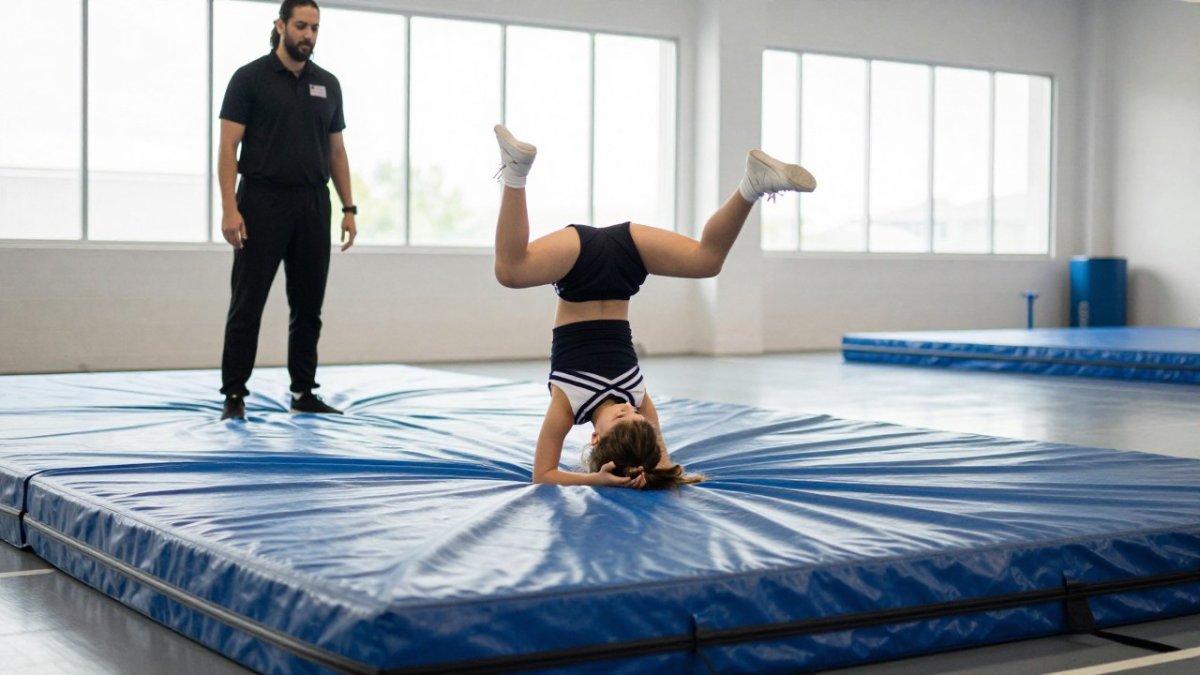
A useful way to frame the decision is by landing type rather than by skill name alone:
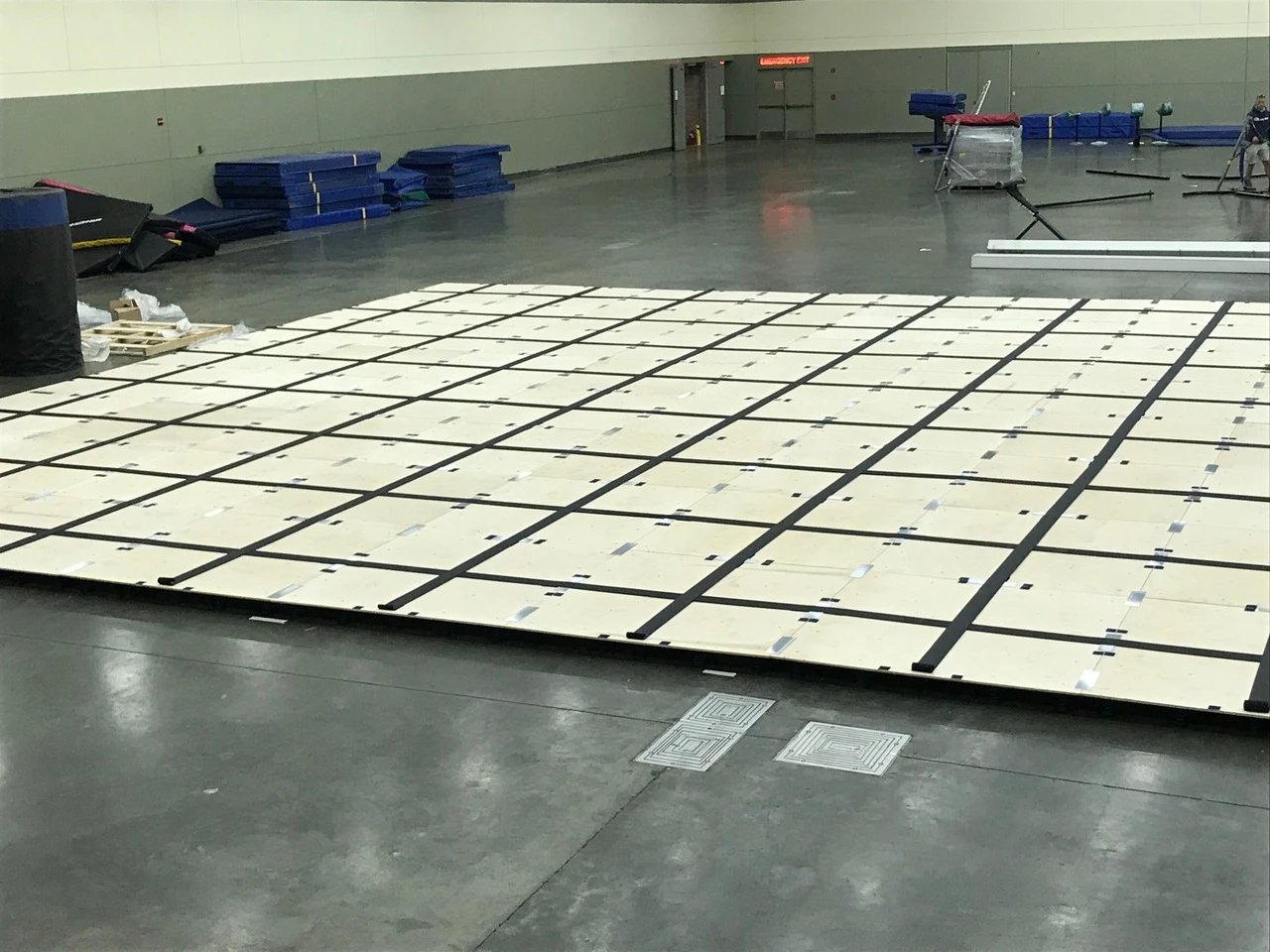
- Routine tumbling on a competition surface. The competition floor is built to a specification, not chosen for maximum cushioning. Treat the floor specification as a minimum for competition work, not as a recommendation for learning new skills or for high-fall repetitions in practice.
- Beginner practice (rolls, cartwheels, low tumbling). A standard cheer mat over a firm, level floor is usually adequate. The priority is a stable, gap-free surface rather than extra thickness.
- Progression tumbling (back handsprings, layouts, twisting). A supplemental landing mat placed at the practice spot gives more stopping distance than the standard floor. This is where a mat in the range of about 6 inches is commonly used for back-tumbling progressions.
- Dismounts from stunt height or a tumble track. These produce the highest landing forces in most programs, and the athlete has less control over the landing angle. A dedicated dismount mat of roughly 18 inches is a common choice so the landing surface sits at a safe depth relative to the surrounding floor.
- Stunt and pyramid work. The mat under a stunt group should cover the realistic fall zone, not just the footprint of the stunt. Thickness helps, but coverage and a stable base matter just as much, because a fall that lands partly off the mat is the bigger risk.
Landing type matters as much as skill level. A controlled, feet-first landing is different from a dismount where the body lands on the back or hips after rotation. Coaches should match the mat to the most demanding landing the athlete performs on that surface, not to the easiest one.
Watch out: a mat that is thick enough but too small for the fall zone gives a false sense of protection, so size the mat to the skill's realistic landing area before choosing a thickness.
Standard Cheer Mats Versus Landing and Crash Mats
Standard cheer mats are designed for general floor work, stretching and low-level tumbling, and they are a practical base for most gyms. Landing and crash mats are thicker, sit on top of or beside the standard floor, and are meant for skills where a fall is more likely to be hard. Using a crash mat for everyday practice is usually unnecessary, while relying only on a standard mat for high-impact skills leaves a real gap.
The two types serve different purposes, so a well-planned gym often uses both: a standard mat across the floor and landing mats placed at the spots where the riskiest skills are practiced. Learn more about how these options compare in the EzFlex Alternatives for Cheer Gyms: 2026 Comparison article.
Mat Thickness for Tumbling and Dismounts
Tumbling and dismounts produce the highest landing forces in most cheer programs.
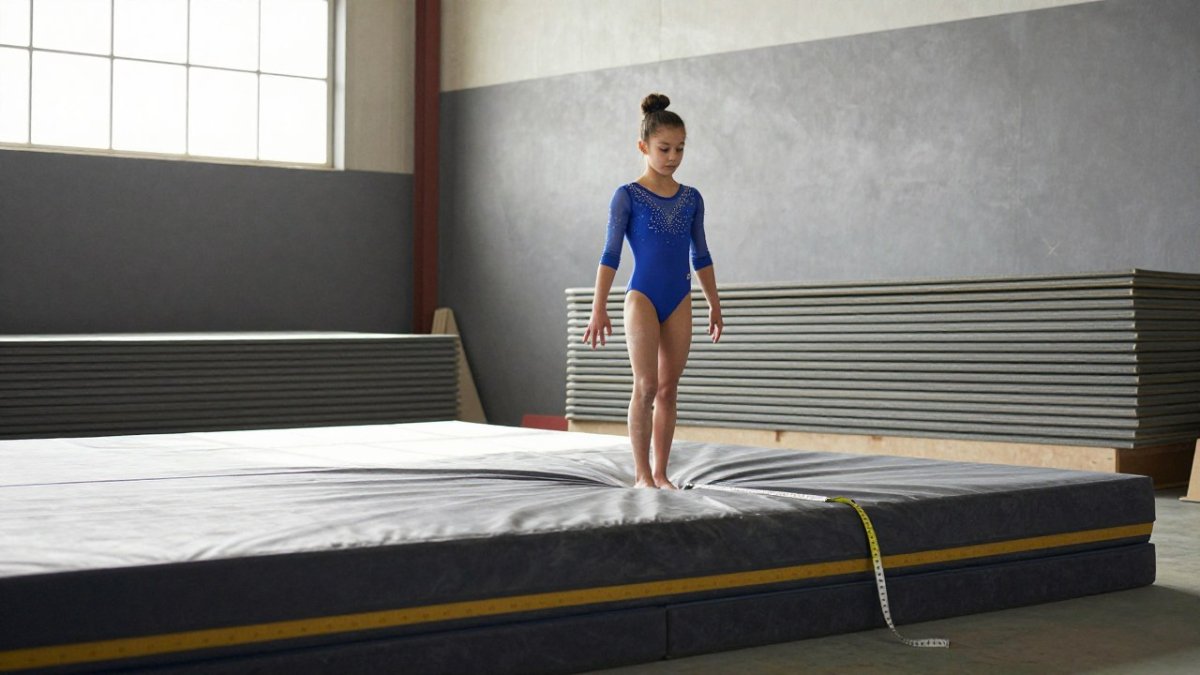
Coaches training back tumbling often use a practice landing mat of about 6 inches for progression work. For dismounts from a tumble track, a dismount mat of about 18 inches is commonly used so the landing surface sits at a safe depth. The 4' x 6' x 6" Landing Mat and the 7 foot x 14 foot x 18 Inch Dismount Mat for Tumble Track are examples of thicknesses that match these uses. Always confirm the exact specification with the manufacturer before ordering.
The right thickness depends on the landing type, so the article matches each situation to a mat.
| Landing type | Suggested mat | Key note |
|---|---|---|
| Routine tumbling on competition surface | Competition floor specification | Treat as a minimum, not for learning new skills |
| Beginner practice (rolls, cartwheels) | Standard cheer mat over firm floor | Priority is a stable, gap-free surface |
| Progression tumbling (back handsprings, layouts) | Landing mat of about 6 inches | Gives more stopping distance than standard floor |
| Dismounts from tumble track | Dismount mat of about 18 inches | Highest landing forces in most programs |
| Stunt and pyramid work | Mat covering the realistic fall zone | Coverage matters as much as thickness |
Choosing the Best Tumbling Mat for Cheerleading
Choosing the best tumbling mat starts with where it will be used. A family training at home may need a lighter, folding panel mat that is easy to store.
Glory and Power Enterprises offers a 6' x 12' x 20 CM Competition Landing Mat built to competition standards, and a 4' x 6' Panel Cheer and Gymnastics Tumbling Mat for home use. Buyers should compare dimensions, thickness, foam density, folding design and how the mat fits the floor they already have. Pricing depends on quantity, dimensions and delivery location, so request a current quote from Glory and Power Enterprises rather than relying on an estimate.
Ask the supplier for the foam density and the recommended use for each mat. A mat that suits one skill level may not suit another, and a clear answer to these questions prevents a poor match.
Crash Mat Thickness and Foam Density Explained
Thickness alone does not describe impact protection. Two mats can both measure 6 inches and behave very differently, because thickness sets how far the body can travel before stopping while foam density controls how firmly the foam pushes back. Reading the two together is what tells you whether a mat will actually protect the landing you have in mind.
A simple way to think about the interaction:
- Thick and low-density. More stopping distance and a softer feel, but the foam can compress too far under a heavy or fast landing and feel unstable. This suits beginners and low-height progressions where a soft landing builds confidence.
- Thick and high-density. More stopping distance plus a firmer push-back. This is the usual pattern for crash and dismount mats built for high-fall skills, where the goal is to absorb a large impact without the mat bottoming out.
- Thin and high-density. A firm, consistent surface with little margin. This suits general floor work and low-level tumbling but offers little protection when an athlete lands a skill they have not mastered.
- Thin and low-density. The least protective combination for high-impact work, because there is little distance and little resistance. It is generally limited to light floor work.
When comparing options, look at the thickness and density together, and ask for the foam specification in writing.
Landing Mat Safety Checks Before Every Practice
A mat that was safe last season may not be safe today. Foam compresses, seams separate and covers wear through with use. Before every practice, staff should walk the mats and check for these issues:
- Flattened or compressed areas that no longer rebound
- Torn covers, exposed foam or split seams
- Loose or shifted sections that could slide during a landing
- Gaps between adjacent mats where a foot or ankle could catch
- Debris, moisture or slick spots on the surface
Replace any mat that shows permanent compression, deep tears or unstable sections. Keep a simple log of inspection dates so coaches can see when a mat was last checked.
Choosing Your Mat for the Next Practice Session
Start with the skills your athletes perform most often and the highest landing they practice. Match a standard cheer mat to basic floor work, and reserve thicker landing or crash mats for tumbling, dismounts and any skill where a hard fall is realistic. Check the foam density alongside the thickness, and confirm that the mats are in good condition before each session.
Age, body size, skill progression and supervision also shape the decision. Younger or smaller athletes may need extra cushioning during early progressions, and every new skill should be introduced on a surface that matches its difficulty. A qualified coach should make the final call on any high-impact skill.
For specific product questions, contact Glory and Power Enterprises through its website to discuss sizes, thicknesses and current pricing.
Frequently Asked Questions
How thick should cheer mats be?
There is no single correct thickness for every cheer mat. Thin floor mats used for stunts and basic practice are generally a few inches thick, while tumbling and dismount landing surfaces need more cushioning. The right thickness depends on the skill being performed, the height of the landing, the athlete's size and experience, and whether the surface sits on a firm floor or a spring floor. Match the mat to the most demanding skill in your routine, and have a qualified coach confirm the choice for your athletes.
How thick should a landing mat be?
A landing mat should be thick enough to absorb the impact of the highest skill it will catch. Thicker high-density foam reduces the force transmitted to the joints, but thickness alone does not guarantee safety. Consider foam density, the mat's construction, its firmness and whether it is secured to the floor. Athletes learning new skills should land on thicker surfaces, and any mat that bottoms out, compresses unevenly or shifts during use should be replaced or taken out of service.
What is the recommended thickness for a crash mat?
Crash mats used for high-impact skills are typically much thicker than standard cheer floor mats, and many are built with dense foam layers and reinforced covers. Because specifications vary by manufacturer, compare the stated thickness, foam density and construction, then confirm the choice against the skills your athletes perform and your facility's supervision rules. Coaches should never assume a crash mat is safe for a skill simply because it is labeled as one.
Does a thicker cheerleading mat always provide a safer landing?
Not always. A mat that is too soft can let an athlete sink and roll an ankle, and an overly thick or unstable surface can make it harder to control a landing. Safe performance depends on the match between mat thickness, foam density, firmness, surface stability and the athlete's skill. Choose the mat that supports the specific skill and keep the surface properly secured and inspected.