 comparison
EzFlex Alternatives for Cheer Gyms: 2026 Comparison
Table of Contents
- Why Gym Owners Look Beyond EzFlex
- Spring Floors vs. Foam Mats: Understanding the Difference
- Top EzFlex Alternatives for Cheer Gyms
- Dollamur vs. EzFlex Mats: What Gym Owners Should Know
- Cheer Gym Flooring Installation and Setup Requirements
- Cheer Gym Equipment Requirements and Safety Standards
- Durability, Maintenance, and Long-Term Value
- Making Your Decision: Which Alternative Fits Your Gym
- Frequently Asked Questions
Last Updated: September 30, 2026
Why Gym Owners Look Beyond EzFlex
Gym owners often reach a point where their current flooring no longer meets their facility's demands. The search for ezflex alternatives cheer gyms typically begins when facility managers realize that one-size-fits-all solutions don't deliver the specialized performance competitive athletes require.
Different training environments demand different surfaces. A foam mat that works for recreational classes may fail under the impact demands of competitive tumbling, while spring floors engineered for elite athletes perform differently than budget roll-out options.
According to the American Academy of Pediatrics guidance on youth sports safety, proper surface selection directly impacts injury prevention in high-impact athletic disciplines. This makes flooring choice a legitimate operational decision, not just a budget line item.
Spring Floors vs. Foam Mats: Understanding the Difference
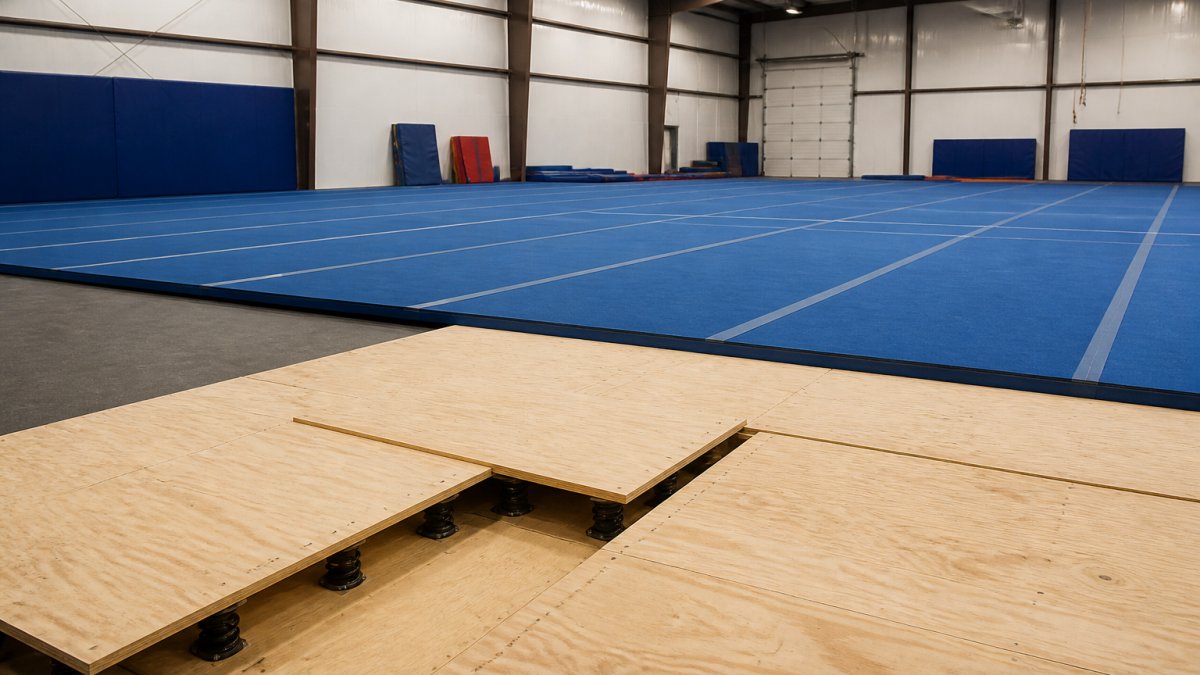
Spring floors use power springs beneath a rigid base layer for rebound and shock absorption. Foam mats rely on cross-linked polyethylene or carpet-bonded foam to absorb impact through material density.
Spring floors maintain consistent impact attenuation because the mechanical spring system doesn't compress. Foam mats typically start with good attenuation but degrade after years of daily competitive use. Athletes feel this difference, and injury risk can increase as shock absorption declines.
Spring floors return a high percentage of energy during takeoff, while foam mats return less, which can drop further as compression occurs. For explosive skills, this energy loss can reduce performance and increase landing impact.
Competition-grade spring floors are designed for long-term durability, while foam systems can develop wear over time with competitive training. Once carpet bonding tears, foam degradation can accelerate.
Spring floors require professional setup, while foam mats roll out in hours. Foam systems may require more frequent repositioning and replacement in competitive facilities compared to spring floors, which require only periodic maintenance.
For facilities running daily high-impact training, spring floors preserve athlete safety and performance longer because the mechanical system doesn't degrade, while foam mats require replacement cycles as the foam compresses.
Top EzFlex Alternatives for Cheer Gyms
Glory and Power Enterprises Two-Layer Baltic Birch Spring Floors
Glory and Power Enterprises manufactures competition-grade spring floors with two-layer Baltic birch construction combining a rigid base with integrated power springs secured using bolt and thread-locker fastening systems.
The system includes hook and loop fasteners for equipment placement and configuration adjustments. Customizable shipping and financing options support implementation for facilities of various sizes.
Best for: Permanent facility installations where competitive training is the primary use case. Ideal for gyms committed to long-term athlete development and willing to invest in professional installation.
Pros:
- Two-layer construction engineered for competitive impact loads
- Power springs provide consistent rebound across the floor's lifespan
- Secure fastening system resists loosening under repeated use
- Financing options available for capital planning
- Customizable shipping reduces logistics complexity
Cons:
- Requires professional installation
- Higher upfront investment than foam alternatives
- Lead times typically extend 17-25 working days
Greatmats Carpet-Bonded Foam Rolls
Best for: Budget-conscious facilities, smaller practice spaces, or gyms needing supplemental flooring alongside a primary spring floor system.
Pros:
- Quick deployment without installation
- Multiple density options for different training zones
- Interlocking configurations enable custom layouts
- Lower upfront cost than spring systems
- Direct online ordering
Cons:
- Shock absorption degrades with use over years
- Shipping costs significant for large orders
- Not ideal for elite competitive training requiring consistent rebound
American Athletic, Inc. Competition-Grade Systems
Best for: Large-scale athletic facilities, schools, or gyms prioritizing brand reputation and integrated equipment systems.
Pros:
- Competition-tested safety standards
- Extensive warranty and support network
- Integrated equipment systems for coordinated facility design
- Strong reputation for equipment longevity
- Comprehensive facility planning support
Cons:
- Premium pricing reflects high-end standards
- Longer lead times for custom configurations
- May exceed requirements for smaller programs
Dollamur vs. EzFlex Mats: What Gym Owners Should Know
Some carpet-bonded foam systems serve the recreational and intermediate training market. These systems experience foam compression over time, which is inherent to the material category. Gym owners often discover that the real differentiator isn't the initial purchase decision but the facility's willingness to reinvest in flooring replacements as foam performance declines.
For facilities seeking alternatives to both brands, spring floor systems like those from Glory and Power Enterprises offer a different value proposition: higher upfront cost but superior durability and consistent performance across a decade or more of use.
Cheer Gym Flooring Installation and Setup Requirements
Professional installation separates spring floor systems from roll-out foam alternatives. Spring floors require secure fastening to prevent movement during high-impact training. The installation process involves:
- Preparing a level subfloor foundation (concrete or wood, typically requires 1-2 days of prep)
- Installing power spring systems according to engineering specifications
- Securing the rigid base layer with bolts and fasteners (critical for safety, loose fasteners cause surface movement that increases injury risk)
- Applying hook and loop fastener strips for equipment configuration
- Testing floor stability and rebound consistency before athlete use
Installation typically requires 2-5 days depending on floor size and subfloor condition. Gym owners must plan facility downtime or phase installation across training areas. Professional installation ensures the floor meets safety and performance specifications; DIY approaches risk compromising the system's structural integrity and voiding warranties.
Foam mat systems deploy differently. Unrolling and positioning takes 4-8 hours for a standard competition floor. Interlocking configurations lock into place mechanically without fastening. This simplicity makes foam systems suitable for temporary or reconfigurable training spaces.
The hidden cost: Long-term ownership and replacement cycles
Installation is only the beginning of the cost picture. Gym owners evaluating flooring alternatives typically focus on upfront purchase and installation costs, but the real financial decision emerges over 10-15 years of operation.
Spring floor systems incur predictable maintenance costs, such as periodic spring tension checks and fastener replacement. These costs are manageable and spread across years. A spring floor installed for competitive training typically requires no full replacement for a decade or more.
Foam systems incur different costs. The initial deployment is faster and can be cheaper, but foam compression is inevitable. After years of daily competitive training, foam performance declines noticeably. At that point, replacement becomes necessary rather than optional. A facility running competitive programs may need to budget for complete foam replacement every few years. This means a foam system purchased in year 1 requires replacement by year 6-7, and again by year 12-14.
Over a long facility lifecycle, spring floors can deliver lower total cost of ownership despite higher upfront investment. For permanent competitive facilities, this long-term value often justifies the professional installation and higher initial expense.
Facility managers evaluating long-term value should calculate replacement cycles and maintenance costs, not just initial purchase price.
Cheer Gym Equipment Requirements and Safety Standards
Competitive cheer training demands flooring that meets specific safety criteria. Impact attenuation, the surface's ability to absorb force from landings, is measurable and critical. Surfaces must maintain consistent shock absorption across the entire training area.
Durability, Maintenance, and Long-Term Value
Spring floor systems require periodic maintenance to preserve performance. The power springs may need periodic tension adjustment. Hook and loop fasteners eventually require replacement. These maintenance tasks are predictable and manageable, and a facility budgets for them as part of operational costs.
Making Your Decision: Which Alternative Fits Your Gym
The choice between ezflex alternatives cheer gyms depends on three primary factors: training intensity, facility permanence, and budget timeline.
| Factor | Spring Floor Systems | Foam Mat Systems |
|---|---|---|
| Training Intensity | Competitive/elite | Recreational/intermediate |
| Installation | Professional, 2-5 days | Self-deployed, hours |
| Upfront Cost | Higher | Lower |
| Maintenance | Periodic adjustments | Minimal active care |
| Replacement Cycle | 10+ years | 5-7 years |
| Rebound Consistency | Maintained across lifespan | Degrades with compression |
| Best For | Permanent installations | Temporary or flexible spaces |
Frequently Asked Questions
What factors should gym owners consider when choosing an ezflex alternative for cheer gyms?
Consider impact absorption quality, durability for high-traffic use, installation requirements, maintenance demands, and long-term cost of ownership. Spring floors offer superior rebound and shock absorption for competitive training, while foam mats provide budget-friendly flexibility for smaller spaces. Evaluate your facility's size, athlete skill level, and whether you need permanent installation or portable solutions. Safety certifications and material specifications like density rating and tensile strength also matter for athlete protection.
How do spring floors compare to carpet-bonded foam for cheer training?
Spring floors feature advanced power springs that provide superior shock absorption and rebound performance, making them ideal for competitive cheer and high-impact training. Carpet-bonded foam offers lighter shock attenuation in a roll-out format, better for budget-conscious gyms or supplementary practice areas. Spring floors require professional installation but deliver longer durability and better athlete performance. Foam mats are easier to store and reconfigure, making them suitable for smaller facilities or temporary training spaces.
What are the durability differences between various cheer mat brands?
Premium brands using two-layer Baltic birch construction with power springs secured by bolt and thread-locker systems demonstrate higher tensile strength and longer service life in high-traffic environments. Competition-grade systems from established manufacturers undergo rigorous safety testing and typically outlast basic foam alternatives by several years. Durability depends on material density rating, fastening security, and maintenance consistency. Spring floors in professional facilities often perform reliably for 10+ years, while foam mats typically require replacement after several years depending on usage intensity.
Are there cost-effective alternatives to standard competition mats for cheer gyms?
Yes. Carpet-bonded foam rolls can offer significant savings compared to full spring floor systems while still providing adequate shock absorption for practice environments. These roll-out flooring options work well for smaller martial arts schools or supplementary training areas. However, for competitive cheer requiring high rebound performance and durability, investing in quality spring floors delivers better long-term value despite higher upfront costs. Evaluate your gym's specific needs, training intensity, and athlete progression goals before choosing budget alternatives.
Facility upgrades require confidence in both the equipment and the decision. Competitive cheer programs deserve flooring engineered for the demands athletes place on it. Glory and Power Enterprises two-layer Baltic birch spring floors provide the shock absorption, rebound performance, and durability that competitive training environments require. Explore customizable configurations and financing options to find the solution that fits your facility's specific needs and timeline.