 listicle
What Equipment Do You Need for Rhythmic Gymnastics?
Last Updated: November 2, 2026
Quick Summary
For what equipment do you need for rhythmic gymnastics, start with the ball, hoop, and rope, plus practice clothing and an apparatus bag. Clubs and ribbon can wait until your coach introduces them, and beginners do not need competition-grade apparatus.
- The five apparatus are rope, hoop, ball, clubs, and ribbon, each training different skills.
- Size a rope so the ends reach the armpits when the gymnast stands on its middle.
- A hoop stood on edge should reach roughly hip height, not be bought oversized.
- Most coaches delay clubs until solid ball and hoop control, often around age eight or older.
- Buy in this order: ball, hoop, rope, clothing and bag, clubs, then ribbon and stick.
Table of Contents
- The Five Pieces of Rhythmic Gymnastics Apparatus
- Rhythmic Gymnastics Equipment for Beginners: What to Buy First
- How to Choose Rhythmic Gymnastics Ball Size
- Rhythmic Gymnastics Ribbon and Stick: What to Check Before You Buy
- What Gymnasts Wear and Bring Besides Apparatus
- Care, Storage, and When to Replace Apparatus
- Build a Practice Space That Supports Your New Apparatus
- Frequently Asked Questions
The Five Pieces of Rhythmic Gymnastics Apparatus
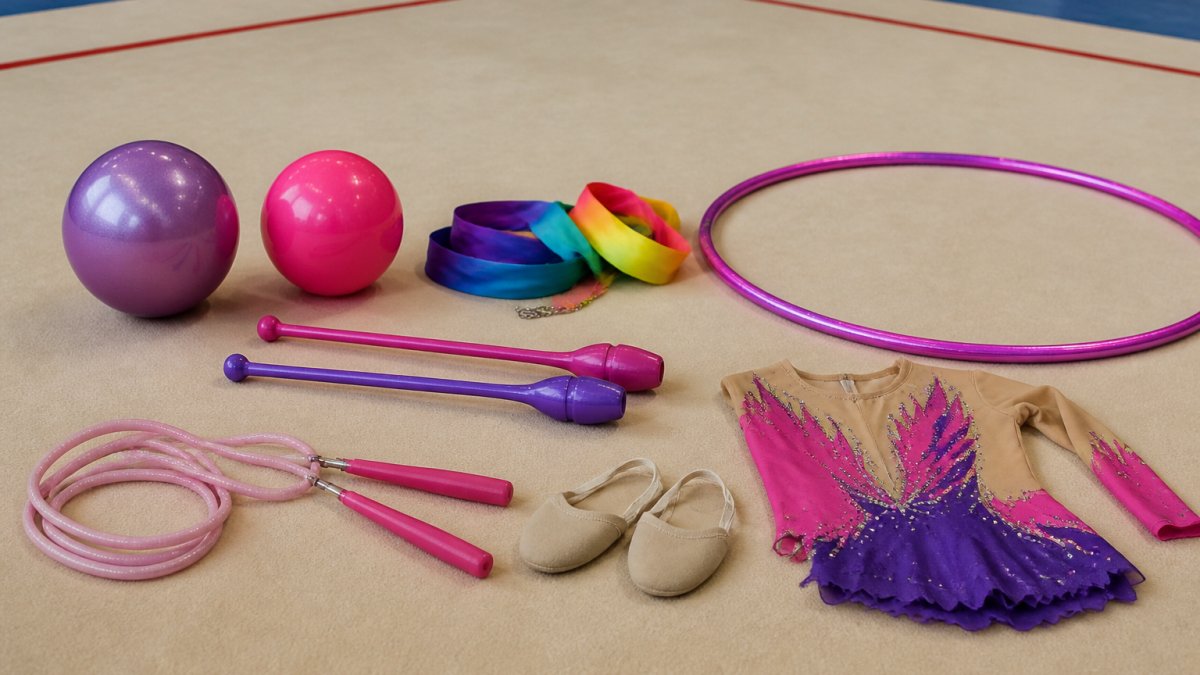
Understanding what equipment do you need for rhythmic gymnastics starts with the five hand-held apparatus that define the sport: rope, hoop, ball, clubs, and ribbon. Each one is used in individual routines and group routines set to music, and each trains a different set of skills. This guide walks through every piece, from sizing to storage.
FIG apparatus specifications for rhythmic gymnastics sets the competition standards, but beginners rarely need competition-grade gear on day one. What matters more is matching each apparatus to the gymnast's age, size, and skill level.
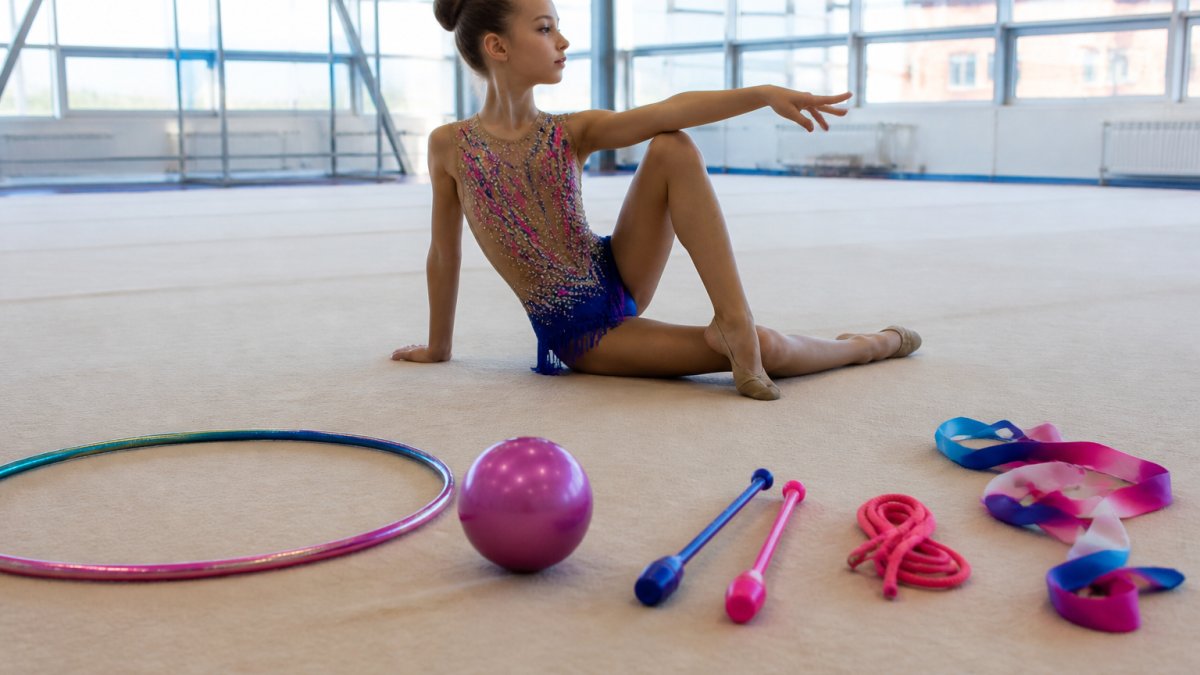
Rope: length, material, and what it teaches
The rope is the lightest apparatus and the one that teaches timing. A gymnast manipulates it through swings, throws, catches, and rolls while jumping in and out of the turning loop. Most ropes are made from a synthetic cord that holds its shape without kinking, and sizing is simple: the gymnast stands on the middle of the rope and the ends should reach the armpits.
Hoop: diameter, weight, and grip
The hoop teaches spatial awareness because it is rigid and unforgiving. A common mistake is buying a hoop that is too large, which makes rolls and spins clumsy. As a rule of thumb, the hoop should reach roughly hip height when stood on edge. Hoops come in plastic and rubber versions; rubber grips better and hurts less on a missed catch, while plastic is lighter and faster through the air.
Ball: the apparatus beginners master first
The ball is where most beginners start, and for good reason. It is forgiving, it rolls predictably, and it teaches balance and body flow without the risk of a hard impact. A rhythmic gymnastics ball is a rubber ball sized to rest comfortably in the gymnast's hand or forearm, and the first skills are simple balances, rolls across the back, and gentle tosses.
Clubs: length, balance, and when to start
Clubs demand the most coordination of any hand-held apparatus. A gymnast swings, tosses, and catches two clubs at once, often while moving. Each club has a bulb, a taper, and a handle, and balance matters more than length. Most coaches wait until a gymnast has solid ball and hoop control before introducing clubs, usually around age eight or older.
Ribbon and stick: the apparatus with the longest learning curve
The ribbon looks graceful and is genuinely hard. A long satin ribbon attaches to a thin stick, and the gymnast must keep the ribbon moving in continuous spirals and snakes without letting it touch the floor or tangle. The learning curve is steep because the ribbon reveals every flaw in arm control. Beginners should expect weeks of practice before a routine looks clean.
Rhythmic Gymnastics Equipment for Beginners: What to Buy First
Most beginners do not need all five apparatus on day one. The smart approach is to separate what a gymnast must bring to the first class from what can wait until skills and interest justify the purchase. This checklist is built around that split.
Essential first-purchase items
These are the items a new gymnast should have before the first few weeks of class:
- Ball, the most forgiving apparatus and the one most coaches introduce first. It teaches balance, rolls, and body flow without hard impacts.
- Hoop, adds spatial awareness and grip control. Buy one sized to the gymnast, not one sized to grow into.
- Rope, inexpensive, easy to store, and the best tool for timing and jumping rhythm.
- Practice clothing, a fitted leotard or stretchy athletic wear that will not catch on apparatus.
- Apparatus bag, a simple drawstring or shoulder bag keeps hoops and clubs from getting scratched and keeps the kit together.
Apparatus that can wait
- Clubs, most coaches delay clubs until the gymnast has solid ball and hoop control, often around age eight or older. Buying them early usually means buying them twice.
- Ribbon and stick, the steepest learning curve of the five. A beginner ribbon will fray and tangle before technique is ready for it, so wait until the coach introduces ribbon work.
- Competition-grade apparatus, beginners do not need FIG-specification equipment. Recreational apparatus is lighter, cheaper, and easier to control while skills develop.
What clubs and coaches usually supply
Many clubs provide apparatus for class use, especially hoops, balls, and ribbons shared among a training group. Before buying anything beyond a ball and hoop, confirm with the coach:
- Which apparatus is supplied during class and which the gymnast must bring
- Whether the club requires a specific size or brand for consistency
- Whether the club sells or loans beginner apparatus
A common pattern is that families overbuy in the first month and end up with duplicate or oversized equipment. One phone call to the coach prevents most of that waste.
First-class packing list
Beyond apparatus, bring these to every session:
- Water bottle
- Small towel (rubber apparatus gets slippery with sweaty hands)
- Hair ties and clips to keep hair clear of ribbon and clubs
Many rhythmic gymnasts train barefoot; half-shoes are optional and mainly protect the toes. Confirm footwear expectations with the coach before the first class.
A sensible buying order
If budget or space is tight, buy in this order: ball, hoop, rope, then clothing and bag, then clubs, then ribbon and stick. This order matches the skill progression most coaches use and avoids spending on apparatus a gymnast will not touch for months.
How to Choose Rhythmic Gymnastics Ball Size
Ball size should match the gymnast's body, not age alone. A ball that is too big slips out of small hands; one that is too small rolls too fast to control.
Use this quick guide when selecting:
| Gymnast's Height | Suggested Ball Diameter |
|---|---|
| Under 4 ft | Smallest size available |
| 4 ft to 4 ft 8 in | Small to medium |
| 4 ft 8 in to 5 ft 4 in | Medium |
| Over 5 ft 4 in | Medium to large |
Always confirm the exact diameter with the coach or the retailer's size chart, since brands label sizes differently. A rubber ball with a slightly textured surface grips better than a smooth one, which helps beginners keep control during rolls.
Sizing the other apparatus by body measurement
Ball diameter is only one piece of the sizing puzzle. The same body-based logic applies to the rest of the kit:
- Rope, the gymnast stands on the middle of the rope; the ends should reach the armpits. A rope that is too long drags and tangles; one that is too short limits jumps and swings.
- Hoop, stood on edge, the hoop should reach roughly hip height. A hoop that is too large makes rolls and spins clumsy; one that is too small restricts body waves and passes.
- Clubs, length matters less than balance. Each club should feel evenly weighted from bulb to handle. Most coaches introduce clubs once the gymnast has solid ball and hoop control, often around age eight or older.
Age-based guidance versus measurement-based guidance
Age is a rough starting point, but height and arm span are better predictors of fit. Two gymnasts the same age can need different hoop diameters and rope lengths. When in doubt, size to the gymnast's current measurements rather than buying oversized equipment to "grow into", oversized apparatus teaches sloppy technique that is hard to correct later.
When to size up
Replace or resize apparatus when the gymnast has clearly outgrown it: a rope that no longer reaches the armpits, a hoop that sits below the hip when stood on edge, or a ball that feels small in the hand. Most beginner apparatus lasts a season or two with reasonable care, so sizing checks at the start of each season are usually enough.
Rhythmic Gymnastics Ribbon and Stick: What to Check Before You Buy
Check three things before buying a ribbon and stick: ribbon length, stick length, and how the ribbon attaches. A ribbon that is too short limits the shapes a gymnast can make; one that is too long tangles and drags. The stick should feel light in the hand and be long enough that the gymnast can reach a full extension without strain.
Inspect the attachment point closely. A weak swivel or a poorly fixed ribbon will fray within weeks. Look for a smooth connector that lets the ribbon spin freely without catching. Satin ribbons move beautifully but snag easily; a slightly stiffer ribbon holds its shape longer for beginners. Buy a spare ribbon, because the first one will wear out.
What Gymnasts Wear and Bring Besides Apparatus
Apparatus is only part of the kit. Gymnasts need the right clothing and a few small extras to train comfortably and safely.
- Leotard - fitted and stretchy, so it does not catch on apparatus
- Gymnastics shoes or bare feet - many rhythmic gymnasts train barefoot; half-shoes protect the toes
- Hair ties and clips - keep hair clear of the ribbon and clubs
A common mistake is showing up to the first class with a full apparatus set and no bag to carry it. A simple drawstring bag protects the equipment and keeps it together.
Care, Storage, and When to Replace Apparatus
Proper care stretches the life of every piece. Wipe rubber balls and hoops with a damp cloth after use and let them air dry fully before storage.
Replace apparatus when it shows real wear: a ball that has lost its grip, a hoop with a crack, a rope that has frayed, or a ribbon that has torn.
Build a Practice Space That Supports Your New Apparatus
A home practice space needs open floor, a clear ceiling, and a forgiving surface.
Glory and Power Enterprises manufactures competition spring floors and sprung dance floors with a two-layer Baltic birch construction and power springs secured with bolt and thread-locker for durability.
For more guidance on flooring and training setups, the Articles section covers sprung dance floor installation, spring floor kits, and tumble track to air floor progressions.
Frequently Asked Questions
What equipment do you need for rhythmic gymnastics as a beginner?
Start with a ball and a rope, which teach the throwing, catching, and coordination basics that carry over to every other apparatus. Add a hoop once your child can track a rolling ball without losing control. Clubs and ribbon come later, usually after a season of practice. Beginners also need a leotard, gymnastics shoes or half-soles, and a water bottle. Most clubs supply shared apparatus for the first few classes, so confirm with the coach before buying all five pieces.
Do beginners need all five rhythmic gymnastics apparatus?
No. Competitive routines use all five, but beginners rarely need them at once. A ball and rope cover the first several months of training. Hoops, clubs, and ribbon are introduced as skills progress. Buying every piece on day one usually means paying for equipment a child will outgrow before using it. Ask the coach which apparatus the class works on each term, then buy that one piece at a time.
What is the right rhythmic gymnastics ball size?
Ball size is matched to the gymnast's age and hand span, not to her height alone. Younger gymnasts use smaller, lighter balls they can grip and catch with one hand; older gymnasts move up as their hands and coordination grow. A ball that is too large slips out of the hand during catches, and one that is too small bounces unpredictably. Check the retailer's size chart against the gymnast's age and measure her hand span before ordering.
What should a beginner bring to rhythmic gymnastics practice?
Bring a leotard or fitted athletic wear, gymnastics shoes or half-soles, hair ties, a water bottle, and a small towel. Leave jewelry and loose clothing at home, since both interfere with apparatus handling and can catch on ribbon or rope. Many gyms ask gymnasts to bring their own ball once they reach a certain level. Pack apparatus in a separate bag so ribbon and rope do not tangle with shoes and clothes.
How do you care for rhythmic gymnastics apparatus?
Wipe balls and hoops with a damp cloth after practice and let them air dry before storage. Store ribbon loosely rolled, never folded, and keep it away from heat and sunlight, which weaken the material. Coil ropes evenly and hang clubs by the handles rather than stacking weight on them. Check for cracks, fraying, or stretched tape every few weeks, and replace any piece that has lost its shape or grip.
Building a home practice space that protects a young gymnast takes the right surface as much as the right apparatus. Glory and Power Enterprises supplies professional-grade sprung flooring with two-layer Baltic birch construction, power springs held by bolt and thread-locker, and customizable shipping regions to fit the space. Get started with Glory and Power Enterprises and give every practice session a floor built for confident, safe training.