 listicle
Best Flooring for Martial Arts Schools: 2026 Guide
Table of Contents
- How to Choose Martial Arts Flooring for Your School
- Interlocking Foam Tiles for Martial Arts Training
- Roll-Out Mats: Continuous Coverage and Installation
- Foam Mats vs. Wood Floors: Which Works Best
- Martial Arts Mat Thickness and Cushioning Standards
- Flooring for Judo and Grappling Arts
- Safe Martial Arts Mats for Studios: Impact Absorption and Durability
- Installation, Maintenance, and Total Cost Considerations
- Frequently Asked Questions
Last Updated: October 7, 2026
How to Choose Martial Arts Flooring for Your School
Choosing flooring for a martial arts school affects injury risk, training comfort, and long-term costs. Yet many schools buy on initial price alone and later find they've compromised on safety, durability, or performance.
The difference between a floor that lasts 5 years and one that lasts 15 comes down to three factors: cushioning depth, material quality, and how well the surface matches your discipline.
This guide breaks down the real choices, interlocking foam tiles, roll-out mats, and sprung flooring systems, and how to evaluate each against your training needs and budget.
Key Selection Criteria
The best flooring for martial arts schools depends on five core variables. Understanding each one eliminates confusion and helps you avoid expensive mistakes.
Discipline matters most. Striking arts like karate and taekwondo need moderate shock absorption to protect joints during kicks and punches. Grappling and throwing need thicker, denser mats that won't compress under repeated impact.
Thickness and density determine performance. One-inch high-density foam suits striking. Grappling typically needs 1.5 to 2 inches of dense foam for throws and ground contact.
Installation and maintenance affect total cost. Interlocking tiles require assembly but allow section repairs. Roll-out mats install faster but are harder to clean and can trap moisture at seams.
Traction and grip prevent slipping. Tatami or thatch-top textures increase grip during footwork and transitions. Smooth vinyl is easier to clean but slippery when wet.
Budget flexibility matters. Some facilities expand or replace in phases; others need a complete installation before opening. Knowing your constraints narrows the field.
Flooring Comparison Table
| Flooring Type | Best For | Thickness Range | Installation | Maintenance |
|---|---|---|---|---|
| Interlocking foam tiles | MMA, karate, mixed disciplines | 0.75-1.5 inches | Modular, DIY possible | Spot cleaning, easy repairs |
| Roll-out mats | Budget-conscious facilities, striking arts | 0.5-1.5 inches | Requires team, time-intensive | Vacuum and wipe, seam care |
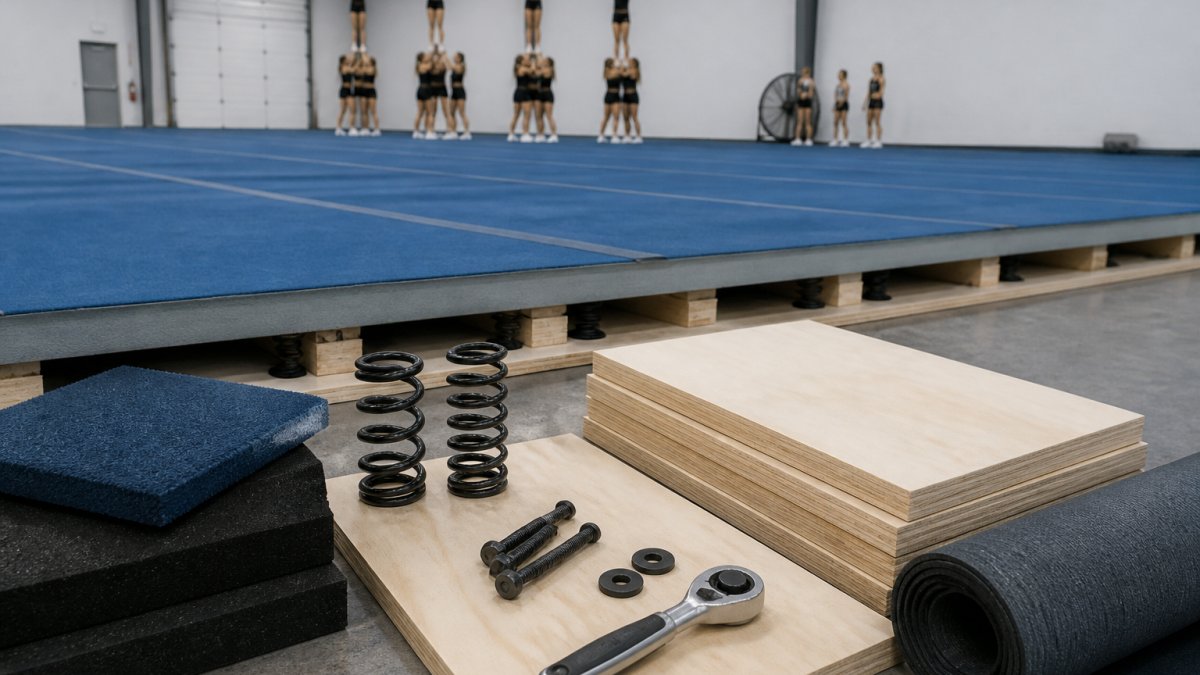
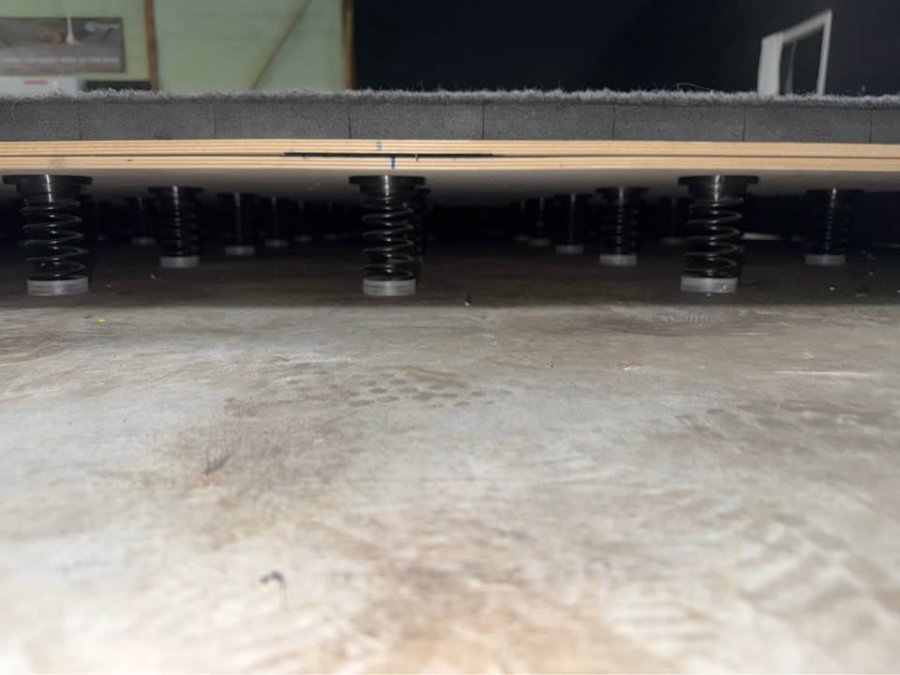
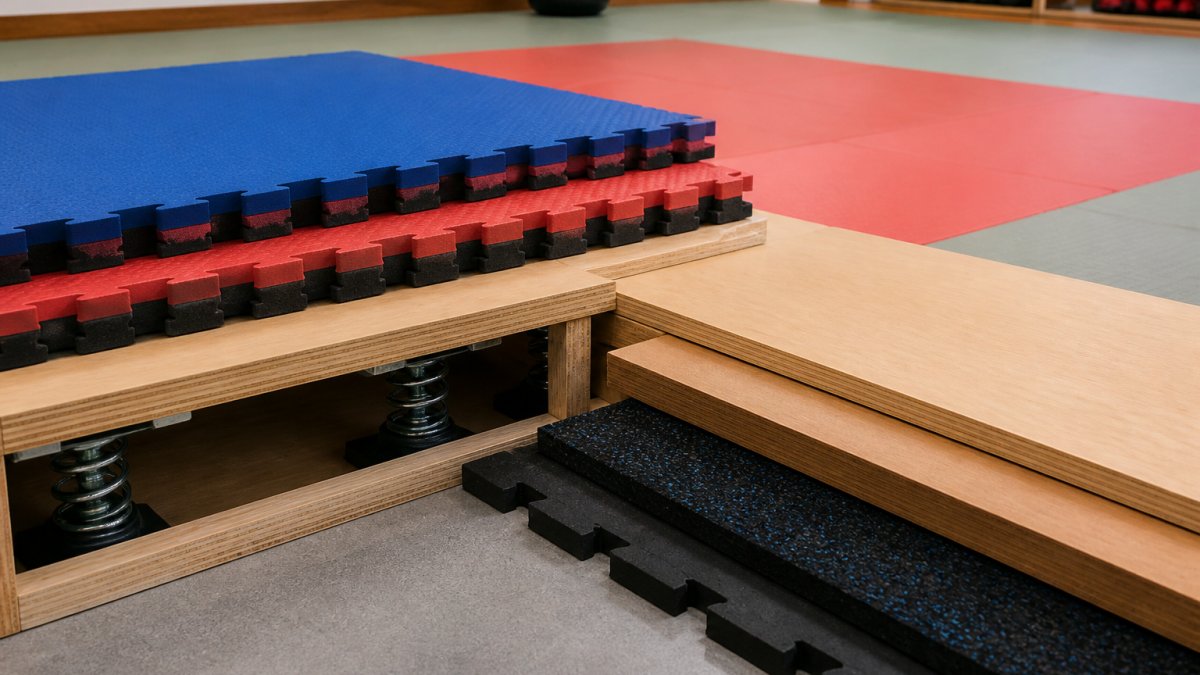
| Sprung flooring (Baltic birch) | High-volume schools, competitive training | 1-2 inches over springs | Professional installation required | Regular inspection, minimal upkeep |
| Vinyl foam-core mats | General training, budget option | 0.75-1 inch | DIY or professional | Wipe down, vinyl durability |
| Tatami-style mats | Judo, wrestling, grappling-focused | 1.5-2 inches | Professional installation | Specialized cleaning protocols |
Interlocking Foam Tiles for Martial Arts Training
Interlocking foam tiles are the default choice for martial arts schools because they balance cost, flexibility, and performance. The puzzle-like mats connect edge-to-edge, and individual tiles can be replaced if damaged.
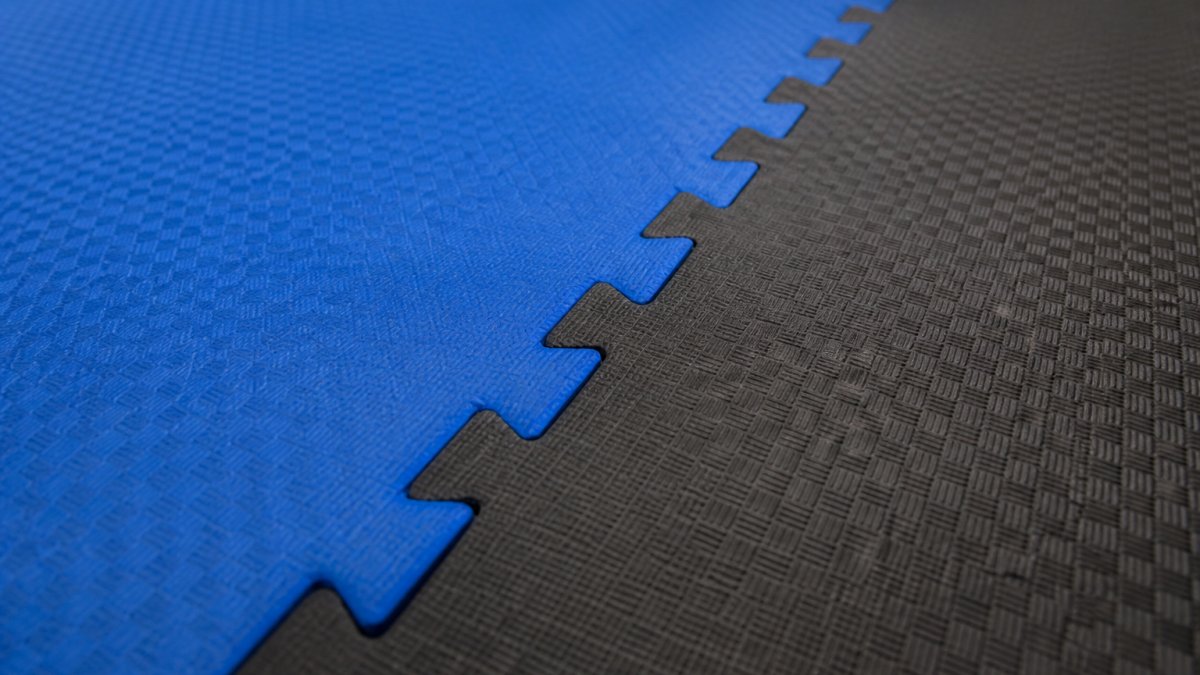
The appeal is practical: replace one damaged tile instead of the whole floor, start small and expand as budget allows, and reconfigure the space when schedules or discipline focus changes.
Foam tiles range from 0.75 to 1.5 inches thick. Thinner options suit striking arts; thicker tiles suit mixed training with ground work or throwing. Many facilities choose one-inch tiles as a compromise.
Installation is simple enough for a small team, most tiles interlock without adhesive or fasteners, so setup takes hours rather than days. The tradeoff: seams trap sweat and bacteria, so a weekly deep clean of the surface and edges is essential.
Durability depends on material quality and usage. Budget tiles may compress within 2-3 years under heavy daily training; higher-density tiles last 5-7 years with proper maintenance. Tatami textures offer better traction but can fray at the edges.
Roll-Out Mats: Continuous Coverage and Installation
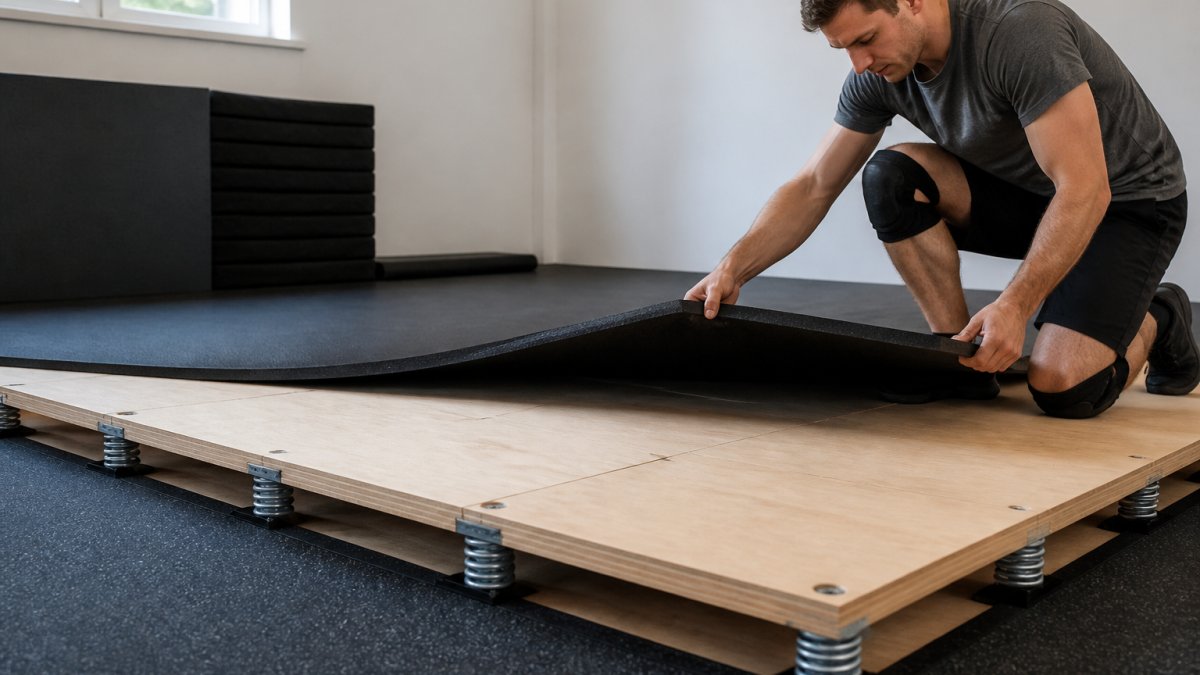
Roll-out martial arts mats come compressed in large rolls and unroll into one continuous sheet, eliminating seams in the middle of your floor.
The advantage is continuity: no interlocking edges to catch a foot during drills, and fewer connection points where dirt and sweat accumulate.
The disadvantages are significant. Roll-out mats are heavy and cumbersome, often requiring professional installation. If a section tears or wears, you can't replace just that area, you patch it or replace the entire mat.
Cleaning requires attention to edges and seams where moisture gets trapped. Vacuum regularly and don't let water sit along the edges, which can deteriorate the foam or separate the backing. Improper storage or installation can cause permanent creases.
Thickness ranges from 0.5 to 1.5 inches. Thinner options are cheaper but absorb little shock, suiting only light training. Most schools choose one-inch rolls; grappling facilities go thicker for throwing forces.
Foam Mats vs. Wood Floors: Which Works Best
The choice between foam mats and wood flooring is one of the most debated in martial arts facility planning. Each has real strengths and limitations.
Foam mats are the standard because they absorb shock immediately and are affordable to install. They protect joints during striking and reduce injury risk in grappling falls, giving slightly when a student lands awkwardly.
The drawbacks are durability and maintenance. Foam also absorbs moisture, leading to mold and odor in humid facilities, and its porous surface traps sweat and bacteria, making thorough cleaning labor-intensive.
Wood floors, typically hardwood over a sprung subfloor, offer superior durability and a professional look. A well-maintained wood floor lasts 20+ years and cleans easily with a sweep and damp mop.
The downsides are high upfront cost and installation complexity: proper subfloor preparation, moisture barriers, and sometimes specialized fastening.
For most schools, foam mats are the practical choice. Schools with the budget and long-term commitment choose sprung flooring systems that combine wood's durability with enhanced shock absorption.
Martial Arts Mat Thickness and Cushioning Standards
Flooring thickness directly correlates with injury prevention and training comfort. There's no universal standard, but best practices have emerged from decades of facility experience.
For striking arts (karate, taekwondo, kickboxing), one-inch foam absorbs impact from kicks and punches without destabilizing footwork. Mats under one inch don't absorb enough force to meaningfully reduce joint stress.
For grappling arts (judo, wrestling, Brazilian jiu-jitsu), 1.5 to 2 inches of high-density foam is the minimum. Throws concentrate tremendous force in small areas, and a thin mat compresses completely, leaving students vulnerable.
For mixed-discipline schools, 1.25 inches is a reasonable compromise, enough cushioning for striking with meaningful protection during occasional grappling.
Density matters as much as thickness. Low-density foam (around 1.3 pounds per cubic foot) compresses easily and loses performance quickly.
Research from the American Academy of Pediatrics on sports injury prevention emphasizes the role of proper surface cushioning in reducing impact-related injuries. Thicker, denser mats demonstrably reduce injury rates in high-impact sports training.
Flooring for Judo and Grappling Arts
Judo, wrestling, and Brazilian jiu-jitsu place unique demands on flooring. Repeated throwing, falling, and ground contact require specialized design.
Throws generate impact forces exceeding 3-4 times body weight concentrated in a small area. A standard one-inch mat compresses completely, leaving students vulnerable. Judo and wrestling facilities should use 1.5 to 2-inch mats, preferably high-density foam or tatami-style construction.
Tatami mats offer specific advantages for grappling: the textured surface grips during footwork and transitions, and the denser construction (often 2 inches or thicker) handles repeated throwing impact without compressing.
Ground contact in BJJ and wrestling demands a surface that supports extended time on the mat. Thinner mats cause discomfort and expose elbows and knees to hard impacts. A 1.5-inch minimum is standard for serious BJJ facilities; some high-level centers use 2-inch mats.
Seams are critical for grappling arts. Interlocking tiles create edges that can catch a grappler's arm or leg during throws or ground work. Some facilities prefer roll-out mats for the seamless surface; others use interlocking tiles with beveled edges.
Safe Martial Arts Mats for Studios: Impact Absorption and Durability
Safety is the non-negotiable foundation of any martial arts flooring decision. The right mat protects students from serious injury; the wrong choice can lead to chronic joint problems, concussions, and acute trauma.
Impact absorption depends on thickness, density, and the subfloor. A one-inch mat over concrete absorbs less than the same mat over a sprung subfloor because concrete doesn't give.
Durability affects safety indirectly. A mat that compresses or develops soft spots creates uneven surfaces that increase trip and fall risk.
Surface texture influences safety during footwork. Smooth vinyl gets slippery when students sweat; tatami or thatch-top textures increase grip during kicks and pivots, though they can fray at the edges without maintenance.
Moisture management is a hidden safety issue. Foam that absorbs sweat becomes a breeding ground for bacteria and fungi, contributing to skin infections.
According to guidance from the National Association of Sports Medicine, proper flooring that absorbs impact forces significantly reduces the incidence of lower-limb injuries in martial arts training. This underscores why mat quality is worth the investment.
Installation, Maintenance, and Total Cost Considerations
The true cost of martial arts flooring extends beyond the purchase price. Installation, maintenance, and eventual replacement should all factor into your decision.
Interlocking tiles have the lowest installation cost since many schools handle it in-house. Professional installation takes 1-2 days. Maintenance is straightforward: vacuum weekly, deep clean monthly, inspect edges quarterly. Individual tiles are simple and inexpensive to replace.
Roll-out mats have moderate installation costs but often need professional help due to size and weight, taking 1-2 days. Maintenance requires attention to edges and seams to prevent moisture damage.
Sprung flooring systems (like those offered by Glory and Power Enterprises) have the highest upfront cost and require professional installation.
A practical approach for budget-conscious schools: start with high-quality interlocking foam tiles, then upgrade to sprung flooring when budget allows. This lets you open quickly while planning for long-term improvement.
Choosing the best flooring for martial arts schools requires balancing safety, performance, and budget constraints. Glory and Power Enterprises specializes in high-quality competition spring floors designed specifically for martial arts training.
Frequently Asked Questions
How thick should martial arts mats be?
Thickness depends on your discipline. Striking arts like karate and taekwondo typically use 1-inch high-density foam for adequate cushioning and support. Grappling and throwing disciplines such as judo and jiu-jitsu benefit from 1.5 to 2-inch thickness to absorb impact from falls and throws. Thicker mats reduce injury risk but increase cost and installation complexity. Check your discipline's training requirements before selecting thickness.
What type of flooring is best for judo mats?
Judo requires flooring that handles frequent throws and ground contact. Tatami-style mats or high-density foam systems 1.5 to 2 inches thick provide the shock absorption and support needed for safe throws. Interlocking foam tiles work well because they distribute impact evenly across the training surface. The surface should offer grip for footwork while remaining forgiving on joints and spine during falls.
Are foam mats or wood floors better for martial arts training?
Foam mats excel at impact absorption and are ideal for high-impact disciplines like karate, taekwondo, and judo. Wood floors with spring systems provide excellent support and durability for long-term use but require higher initial investment. Foam mats are more affordable and easier to install, while sprung wood floors last longer and support competitive training environments. Your choice depends on budget, discipline, and facility permanence.
What makes a martial arts mat safe for studios?
Safe mats combine several features: adequate thickness (minimum 1 inch for striking, 1.5+ inches for grappling), high-density foam that absorbs shock without bottoming out, slip-resistant surface texture for secure footing, and durability to withstand repeated training. The mat should also be easy to clean and maintain to prevent moisture buildup and bacterial growth. Proper installation with secure fastening prevents movement during training.
Should we replace our existing flooring or add mats on top?
This depends on your current setup and training intensity. Adding interlocking foam tiles over existing flooring works for moderate use and smaller facilities. Replacing flooring entirely with sprung systems or professional-grade mats is better for high-impact training, competition preparation, and long-term durability. Consider your facility's subfloor condition, training volume, and budget. Professional installation ensures safety and proper support regardless of which approach you choose.