 listicle
Order Custom Martial Arts Mats: Complete 2026 Guide
Table of Contents
- What to Know Before You Order Custom Martial Arts Mats
- Martial Arts Mats for Dojo: Core Types and Applications
- Custom Size Martial Arts Mats: Measuring and Layout Planning
- Interlocking Martial Arts Mats vs. Roll-Out Systems
- Martial Arts Mat Thickness: Impact Absorption and Durability
- Customization, Branding, and Ordering Process
- Maintenance, Warranty, and Long-Term Value
- Conclusion: Selecting the Right Custom Mat for Your Facility
- Frequently Asked Questions
Last Updated: October 13, 2026
What to Know Before You Order Custom Martial Arts Mats
Ordering custom martial arts mats is a critical decision for any dojo owner, gym operator, or home trainer. The right system absorbs impact and lasts for years; the wrong choice invites injuries and costly replacements.
This guide from Glory and Power Enterprises covers mat types, dimensions, thickness standards, and customization options so you can match your discipline, budget, and facility size.
Martial Arts Mats for Dojo: Core Types and Applications
The mat you choose must match your discipline's impact demands.
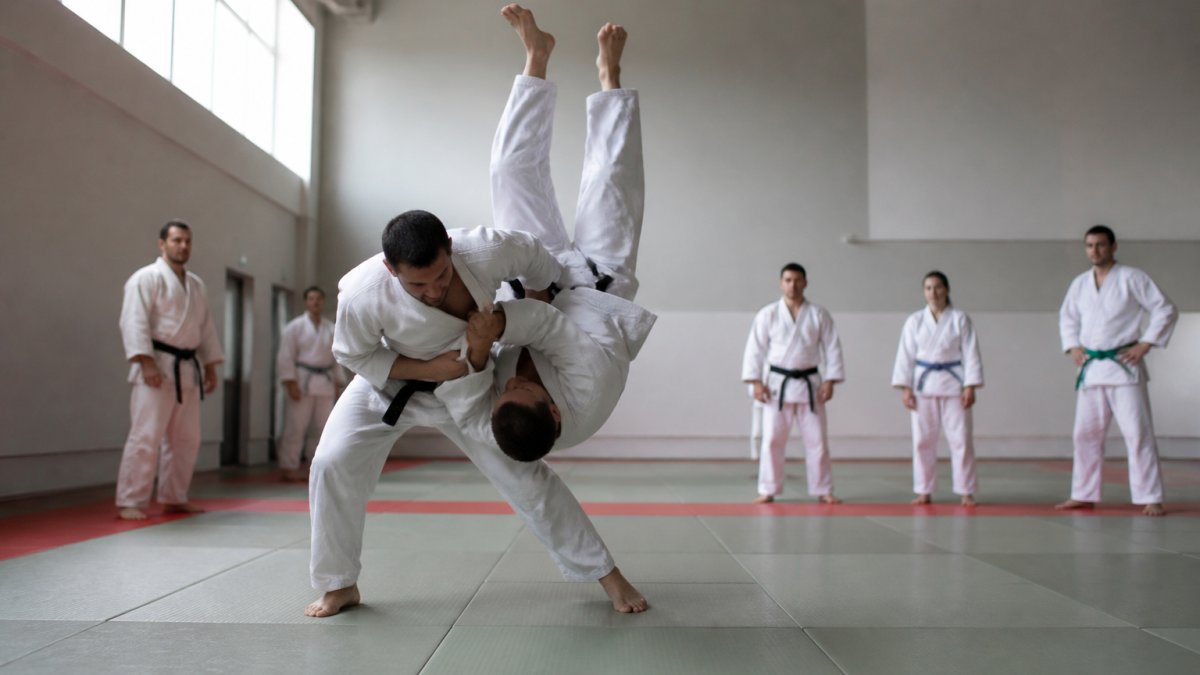
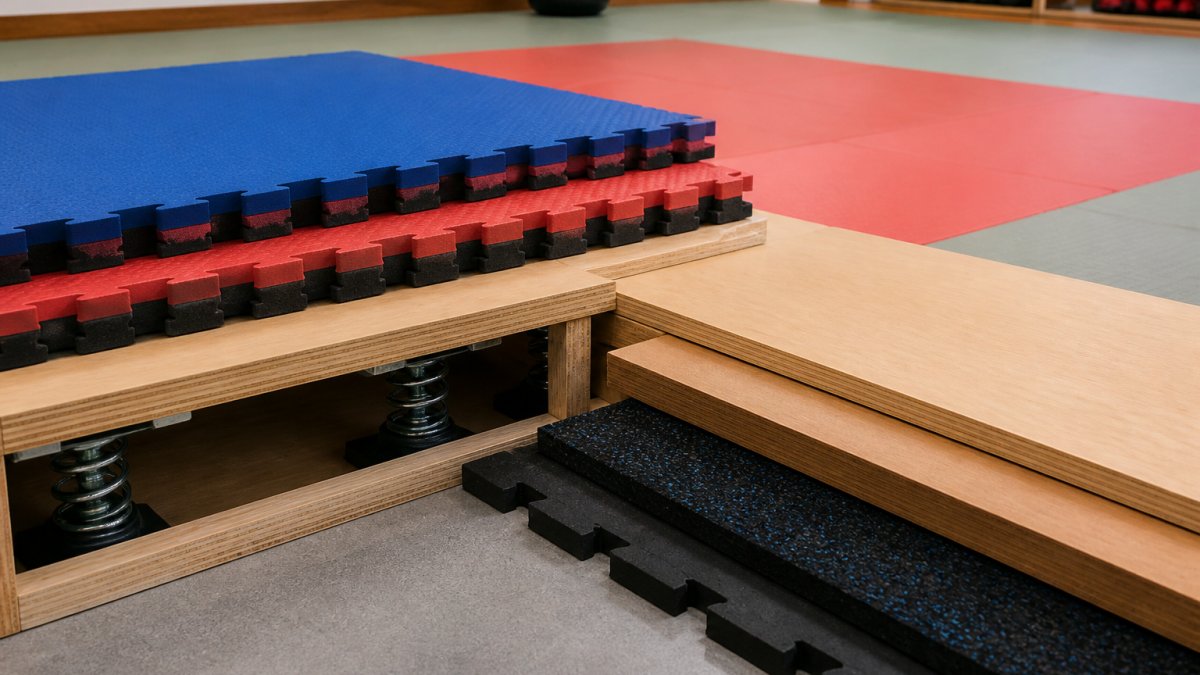
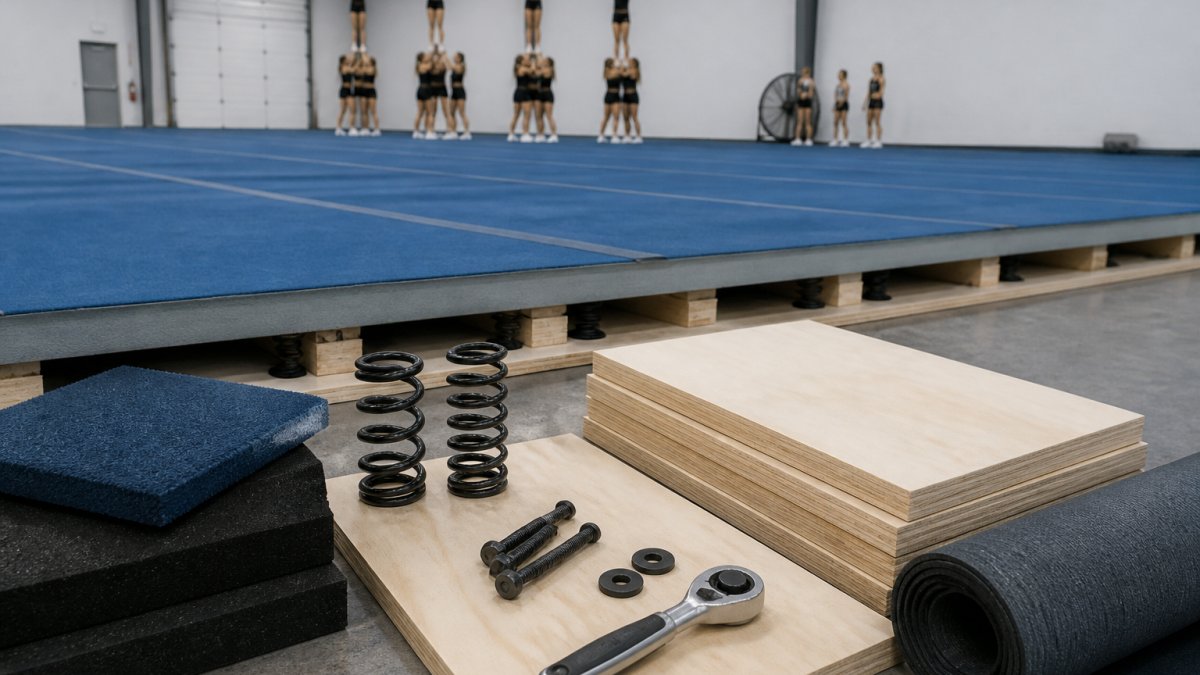
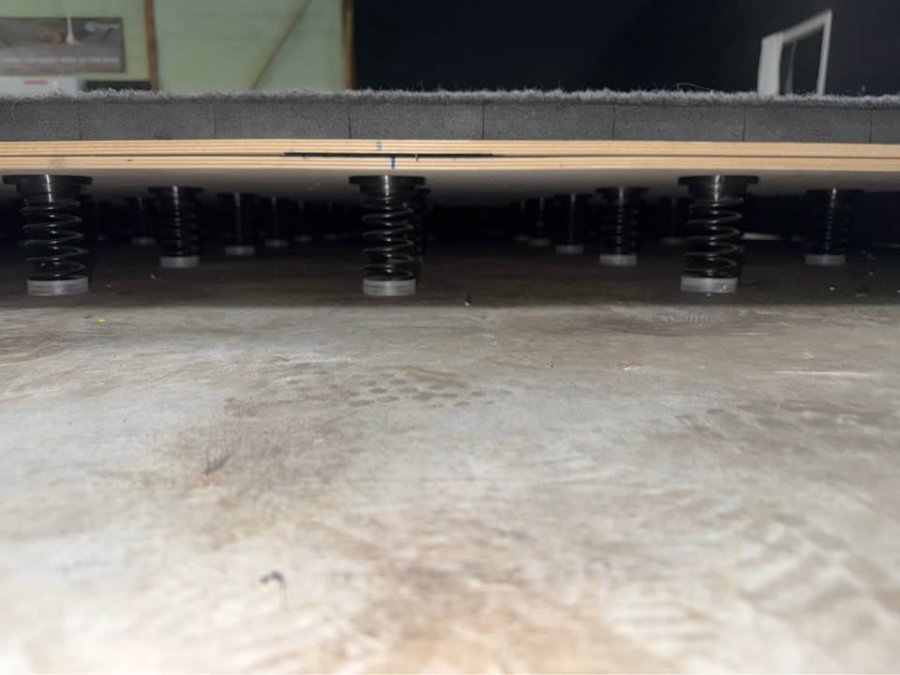
Sprung flooring systems use a sub-floor layer of springs or shock-absorbing supports to reduce joint stress during throws, takedowns, and striking, and are standard in competitive dojos.
Foam and tatami options serve budget-conscious facilities and home trainers.
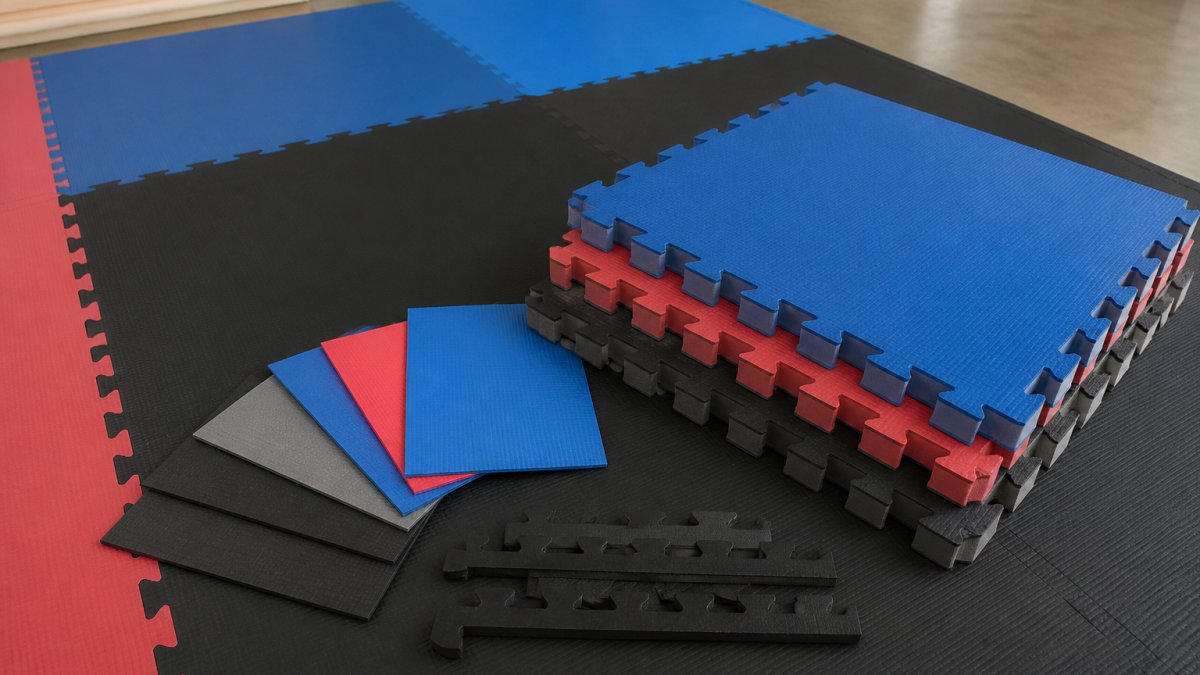
Interlocking puzzle mats are modular tiles that connect edge-to-edge.
Roll-out continuous mats are manufactured in long sheets that create a seamless surface with uniform impact absorption.
Custom Size Martial Arts Mats: Measuring and Layout Planning
Measure your training space accurately before ordering, incorrect measurements lead to delays and wasted material.
How to Measure Your Training Space
Measure length and width in feet, accounting for walls, columns, or equipment racks.
Note the widest clear span: many roll-out systems can be manufactured up to 42 feet wide, while narrower spaces use custom-cut lengths to avoid waste.
Document ceiling height if you plan wall padding, and take photos from multiple angles to help suppliers spot fitting challenges before manufacturing begins.
A Practical Sizing and Layout Calculator
You can estimate your mat order before requesting a quote. The math differs by mat type.
Interlocking puzzle mats. Tiles are sold in nominal sizes, most commonly 2 ft x 2 ft (4 sq ft per tile) or 1 m x 1 m (roughly 10.76 sq ft). To estimate tile count:
- Multiply room length by room width to get total square footage. A 30 ft x 40 ft training floor is 1,200 sq ft.
- Divide by the square footage per tile. At 4 sq ft per tile, 1,200 ÷ 4 = 300 tiles.
- Add 5-10% for cuts, damaged tiles, and future replacements. That brings the order to roughly 315-330 tiles.
- Count edge pieces separately. Border tiles with a finished (non-interlocking) edge are usually sold as a distinct SKU. The perimeter of a 30 x 40 room is 140 linear feet; at 2 ft per edge piece, that's about 70 edge tiles.
Roll-out continuous mats. Quoted by width and length, not tile.
Sprung flooring systems. Quoted by panel or module, not square footage. Ask for panel dimensions and sub-floor grid spacing, then divide your room dimensions by the panel size. Most suppliers produce a layout drawing from your measurements, take advantage of it.
Sketch your room on graph paper at 1/4 inch = 1 foot. Mark doors, columns, mirrors, and any equipment that stays in place. A scaled sketch catches fit problems that raw dimensions miss, and it gives the supplier a document they can mark up.
Choosing Between Single and Multi-Section Layouts
Single-section layouts work best for compact spaces under 1,000 square feet, providing the most consistent performance with fewer seams.
Multi-section layouts divide larger areas into sections that can be removed for cleaning, replaced if damaged, or reconfigured, letting facilities create distinct zones, grappling, striking, and conditioning, each with its own mat system.
Specify each section's dimensions clearly, and keep seams tight to prevent tripping hazards and ensure consistent impact absorption.
Layout Mistakes That Cost Money
A few patterns show up repeatedly in custom mat orders:
- Measuring to the wall instead of the baseboard or trim. Baseboards, door frames, and outlet covers eat into usable floor space. Measure the clear floor, not the room's architectural dimensions.
- Forgetting the door swing. A mat that's 1-1/4 inches thick can block a door that swings inward. Note door clearances before you finalize thickness.
- Ordering to the exact square footage. Cuts, waste, and future replacement tiles always push the real number higher. The 5-10% buffer is not optional.
- Mixing mat types in one zone. A grappling area transitioning from roll-out mat to interlocking tile creates a seam with different impact characteristics. Plan transitions deliberately.
- Ignoring weight. A 1-5/8 inch roll-out mat is heavy. Confirm the floor's load rating and delivery path, stairs, elevators, and narrow doorways can turn a simple install into a rigging job.
Interlocking Martial Arts Mats vs. Roll-Out Systems
Interlocking puzzle mats and roll-out continuous mats serve different needs.
Interlocking mats connect via jigsaw-style edges and are modular, so tiles can be added or removed without affecting the rest of the system.
Roll-out continuous mats are manufactured as single sheets for your exact dimensions, providing uniform shock absorption and eliminating seam-related variations.
Roll-out systems generally outperform interlocking mats under high-impact conditions, but interlocking remains solid for flexibility and easy maintenance.
Martial Arts Mat Thickness: Impact Absorption and Durability
Thickness directly affects impact absorption, durability, and cost. Thicker mats absorb more shock but cost more and take up more vertical space.
Thickness Standards by Discipline
Karate and taekwondo typically use 7/8-inch to 1-1/4-inch mats, which handle kicks, punches, and controlled throws without excessive softness that compromises balance and footwork.
MMA and mixed martial arts require a 1-inch minimum, often 1-1/4 inches or thicker, to handle striking, grappling, and takedowns.
Home training can use 7/8-inch mats if space is limited, but 1 inch is the practical minimum for safety and comfort.
Density and Long-Term Performance
Thickness alone doesn't guarantee durability. Density, how tightly the foam is compressed, determines how well the mat resists compression set.
High-density foam retains cushioning longer under heavy use, while budget mats compress over time and need replacement sooner. Ask about density specifications: higher density means longer lifespan.
Customization, Branding, and Ordering Process
Custom martial arts mats can be tailored to your facility's needs and branding, from first measurement to delivered mat.
Custom Logos and Color Options
Custom colors let you match your branding or create visual zones.
Allow extra lead time for custom colors, since graphics require design approval and additional manufacturing steps. Confirm color samples before production.
What to Submit With Your Custom Order
Suppliers who receive a full spec sheet quote faster and produce a mat that fits the first time. Prepare the following:
- Room dimensions in feet and inches, including length, width, and any irregular shapes.
- A scaled sketch or floor plan showing doors, columns, mirrors, and fixed equipment.
- Intended use, the martial art, the training intensity, and whether the space hosts competition.
- Mat type preference, interlocking tile, roll-out continuous, or sprung flooring system.
- Thickness and density requirements for your discipline.
How Proofs and Samples Work
For any custom color, expect a proofing step before production:
- Artwork review. The supplier checks your logo file for resolution, color separations, and elements that won't reproduce cleanly on mat material.
- Digital proof. You receive a mockup showing logo placement, size, and colors. Approve or request changes.
- Physical sample (optional but recommended). For large orders or critical branding, request a small sample to catch color shifts a screen can't show.
- Final sign-off. Once approved, the order moves to production; changes after this point usually mean a new order.
Approve your proof carefully. Color is locked in at sign-off. A color that looks right on a screen can read very differently on a 40-foot mat surface, check the scale against your room dimensions before you approve.
Lead Times, Shipping, and Installation Support
Lead times for custom martial arts mats typically range from 2 to 4 weeks, depending on supplier and customization complexity.
What drives the timeline:
- Standard colors and no logo, shortest lead time.
- Custom colors, adds time for color matching and material runs.
- Custom logos, adds design review, proofing, and a separate production step.
- Sprung flooring systems, longer than mat-only orders because of sub-floor fabrication and hardware.
- Large or multi-section orders, longer production runs and more complex freight coordination.
Confirm whether the supplier handles freight coordination or you arrange pickup, and ask what happens if the mat arrives damaged.
Installation support varies: some suppliers offer on-site guidance or certified regional installers, while others provide manuals. For large sprung flooring systems, professional installation is recommended to ensure proper fastening and performance.
Questions to Ask Before You Sign
A short checklist that separates a smooth order from a frustrating one:
- What is the exact lead time, and does it start at order or at proof approval?
- Who handles freight, and what access is required at delivery?
- What is the damage-claim window and process?
- Are replacement tiles or mat sections available in the same color and density later?
- What installation support is included, and what costs extra?
- What is the warranty period, and what does it cover?
The custom-order process rewards preparation. A complete spec sheet, an approved proof, and clear delivery logistics are the three things that most often determine whether a custom mat order lands on time and on spec.
Maintenance, Warranty, and Long-Term Value
The true cost of ownership extends beyond the purchase price.
Maintenance requirements differ by mat type. Foam and tatami mats need regular cleaning with mild soap and water plus periodic inspection for compression or damage.
Warranty coverage protects your investment. Ask about the period, what's covered (manufacturing defects, seam failures, compression), and exclusions.
Long-term value means calculating cost per year of use: a durable sprung flooring system may cost less annually than replacing cheaper foam mats every few years.
Conclusion: Selecting the Right Custom Mat for Your Facility
Ordering custom martial arts mats requires balancing impact absorption, durability, customization, and budget. The right system supports athlete safety and lasts for years.
Glory and Power Enterprises manufactures premium sprung flooring with two-layer Baltic birch construction, power springs secured with bolt and thread-locker fasteners, and customizable shipping regions. With financing options available and lead times of 17-25 working days, Glory and Power Enterprises delivers professional-grade flooring for facilities that demand durability and consistent performance. Order custom martial arts mats from Glory and Power Enterprises and equip your facility with flooring engineered for competitive excellence.
Selecting the right custom martial arts mat system is a significant facility investment. The decision affects athlete safety, training quality, and long-term operational costs. According to the American Academy of Pediatrics guidelines on youth sports safety, proper impact-absorbing flooring reduces injury risk in high-contact training environments.
Frequently Asked Questions
What is the best thickness for martial arts mats?
The ideal thickness depends on your discipline and training intensity. MMA and grappling facilities typically use 1 to 1.5 inches for maximum impact absorption. Karate and taekwondo dojos often choose 0.75 to 1 inch. Thicker mats (1.25 to 1.625 inches) provide better shock absorption for high-impact training but cost more. Always balance thickness with your budget and the specific demands of your martial arts program.
Can I order custom size martial arts mats for an odd-shaped room?
Yes. Most suppliers, including Glory and Power Enterprises, offer custom-cut lengths and widths to fit your exact training space. Some systems can be configured in single or multiple sections to accommodate irregular layouts. Measure your room carefully, including doorways, columns, and equipment placement, and provide those dimensions when requesting a quote. This ensures your custom mat fits perfectly without gaps or overlaps.
Are interlocking martial arts mats easier to install than roll-out systems?
Interlocking puzzle mats are typically easier for smaller spaces and DIY installation since individual tiles connect without tools. Roll-out systems, especially sprung flooring with power springs and fasteners, require more precise installation but offer superior durability and performance for competitive training. Choose interlocking for home gyms or smaller dojos; choose roll-out systems for professional facilities expecting heavy daily use.
How long does it take to receive a custom order of martial arts mats?
Lead times vary by supplier and customization complexity. Glory and Power Enterprises typically delivers custom orders within 17-25 working days, though timelines depend on your region, order size, and current production schedules. Confirm the exact delivery window with your supplier before ordering, especially if you have a competition or opening deadline.
What maintenance do custom martial arts mats require?
Maintenance depends on mat type. Sprung flooring systems need occasional inspection of fasteners and springs to ensure secure performance. Foam and tatami mats require regular vacuuming and spot cleaning with mild detergent. Avoid excessive moisture and direct sunlight. Most quality mats last 5-10 years with proper care. Check your warranty details and supplier guidance for specific upkeep recommendations for your chosen system.