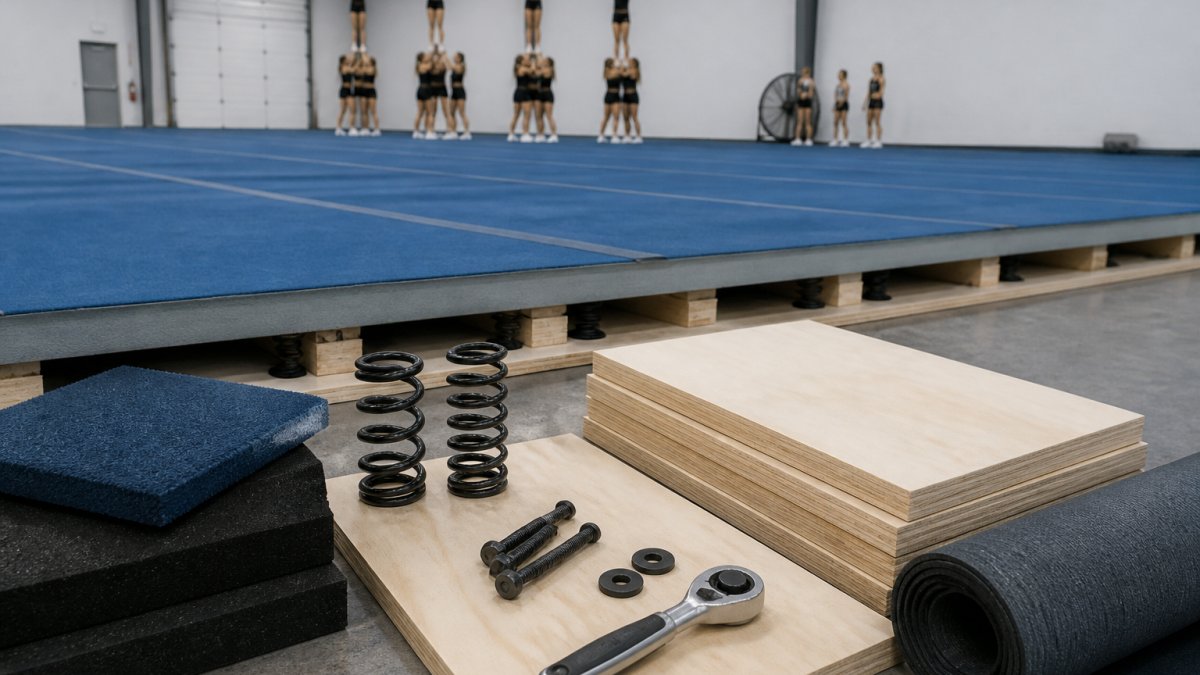
 listicle
Professional Cheer Floor Cost Estimate: 2026 Guide
Table of Contents
- What Factors Influence Professional Cheer Floor Cost
- Types of Cheerleading Mats and Spring Floors
- Cost Per Square Foot Breakdown
- Cheer Floor Installation Requirements and Labor
- Cheer Floor Lifespan and Durability Considerations
- Total Cost of Ownership for Cheer Facilities
- Used vs. New Cheer Floor Investment Analysis
- Conclusion
- Frequently Asked Questions
Last Updated: October 4, 2026
What Factors Influence Professional Cheer Floor Cost
When facility managers evaluate a professional cheer floor cost, they're weighing far more than just the material itself. The final investment depends on square footage, material type, customization choices, and the complexity of your installation. Understanding these drivers helps teams make informed decisions that align with their budget and performance needs.
Square Footage and Scale
The size of your training or competition space directly shapes your total investment. A small martial arts studio with 2,000 square feet faces different cost dynamics than a full-size competitive cheerleading facility with 10,000 square feet. Larger installations often benefit from economies of scale, though they require more complex logistics and labor coordination.
Facility managers should calculate exact square footage before requesting quotes. Measure length and width, account for any irregular corners, and determine whether you need full-court coverage or sectional mats for specific training zones. Many gyms start with a core competition area and expand into practice spaces over time.
Material Type and Construction
The choice between spring floor systems and foam-based alternatives fundamentally shapes your investment. Two-layer spring floors with Baltic birch construction offer superior shock attenuation and durability for competitive environments. Carpet bonded foam provides a more budget-conscious entry point.
Glory and Power Enterprises manufactures competition-grade spring floors featuring power springs secured with bolt and thread-locker fastening systems. This construction method delivers consistent performance across years of high-impact training. The two-layer design combines structural resilience with athletic confidence, critical for facilities hosting competitive teams.
Synthetic flooring options like Marley surfaces offer versatility for multi-purpose facilities that host both cheer and dance activities.
Customization and Surface Options
Customization choices, color, surface finish, edge treatments, and specialized landing mat integration, add to the total cost. Facilities often select colors that match team branding or coordinate with existing gym aesthetics. Hook and loop fastener systems (one linear foot per board in professional systems) allow modular reconfiguration, which some facilities value for mixed-use spaces.
Custom dimensions beyond standard floor sizes require additional engineering and manufacturing time. Shipping regions also affect final pricing, as logistics for oversized flooring systems vary significantly by geography and delivery accessibility.
Types of Cheerleading Mats and Spring Floors
The market offers distinct flooring categories, each suited to different training environments and competitive levels. Understanding the differences helps facility managers select the right solution for their specific needs.
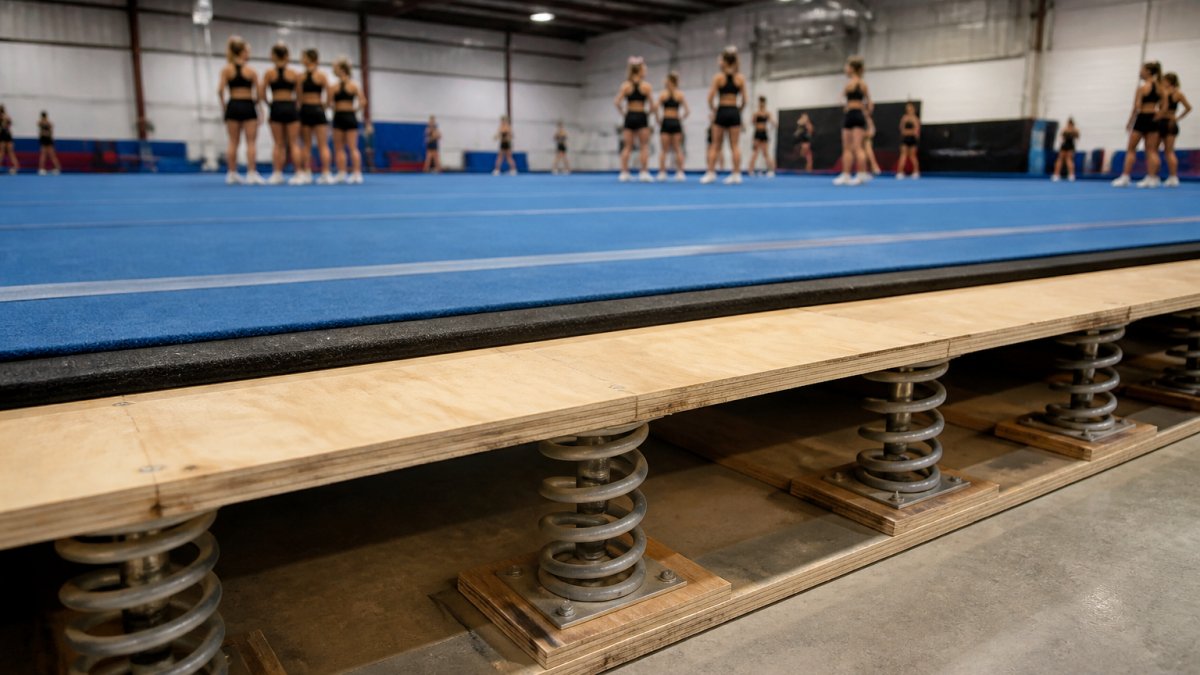
Two-Layer Spring Floor Systems
Two-layer spring floors represent the premium category for competitive cheerleading and gymnastics. These systems combine a solid base layer with power springs that absorb impact and return energy to athletes. The construction reduces joint stress during high-impact movements like tumbling and stunting.
Glory and Power Enterprises designs spring floors with advanced power springs and secure fastening mechanisms. The two-layer Baltic birch construction provides consistent performance across the entire floor surface. These systems excel in competition environments where reliability and athlete safety are non-negotiable.
The installation process for spring floors requires professional expertise. Subfloor preparation, base layer setup, and precise spring alignment all demand technical knowledge.
Carpet Bonded Foam Cost and Performance
Carpet bonded foam combines foam cushioning with a durable vinyl or polyester surface layer. This category offers moderate impact absorption at a lower material cost than spring systems. Many training facilities and smaller gyms use carpet bonded foam for practice areas, reserving spring floors for competition zones.
The foam layer provides reasonable shock attenuation for skill development and conditioning work. The carpet surface resists staining and cleans easily with standard gym maintenance protocols.
Folding Mats for Training and Practice
Folding mats serve as supplementary training tools rather than full-floor solutions. These portable options accommodate skill progression, spotting practice, and conditioning work. Athletes use them for floor exercises, tumbling progressions, and stunt safety training.
Folding crash mats and junior folding mats allow coaches to create targeted training zones within larger facilities. Their portability means they can be stored when not in use, making them ideal for multi-purpose gyms. Many competitive programs maintain a collection of folding mats for specialized skill work alongside their primary spring floor.
Cost Per Square Foot Breakdown
Understanding pricing structure by material type helps facility managers compare options and project total investment. Costs vary based on material quality, customization complexity, and regional labor availability.
Spring Floor Pricing Structure
Spring floor systems command higher per-square-foot costs due to manufacturing complexity and superior performance characteristics. The two-layer construction, power spring integration, and fastening system all contribute to material expenses. Professional installation labor adds significantly to the total project cost.
Facilities should request quotes from multiple manufacturers to understand market rates. Installation timelines vary, with lead times for custom orders typically ranging from 17-25 working days.
Synthetic and Foam Options
Foam-based solutions offer flexibility for facilities with changing space needs. Their lower material cost makes them accessible to smaller gyms and martial arts schools. However, replacement frequency and surface wear considerations affect the true cost of ownership over time.
Comparing material options requires looking beyond initial purchase price.
Cheer Floor Installation Requirements and Labor
Installation complexity significantly impacts total project cost. The method chosen, professional installation versus DIY assembly, shapes both timeline and budget.
Professional Installation vs. DIY Assembly
Professional installation ensures proper subfloor preparation, base layer alignment, and spring tension calibration. Specialized installers bring expertise that prevents costly mistakes.
DIY installation appeals to budget-conscious facilities with technical expertise and available labor. However, improper installation can compromise floor performance, create safety hazards, and void manufacturer warranties.
Subfloor Preparation and Base Layer Setup
The foundation beneath your flooring system determines long-term performance. Concrete subfloors require moisture barriers and leveling compounds. Wooden subfloors need assessment for structural integrity and damage from moisture or pests.
Base layer setup involves installing support structures that distribute athlete weight evenly across the floor system. Improper base layer installation creates soft spots, uneven surfaces, and accelerated wear. This preparation phase often represents 15-25% of total installation labor cost.
Many facilities underestimate subfloor preparation expenses. Discovering structural issues during installation can significantly extend timelines and increase costs. Site inspections before ordering help identify potential complications.
Cheer Floor Lifespan and Durability Considerations
Understanding expected service life helps facility managers plan replacement cycles and calculate total cost of ownership accurately.
Expected Service Life by Material Type
The two-layer construction and quality materials resist degradation from heavy use. Regular inspections and minor repairs extend the functional lifespan significantly.
The foam gradually loses resilience as it compresses under repeated impact. Surface wear on the vinyl covering becomes visible after 3-4 years in high-traffic areas.
Floor Maintenance and Cleaning Requirements
Spring floors require regular inspections for spring tension, fastener integrity, and surface damage. Cleaning involves vacuuming and occasional damp mopping, avoid excessive water that can damage the wood base layer.
Foam and synthetic surfaces demand more frequent cleaning due to visible dust accumulation and staining. Weekly vacuuming and monthly deep cleaning maintain appearance and hygiene.
Preventive maintenance reduces long-term costs significantly. A facility spending modest amounts on regular care avoids expensive repairs or premature replacement.
Total Cost of Ownership for Cheer Facilities
Looking beyond the initial purchase price reveals the true investment required for professional flooring. Total cost of ownership includes material, installation, maintenance, and eventual replacement.
Shipping and Freight Considerations
Flooring systems represent substantial shipments requiring specialized freight handling. Oversized components demand flatbed trucks, which cost significantly more than standard shipping. Regional delivery costs vary, facilities in remote areas or with limited truck access may face premium freight charges.
Glory and Power Enterprises offers customizable shipping regions to accommodate diverse facility locations. Freight damage risk increases with distance and handling complexity. Some facilities choose to coordinate delivery logistics directly with freight carriers, while others rely on manufacturers to manage the process.
Requesting freight estimates before finalizing orders prevents budget surprises. Understanding whether pricing includes delivery, installation site access, and debris removal clarifies the true cost structure.
Financing Options and Payment Plans
Many facilities lack capital for large upfront flooring investments. Financing options allow spreading costs across multiple years, aligning payments with facility revenue cycles.
Glory and Power Enterprises provides financing options to help facilities manage cash flow. Multi-year payment plans make premium spring floors accessible to gyms that would otherwise require significant debt. Facilities should evaluate financing terms carefully, comparing interest rates and payment schedules across available options.
Some facilities pursue grants or sponsorships to offset flooring costs. Athletic departments at schools and colleges may access institutional funding. Community organizations sometimes contribute to facility improvements that support youth athletics.
Used vs. New Cheer Floor Investment Analysis
The secondary market for flooring systems offers potential cost savings, though trade-offs exist regarding condition, warranty, and remaining service life.
Assessing remaining lifespan requires expert evaluation. A used spring floor with 8 years of service life remaining may offer reasonable value, while one showing signs of spring degradation presents risk.
Purchasing used systems requires site visits to inspect condition. Look for visible wear, spring responsiveness, surface damage, and structural integrity.
New flooring systems come with manufacturer warranties and guaranteed performance specifications. The higher initial cost buys peace of mind and predictable service life.
Used systems work best for facilities with shorter operational horizons or those expanding existing flooring with matching components. Mixing old and new sections creates performance inconsistencies that athletes notice immediately.
Conclusion
Professional cheer floor investment decisions require balancing performance needs, budget constraints, and long-term facility goals. Spring floor systems deliver superior athlete safety and durability, while foam and synthetic options provide accessible entry points for smaller facilities.
Glory and Power Enterprises manufactures competition-grade spring floors featuring two-layer Baltic birch construction with power springs secured by bolt and thread-locker fastening systems. The advanced design supports rigorous training environments while the financing options available make professional-grade flooring accessible to facilities of all sizes. Facilities seeking reliable performance backed by comprehensive flooring solutions should explore Glory and Power Enterprises's offerings and request quotes tailored to their specific space and competitive needs.
Frequently Asked Questions
What factors influence the price of a professional cheer floor cost?
Professional cheer floor cost depends on several key factors: square footage, material type (spring floor vs. foam), surface finish, customization options, and installation complexity. Spring floors with advanced power springs and two-layer Baltic birch construction cost more than basic foam mats but offer superior shock attenuation and durability. Additional costs include subfloor preparation, freight, and professional installation labor. Geographic location and facility-specific requirements also affect pricing significantly.
Is it cheaper to buy carpet bonded foam or a full spring floor?
Carpet bonded foam typically has a lower upfront cost per square foot compared to professional spring floor systems. However, the total cost of ownership differs significantly. Spring floors provide better impact absorption and superior performance for competitive athletes. Carpet bonded foam cost works well for training facilities and smaller operations where budget constraints are primary, but competition-grade facilities benefit from spring floors' enhanced resilience and durability.
How long do professional cheer floors typically last?
Professional cheer floor lifespan and durability varies by material and maintenance. Regular floor maintenance, including cleaning and inspection of fastener rolls and vinyl surfaces, extends service life significantly. Factors affecting longevity include usage intensity, climate conditions, and whether shock attenuation systems are properly maintained. High-quality construction with secure fastening systems directly impacts how long your investment performs.
Do professional cheer floors require professional installation?
Professional installation is highly recommended for spring floor systems, though some facilities handle assembly in-house. Installation complexity depends on subfloor condition, square footage, and system type. Professional installers ensure proper base layer setup, correct spring placement, and secure fastening with bolt and thread-locker systems. DIY installation risks improper shock attenuation and safety issues. Cheer floor installation requirements typically include level subfloor preparation, proper spacing for power springs, and secure vinyl surface attachment.