 Listicle
5 Best Dance Floors for Tap and Ballet Compared
Last Updated: November 15, 2026
Quick Summary
The best dance floors for tap and ballet are Timestep, ProStep Marley Dance Floor Rolls, VersaStep Pro Marley Dance Floor Rolls, Rosco Adagio Marley and Bravo Dance Floor. Timestep is described as suitable for tap and several other styles, while Marley-style rolls are widely used for ballet. Tap suitability for the Marley rolls is not verified, so test a sample before buying.
- Timestep is stated as suitable for tap and multiple dance styles.
- ProStep Marley rolls are lightweight and reversible, and listed as a budget ballet pick.
- VersaStep Pro Marley rolls are listed as a top ballet pick in a roll-out format.
- Bravo Dance Floor is lightweight and reversible, suited to general practice.
- Confirm dimensions and construction with the seller, since pricing was not available.
Table of Contents
- Why Tap and Ballet Need Different Dance Floor Properties
- Quick Comparison: 5 Best Dance Floor Options for Tap and Ballet
- 1. Timestep: One Floor for Tap and Multiple Dance Styles
- 2. ProStep Marley Dance Floor Rolls: A Lightweight Ballet Option
- 3. VersaStep Pro Marley Dance Floor Rolls: Top Pick for Ballet Studios
- 4. Rosco Adagio Marley: A Home Dance Space Option
- 5. Bravo Dance Floor: Lightweight and Reversible
- Dance Studio Flooring Material: Subfloor, Maintenance and Slip Resistance
- Marley dance floor for home and portable options
- What is the best flooring for dance studio use?
- Frequently Asked Questions
Dance studios and home practice spaces rarely have a single flooring need. A tap dancer needs a surface that returns sound and gives a clean, controlled slide, while a ballet dancer needs grip and a forgiving surface for pointe and jumps. Choosing the right floor means matching those demands. This guide compares five dance floor options so you can see where each one fits.
The comparison below covers five products that appear across dance flooring guides. Tap suitability, portability and budget are the main differences, so the table is a good place to start.
Why Tap and Ballet Need Different Dance Floor Properties
Tap and ballet place different demands on a floor. Tap depends on the surface producing a clear, resonant sound and allowing the shoe to slide and stop cleanly. Ballet depends on traction and a surface that absorbs impact during jumps and landings, which protects the knees, ankles and hips.
A floor that suits one style is not always right for the other. Some surfaces are built for both, while others are tuned for a single discipline. Knowing which demand matters more in your space narrows the options quickly. Many studios also run mixed classes, so a floor that handles both styles can simplify purchasing and storage.
Quick Comparison: 5 Best Dance Floor Options for Tap and Ballet
| Floor | Tap Suitability | Ballet Suitability | Portability | Price Information |
|---|---|---|---|---|
| Timestep | Stated as suitable for tap | Multipurpose, covers multiple styles | Not specified in supplied results | Contact the seller |
| ProStep Marley Rolls | Not verified | Listed as a budget ballet pick | Lightweight and reversible | Contact the seller |
| VersaStep Pro Marley Rolls | Not verified | Listed as a top ballet pick | Roll-out format | Contact the seller |
| Rosco Adagio Marley | Not specified | Home dance option | Suited to home use | Contact the seller |
| Bravo Dance Floor | Not specified | Not specified | Lightweight and reversible | Contact the seller |
Pricing depends on quantity, dates and delivery, so request current pricing from the seller or from Glory and Power Enterprises' website.
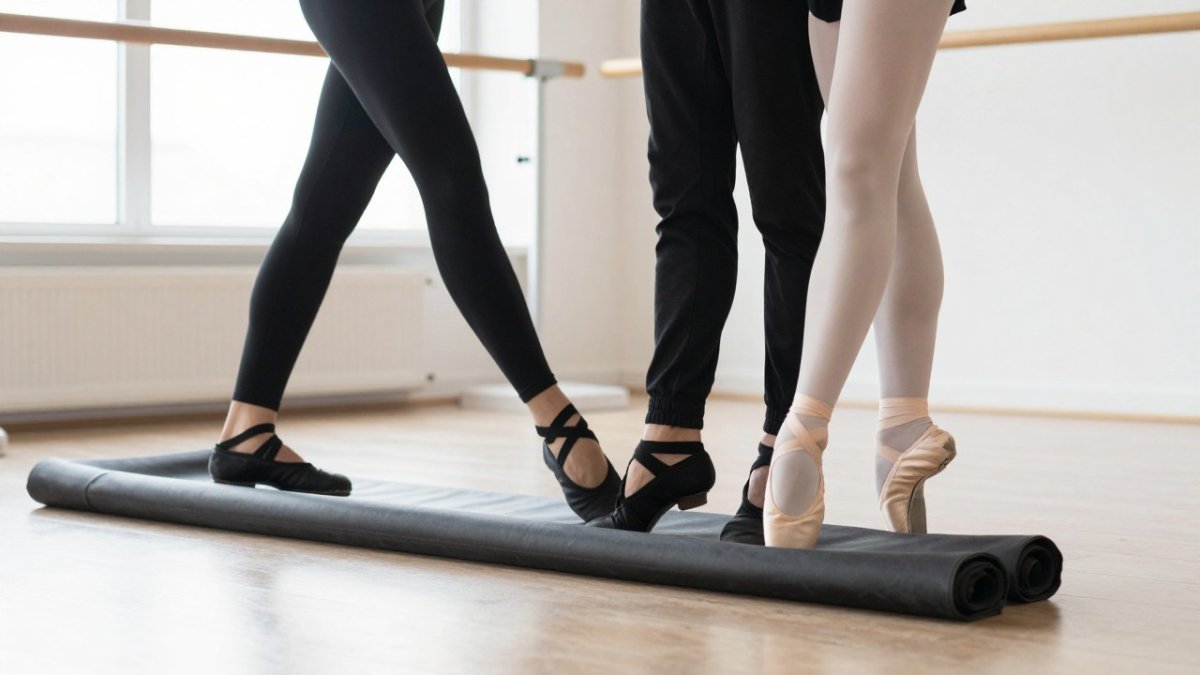
1. Timestep: One Floor for Tap and Multiple Dance Styles
Timestep is the floor to consider when one surface must serve tap alongside other dance styles.
The trade-off is limited detail in the available information. The supplied results do not give construction details or dimensions, so confirm specifications before ordering. For a studio that prioritizes one versatile floor, Timestep is a strong candidate to request a quote for.
2. ProStep Marley Dance Floor Rolls: A Lightweight Ballet Option
ProStep Marley Dance Floor Rolls are presented as a lightweight, reversible option.
Lightweight rolls are easier to move and store, which helps studios that share space or rearrange their rooms. The supplied results do not verify suitability for tap, so a tap-focused studio should test a sample before committing. Roll dimensions were not shown in the research, so confirm them with the seller.
3. VersaStep Pro Marley Dance Floor Rolls: Top Pick for Ballet Studios
The main gap is detail. The available results do not provide full specifications, and tap suitability is not verified. Studios focused mainly on ballet will find this option worth comparing against the ProStep rolls on price and feel.
4. Rosco Adagio Marley: A Home Dance Space Option
Marley flooring is a common choice for home studios because it protects the subfloor and offers reliable traction for ballet.
Home buyers should check tap suitability and dimensions before purchasing, since these were not specified in the research.
5. Bravo Dance Floor: Lightweight and Reversible
Reversibility means the floor can be used on either side, which extends its usefulness for studios with varied needs.
Its strengths are portability and cost. The research does not confirm tap or ballet suitability, however, so it is best suited to general practice or as a secondary floor. Request specifications from the seller before relying on it for a particular discipline.
Dance Studio Flooring Material: Subfloor, Maintenance and Slip Resistance
The surface layer is only the top of a system. Underneath it, the subfloor determines how much shock reaches a dancer's knees and ankles, how the floor sounds, and how long the surface layer lasts. Three variables matter most: the subfloor build, the cleaning protocol, and the traction the surface holds over time.
Building a Sprung Subfloor for a Home or Studio Space
A sprung subfloor is a layer of foam or rubber underlayment placed between the structural floor and the dance surface. The goal is controlled give: enough flex to absorb landing impact, but not so much that the floor feels spongy under turns or pointe work. A common pattern for a home build is a high-density foam or rubber roll laid directly over a flat, clean concrete or wood subfloor, followed by a plywood deck layer, then the vinyl or Marley surface on top.
Thickness and density choices depend on the style. Tap benefits from a firmer, more stable build because a bouncy floor muddies the sound and makes clean stops harder. Ballet benefits from more absorption for jumps and landings. A mixed-use room usually settles on a middle density and tests it before committing.
Watch out: laying a dance surface directly over an uneven or damp subfloor can cause seams to lift, so check flatness and moisture before any roll goes down.
Acoustic Dampening for Tap in Shared Spaces
Tap is loud, and that is the point of the style, but it is also the reason home dancers in apartments and shared buildings run into noise complaints. Most flooring guides cover surface feel and skip sound entirely. For renters who cannot modify the floor, a portable tap board placed over a thick rubber mat is a practical compromise that cuts some transmission without a permanent install.
Cleaning Without Damaging the Slip-Resistance Finish
Vinyl and Marley surfaces carry a factory finish that provides traction. Aggressive cleaners strip that finish, and once it is gone the floor becomes either too slick or too grabby, which is a safety issue for ballet pivots and tap slides. Routine care is simple: sweep or dust-mop before every session to remove grit that acts like sandpaper under dance shoes, then damp-mop with a pH-neutral cleaner and clean water. Avoid solvent-based products, abrasive pads, and wax. Wipe up spills promptly, and check seams and edges regularly, since lifting edges catch shoes and cause trips.
Slip Resistance and Traction Checks
Traction needs vary by style. Ballet depends on controlled grip for turns and pointe work, while tap depends on a predictable slide and stop. Before a floor goes into daily use, test it in dance shoes: turn, pivot, and slide on a sample or a corner of the installed floor. If the surface feels inconsistent across the room, the subfloor or the seams are usually the cause rather than the surface itself.
Marley dance floor for home and portable options
A Marley dance floor for home use suits dancers who want a stable ballet surface without a permanent installation. The practical question is not whether Marley works at home, but how to install it so it stays flat, stays put, and comes up cleanly when the room goes back to being a living space.
Portable Versus Permanent Installation
Portable setups use rolled Marley or vinyl that is unrolled for practice and rolled back up for storage. They work best over a hard, flat surface, and they need a way to stay in place: tape the seams and edges with a dance-floor tape that releases without residue, and use the same tape to mark the perimeter so the roll goes back down in the same position. Permanent setups bond or fasten the surface to a subfloor and are the right choice for a dedicated studio where the floor will not move.
Choosing Thickness for the Style
Thickness is where home buyers most often guess. A thinner roll is easier to move and store and gives a firmer feel that suits tap, while a thicker roll adds absorption for ballet jumps and landings. A common pattern is to pick a mid-range thickness for a mixed-use home space and test it in shoes before buying a full roll. Confirm the roll dimensions and thickness with the seller, since these vary by product and were not specified in the research for this guide.
A Budget-Friendly Home Build
A workable home setup does not require a full studio build. Lay a high-density foam or rubber underlayment over the flat subfloor, add a plywood deck if the room allows the height, then unroll the Marley surface on top and tape the seams. This gives some of the shock absorption of a sprung floor at a lower cost and keeps the surface removable.
Watch out: unrolling a cold Marley roll straight onto the floor can leave waves and curled edges, so let the roll relax flat in the room before taping it down.
Storage and Care Between Sessions
Roll the floor surface-side out, store it flat or standing on end rather than folded, and keep it away from heat sources that can warp vinyl. Sweep before every session and damp-mop with a pH-neutral cleaner to protect the traction finish. Check the tape lines each time the floor goes down, since worn tape is the most common cause of a seam catching a shoe.
What is the best flooring for dance studio use?
The best flooring depends on the dance styles taught and the budget available. Studios teaching both tap and ballet benefit from a multipurpose floor such as Timestep, while ballet-focused rooms often favor Marley-style rolls. Test a sample where possible, since surface feel matters more than specifications alone.
Frequently Asked Questions
What is the best flooring for tap dancing?
A floor for tap needs enough give to protect joints and enough surface texture to produce clear sound without excessive grip. Options such as Timestep are described as suitable for tap, while standard Marley rolls are primarily positioned for ballet. Check whether a floor is rated for tap before buying, since the sound and wear it produces differ from ballet use. Compare surface construction and ask the supplier which dance styles the product was tested for.
What type of floor is best for ballet?
Ballet calls for a smooth, low-friction surface that allows clean turns and slides while still giving the dancer enough traction to stop safely. Marley-style vinyl rolls are widely used for ballet because they are designed for that balance. Choose a roll that lies flat, does not curl at the edges, and can be cleaned easily.
Can you use the same dance floor for tap and ballet?
Yes, if the floor is designed for multiple styles. Timestep is presented as a multipurpose floor that handles tap along with other dance styles. A floor built only for ballet may not produce the sound or durability tap requires, so confirm suitability before purchasing. A single multipurpose surface can save space in a home studio that serves both styles.
Is Marley flooring suitable for home dance studios?
Marley flooring is a common choice for home dance spaces because the rolls are portable, can often be reversed, and do not require permanent installation. Before buying, measure the space, confirm the roll dimensions with the seller, and check that the floor can be placed over your existing subfloor. Pricing depends on size, quantity and delivery, so request a quote from Glory and Power Enterprises at gloryandpower.com.