 blog
blog
Marley Dance Floor for Home Studios: 2026 Guide
Table of Contents
- What Is a Marley Dance Floor and Why Home Studios Use It
- How to Choose the Right Marley Floor for Your Home Studio
- Sprung Dance Floor Installation: DIY vs Professional
- Portable Marley Dance Floor Mats for Flexible Home Use
- Dance Floor Maintenance Tips for Home Environments
- Acoustic Impact and Slip Resistance in Home Studios
- Frequently Asked Questions
Last Updated: September 16, 2026
What Is a Marley Dance Floor and Why Home Studios Use It
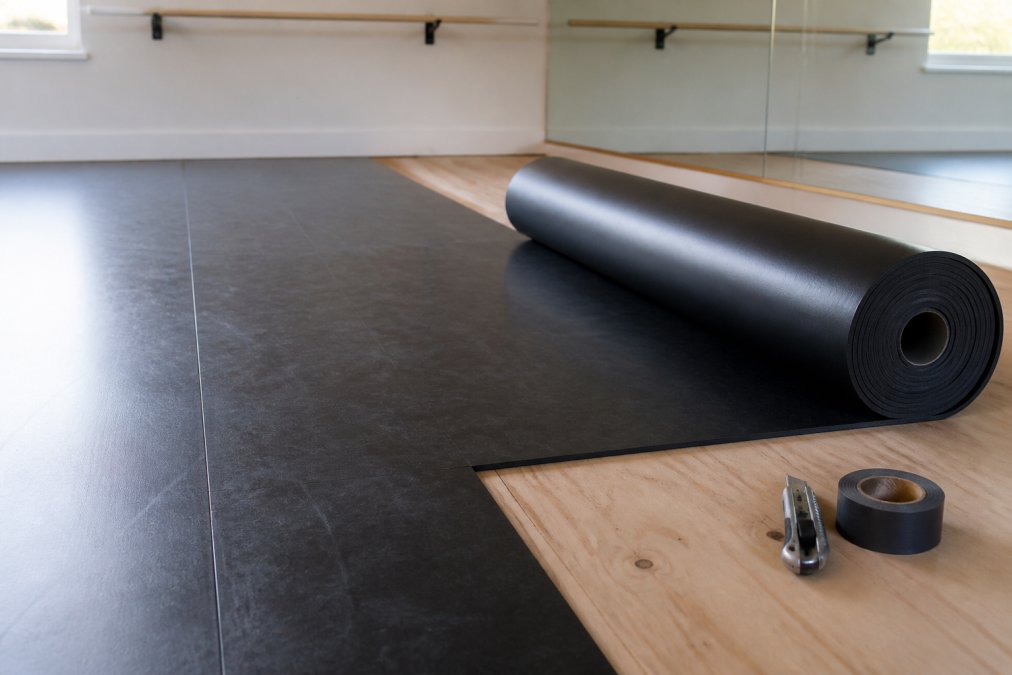
A Marley dance floor is a vinyl performance surface, typically 1.5 to 2 millimeters thick, that rolls out over a hard, flat subfloor to give dancers consistent traction and slip resistance. This guide from Glory and Power Enterprises covers how to choose, install, and maintain one in a spare room, garage, or basement.
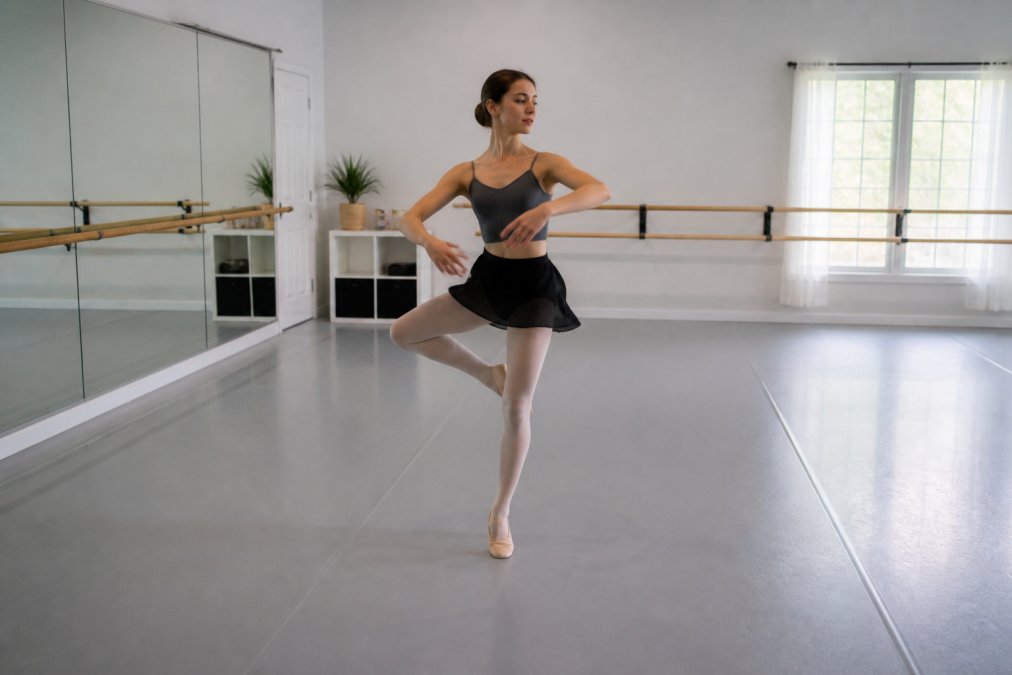
The attraction for home studios is simple. Marley is a resilient flooring material that behaves the same way on a basement slab as it does in a professional rehearsal space, so a dancer's turns and landings stay predictable. It also protects the subfloor underneath from scuffs and moisture.
How to Choose the Right Marley Floor for Your Home Studio
The right Marley floor for a home studio balances thickness, density, and roll length against the size of your room and how you plan to use it. Buy too thin and the surface telegraphs every bump in the subfloor; buy too thick and rolls get heavy and awkward to move alone.
Start with these questions:
- How much square footage do you need to cover, including a border for seaming?
- Will the floor stay down permanently or roll up between sessions?
- What style do you train in most: ballet, tap, contemporary, or a mix?
- Is the subfloor smooth and level, or does it need prep first?
Thickness, Density, and Wear Layer Explained
Thickness controls how forgiving the surface feels underfoot. Density determines how well the floor resists compression over time, and the wear layer is the top coating that takes the abuse from shoes, taps, and repeated pivots.
Subfloor Compatibility for Home Spaces
Concrete slab. The most common basement and garage option, and the one with the most hidden risk. Before laying anything, tape a 2-foot square of clear plastic sheeting to the slab, seal the edges, and leave it for 24 hours. Condensation on the underside means moisture is migrating up through the concrete. Marley laid over a damp slab traps that moisture, and the adhesive or tape line fails first. A concrete sealer or a vapor barrier goes down before the vinyl. Also fill any control-joint cracks and grind down high spots, a 1/8-inch ridge is enough to telegraph through the surface.
| Subfloor Type | Compatible? | Prep Needed |
|---|---|---|
| Concrete slab | Yes, if level and dry | Plastic-sheet moisture test, seal or vapor barrier, fill cracks, grind high spots |
| Plywood over joists | Yes | Sand seams, countersink fasteners, seal joints, add blocking if it flexes |
| Hardwood | Yes, with underlayment | Protect finish, bridge gaps, avoid direct adhesive |
| Carpet | No | Remove, or cover with rigid hardboard or plywood panel |
| Uneven tile | Rarely | Self-leveling underlayment or plywood panel layer first |
Sprung Dance Floor Installation: DIY vs Professional
Sprung dance floor installation is the step where most home studio owners have to make a real decision: build the spring layer yourself or bring in a professional. The vinyl surface itself is manageable for a careful DIYer. The sprung base underneath is a different job.
Go DIY if:
- Your room is small and you are laying a portable mat over an existing hard floor
- You are comfortable with basic tools and can measure and cut accurately
- You are not building a true sprung base, just a surface layer
Bring in a professional if:
- You want a permanent sprung system with power springs and secure fastening
- Your subfloor needs leveling or repair
- The room is large enough that seaming and stretching become difficult to control
Portable Marley Dance Floor Mats for Flexible Home Use
Portable Marley dance floor mats solve the space problem for dancers who cannot dedicate a room. These roll-out flooring options store against a wall or in a closet and lay down in minutes.
Dance Floor Maintenance Tips for Home Environments
Dance floor maintenance tips for a home studio come down to three habits: clean often, control moisture, and protect the surface from things that are not dance shoes.
- Sweep or vacuum before every session to remove grit that acts like sandpaper underfoot.
- Damp-mop with a manufacturer-approved cleaner; never soak the floor or let water sit at the seams.
- Keep street shoes off the surface. Grit and oils from outdoor shoes break down the wear layer.
- Roll portable mats loosely around a core, never folded, to avoid creases that never flatten out.
- Check seams and edges monthly and re-tape as needed before they lift.
Acoustic Impact and Slip Resistance in Home Studios
Acoustic impact and slip resistance are the two performance factors home studio owners notice first, and they pull in opposite directions. A softer floor dampens sound but can feel less secure underfoot. A harder, more slip-resistant surface transmits more noise to the rooms below.
How Marley Thickness Affects Sound
The vinyl surface itself is a thin wear layer, not a sound barrier. What changes the acoustics is what sits under it. A few patterns hold up across home installs:
- Vinyl alone over a hard subfloor. The thinnest, loudest configuration. Impact noise from jumps and landings travels straight into the slab or joists and radiates through the structure. Fine for a ground-floor room over a slab; the worst choice for a second-floor bedroom above a living space.
- Vinyl over a foam or rubber shock layer. The most common home upgrade. A closed-cell foam or rubber underlayment of roughly 3 to 10 millimeters breaks the direct path between the vinyl and the subfloor, which is what actually reduces the thump transmitted to the room below. Thicker foam dampens more but feels softer and less stable under fast turns.
- Vinyl over a true sprung system. The best acoustic result and the best feel, because the spring layer absorbs impact before it reaches the structure. It is also the most expensive and the hardest to retrofit into an existing room.
Slip Resistance, Texture, and the Safety Trade-Off
Slip resistance comes down to surface texture and matte finish. A properly maintained Marley floor gives predictable traction for turns and stops without being so grippy that it grabs the knee or ankle during a fast pivot. Worn or dirty surfaces lose that balance, which is why maintenance is a safety issue, not just a cosmetic one.
- Shoe choice. Ballet slippers, jazz shoes, and bare feet all interact differently with the same surface. Test the floor in the footwear you actually train in, not in socks.
- Humidity. A basement studio that swings between damp and dry will feel different season to season. Vinyl that is slightly tacky in summer can feel slick in a dry winter room.
- Residue. Household cleaners, floor polish, and even some mop solutions leave a film that destroys the traction balance. Use only a manufacturer-approved cleaner, and rinse rather than let it dry on the surface.
Frequently Asked Questions
What is the best Marley floor for a dance studio?
The best Marley floor depends on your dance style and space. For home studios, a vinyl roll-out with a matte finish and at least 1.5mm wear layer works for ballet, tap, and contemporary dance. If you need shock absorption, pair it with a sprung subfloor. Look for slip-resistant surface texture and a weight that stays flat without adhesive. Glory and Power Enterprises offers Marley options sized for home use.
Do you need a sprung floor under a Marley mat?
Not always, but a sprung dance floor installation adds shock absorption that reduces joint impact during jumps and leaps. For tap dance, a sprung subfloor also improves sound quality. If you only do barre work or low-impact contemporary dance, a Marley mat over a flat, clean concrete or plywood subfloor may be enough. For high-impact training, combine both. Check with your flooring supplier about subfloor compatibility before you install.
How do you clean and maintain a home Marley floor?
Sweep or vacuum daily to remove grit that can scratch the surface. Damp-mop with a pH-neutral cleaner and water, then dry immediately. Avoid harsh chemicals, waxes, or abrasive pads. For dance floor maintenance tips, place felt pads under barres and equipment, and use a mat at the entry to trap dirt. Roll up portable mats when not in use and store them flat. Inspect seams and edges monthly for lifting, and re-tape as needed.
How much does a Marley dance floor cost?
Pricing for a Marley dance floor varies by roll length, width, thickness, and whether you add a sprung subfloor. Portable mats cost less than permanent installations. For an accurate quote, contact Glory and Power Enterprises directly with your room dimensions and dance style. They can recommend the right square footage and provide current pricing, shipping options, and financing details. Avoid generic online estimates that do not account for subfloor preparation or seaming.