 blog
blog
Buying Professional Gymnastics Floors Online
Table of Contents
- Understanding Professional Gymnastics Flooring Systems
- Carpet Bonded Foam vs Spring Floors: Which System Fits Your Needs
- Key Specifications to Evaluate When Selecting Professional Flooring
- Gymnastics Floor Maintenance Best Practices
- Custom Gym Floor Design Benefits and Implementation
- Purchasing Considerations for Professional Gymnastics Floors
- Frequently Asked Questions
Last Updated: September 20, 2026
Understanding Professional Gymnastics Flooring Systems
Professional gymnastics floors are engineered surfaces designed to absorb impact, provide consistent spring response, and support advanced athletic movements. When purchasing professional gymnastics floors online, understanding the fundamental system types is essential to matching your facility's specific needs.
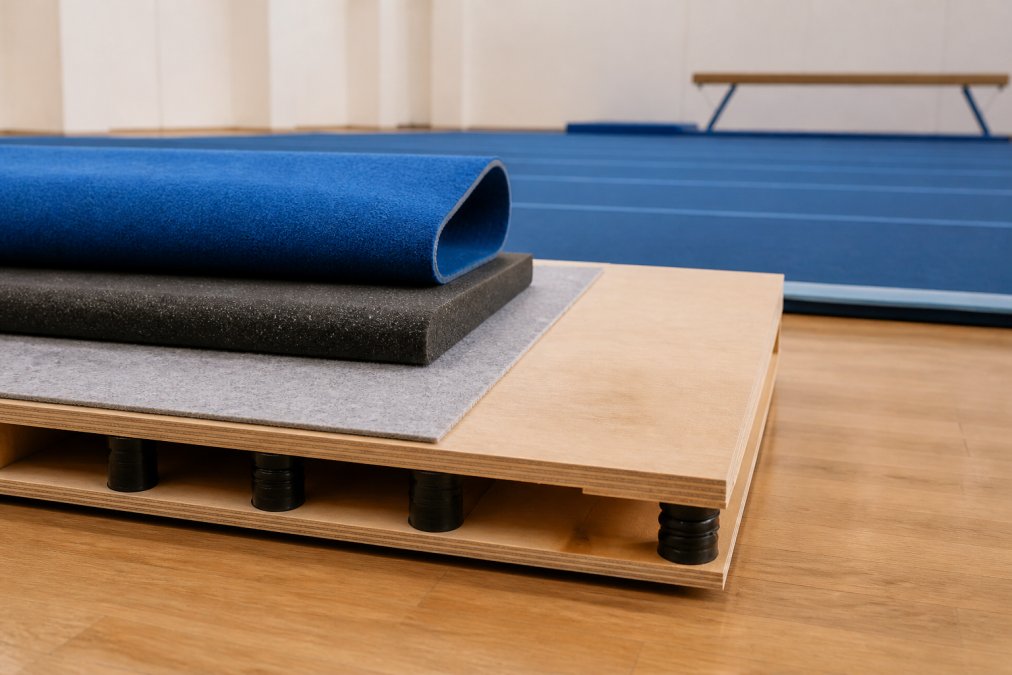
Professional flooring systems fall into two main categories: spring-based and foam-based. Each offers different performance, durability, and cost profiles that affect training quality and long-term maintenance.
Spring Floor Systems vs. Foam Mats
Spring floor systems use a wooden deck (typically two-layer Baltic birch plywood) mounted on resilient springs that compress under weight and release energy on rebound. Springs are secured with bolt and thread-locker fastening systems for durability.
Foam mats use high-density foam padding bonded to a base layer. They absorb impact but don't actively return energy, making them suitable for recreational training but less ideal for advanced competitive work.
Spring floors excel in competitive environments by reducing joint stress and maintaining consistent rebound. Foam systems work well for recreational gymnastics, martial arts, and dance studios where impact absorption is the priority.
Competition-Grade vs. Recreational Options
Competition-grade flooring meets rigorous testing standards for shock attenuation, surface friction, and resilience. It features thicker plywood, higher-quality springs, and more sophisticated fastening than recreational options.
Recreational options prioritize affordability and ease of installation but may not meet competition certification requirements or deliver consistent performance for advanced skills.
Carpet Bonded Foam vs Spring Floors: Which System Fits Your Needs
The choice between carpet bonded foam and spring floors depends on your facility's primary use, budget, and performance expectations.
Carpet bonded foam offers straightforward installation, lower upfront cost, and minimal maintenance. It works effectively for recreational gymnastics, cheerleading, and martial arts training.
Spring floors deliver superior performance for competitive training by reducing fatigue and providing precise feedback. However, they require more sophisticated installation and periodic maintenance.
Impact Absorption and Safety Ratings
Impact absorption measures how effectively a floor reduces force transmitted to an athlete's body during landings. Professional gymnastics floors are tested for shock attenuation, the percentage of impact energy absorbed rather than transmitted upward.
Spring floors achieve superior shock attenuation by gradually releasing energy over time, reducing peak forces on joints. Carpet bonded foam absorbs impact but releases energy sharply, resulting in greater force transmission.
Safety standards establish guidelines for impact absorption, surface friction, and structural integrity. Verify that systems meet applicable certifications for your intended use.
Durability and Long-Term Performance
Spring floor durability depends on spring quality, fastening reliability, and maintenance. High-quality springs with proper fastening can maintain performance for many years. Baltic birch plywood resists wear and provides stability.
Carpet bonded foam durability is limited by foam degradation. Over time, permanent compression reduces impact absorption and creates inconsistent surfaces. Heavy-use facilities may need replacement more frequently than with spring systems.
Total cost of ownership often favors spring systems in high-use facilities despite higher initial cost. Recreational facilities with lighter usage may find foam more cost-effective.
Key Specifications to Evaluate When Selecting Professional Flooring
When evaluating professional gymnastics floors online, specific technical specifications determine whether a system will meet your facility's performance and safety requirements.
Baltic Birch Plywood and Spring Tension
Baltic birch plywood is the industry standard because it combines strength, stability, and consistent performance. Two-layer construction provides adequate thickness and resilience for competitive use.
Spring tension varies based on spring type, quantity, and design. Proper tension ensures consistent rebound and reduces dead spots.
Foam Density and Shock Attenuation
Foam density (measured in pounds per cubic foot) correlates with durability and impact absorption. Higher-density foam resists compression longer. Shock attenuation specifications indicate the percentage of impact force absorbed.
Carpet bonded foam specifications should include density and attenuation ratings to verify systems meet safety standards.
Safety Standards and Certifications
Professional gymnastics floors should meet safety standards for impact absorption, surface friction, and structural stability. Verify that products include certification documentation.
Gymnastics Floor Maintenance Best Practices
Proper maintenance extends flooring lifespan, preserves performance characteristics, and ensures consistent safety. Maintenance requirements differ significantly between spring and foam systems.
Routine Cleaning and Inspection
Sweep or vacuum regularly and wipe with a slightly damp cloth using appropriate cleaning solutions. Avoid excessive moisture that can seep between layers or compromise adhesive bonds.
Inspect for visible damage, loose fasteners, and surface changes. Check spring floors for rust and corrosion; foam systems for compression and wear. Address issues early to prevent major repairs.
Spring System Care and Longevity
Spring systems require periodic attention. Check bolts, thread-lockers, and fastening hardware for security. Clean accumulated dust and debris. In high-use facilities, springs may eventually require replacement.
Springs perform best on stable, level subfloors with adequate air circulation underneath. Poor conditions or inadequate ventilation can lead to rust, corrosion, or uneven settling.
Custom Gym Floor Design Benefits and Implementation
Custom design optimizes flooring for your space and training focus. Before selecting dimensions, evaluate whether your existing subfloor can support professional gymnastics flooring, this assessment directly impacts installation success and durability.
Subfloor Assessment and Preparation Requirements
Professional gymnastics floors require stable, level subfloors. Many online buyers don't realize their existing concrete or wooden floor may require significant preparation before installation.
Concrete Subfloors: Concrete must be structurally sound, sealed, and tested for moisture before installation. Moisture migration causes flooring failure, foam delamination, and spring corrosion. Seal with epoxy or polyurethane and test moisture levels. Uneven surfaces require grinding or self-leveling compounds. Repair cracks before installation.
Wooden Subfloors: Wooden subfloors need adequate support joists (typically 16 inches on center) and cross-bracing. Wood must be dry, stable, and free from rot. Excessive deflection causes dead spots and uneven rebound. Inspect for adequate ventilation underneath. Verify structural integrity with a qualified contractor before installation.
Ventilation and Moisture Control: Both concrete and wooden subfloors benefit from adequate air circulation to prevent moisture accumulation and rust. Ensure crawl spaces aren't sealed in ways that trap moisture. Below-grade installations may need dehumidification systems.
Sizing and Layout Customization
Once subfloor readiness is confirmed, custom sizing optimizes floor dimensions for your space. Layouts can include separate areas for tumbling, vault runways, bar work, and conditioning, each with specifications matched to activity type.
Plan layouts to account for traffic patterns, equipment placement, safety clearances, and future expansion.
Lead Times and Delivery Coordination
Custom flooring has lead times ranging from several weeks to several months. Account for these in your project timeline and coordinate delivery with subfloor preparation and installation scheduling.
Delivery logistics require careful planning. Floors are heavy and require specialized handling and freight shipping depending on location. Customizable shipping options allow facilities to coordinate delivery windows with installation readiness. Understanding shipping processes, unloading requirements, and material storage needs prevents installation delays and potential damage from weather or improper handling.
Purchasing Considerations for Professional Gymnastics Floors
Buying professional gymnastics floors online involves evaluating multiple factors beyond product specifications. Lead times, delivery options, warranty coverage, installation support, and total cost of ownership all influence the purchasing decision and long-term value of your investment.
Total Cost of Ownership and Hidden Expenses
The purchase price of flooring is only one component of total facility investment. Buyers should account for all expenses associated with acquiring and maintaining a professional flooring system over its expected lifespan.
Installation and Labor: Professional installation is strongly recommended for spring floor systems to ensure proper alignment, fastening, and surface preparation. Installation costs vary based on floor size, complexity, and local labor rates. Foam-based systems may allow facility staff to handle installation, reducing labor costs but requiring careful attention to adhesive application and surface preparation.
Subfloor Preparation: If your existing subfloor requires preparation, concrete sealing, moisture testing, grinding, wooden floor reinforcement, or dehumidification system installation, these costs should be budgeted separately.
Warranty Coverage and Manufacturer Support
Warranty terms vary significantly among suppliers. Warranty details should specify what is covered (manufacturing defects, material failure, workmanship) and what is excluded (damage from improper installation, inadequate maintenance, environmental damage).
Lead Times and Delivery Logistics
Professional gymnastics floors are typically manufactured to order. When planning facility upgrades or renovations, account for lead times in your project timeline. Communicate with the supplier about your target installation date and confirm that manufacturing and delivery can be coordinated accordingly.
Supplier Evaluation and Reputation
When purchasing professional flooring online, supplier reliability is critical. Evaluate suppliers based on their experience in the gymnastics industry, customer reviews, responsiveness to pre-purchase questions, and willingness to provide references from other facilities. Reputable suppliers can answer technical questions about specifications, subfloor requirements, customization options, and maintenance without hesitation.
Frequently Asked Questions
What is the difference between carpet bonded foam and spring floors?
Carpet bonded foam features layers of compressed foam covered with carpet, offering solid impact absorption at a lower cost and easier installation. Spring floors use resilient springs beneath plywood decking, providing superior shock attenuation, better rebound for tumbling skills, and longer durability for high-volume competitive use. Spring systems excel for serious training environments; foam options work well for recreational facilities or budget-conscious gyms.
What safety standards should professional gymnastics flooring meet?
Professional gymnastics flooring must meet safety standards for impact absorption and shock attenuation. These standards ensure the floor reduces injury risk during high-impact activities like tumbling and aerial skills. Look for flooring systems tested and certified to these specifications. Manufacturers should provide documentation of their compliance, and installations should follow their recommended subfloor preparation to maintain safety ratings.
How do you maintain professional gymnastics flooring systems?
Routine maintenance includes daily sweeping to remove dust and debris, weekly mopping with mild soap and water, and monthly inspections for wear or damage. For spring floor systems, check fasteners and springs annually for tightness and corrosion. Avoid excess moisture and direct sunlight. Proper maintenance extends floor life significantly and preserves impact absorption properties. Most manufacturers provide detailed care guidelines specific to their systems.
What should you look for when buying professional gymnastics floors online?
Evaluate the floor system type (spring vs. foam), plywood quality and thickness, foam density ratings, and safety certifications. Verify lead times match your installation deadline, understand delivery and freight handling processes, and confirm warranty coverage. Review customization options for sizing and layout. Check financing availability if needed. Ensure the manufacturer provides comprehensive installation guidance or support.