 how-to
How to Reduce Gym Floor Impact: A Complete Guide
Table of Contents
- Understanding Impact Noise vs. Airborne Noise in Gym Environments
- Best Shock Absorbing Gym Flooring Options
- The Role of Acoustic Underlayment and Vibration Isolation
- Gym Flooring Thickness Guide: Choosing the Right Protection Level
- Sprung Dance Floor Benefits for Impact Reduction
- Installing Damping Platforms and Vibration Control Systems
- Maintaining Impact-Absorbing Floors for Long-Term Performance
- Apartment and Condo Considerations for Impact Noise Control
- Frequently Asked Questions
Last Updated: October 2, 2026
Understanding Impact Noise vs. Airborne Noise in Gym Environments
Impact noise occurs when heavy objects strike a surface, a barbell dropping, feet landing hard during a jump, or weights crashing down. Airborne noise travels through the air from voices, music, or equipment operation.
Impact noise vibrates through the floor structure itself, traveling downward into subfloors and ceilings below, which is why choosing flooring designed to reduce gym floor impact is essential. Airborne noise bounces around the room.
Most gym owners focus only on sound deadening without addressing vibration transmission. Impact vibration shaking through building structure can damage spaces below, violate lease terms in apartment buildings, or create structural stress over time.
Glory and Power Enterprises designs flooring specifically to handle impact forces. The two-layer Baltic birch construction with power springs absorbs the shock of heavy landings and equipment drops before vibration reaches the subfloor.
Best Shock Absorbing Gym Flooring Options
Several flooring types excel at impact protection, each with measurably different shock absorption and noise reduction performance.
Rubber flooring tiles rank among the most effective for shock absorption. High-density rubber (60-80 Shore A durometer) compresses on impact without transferring force downward.
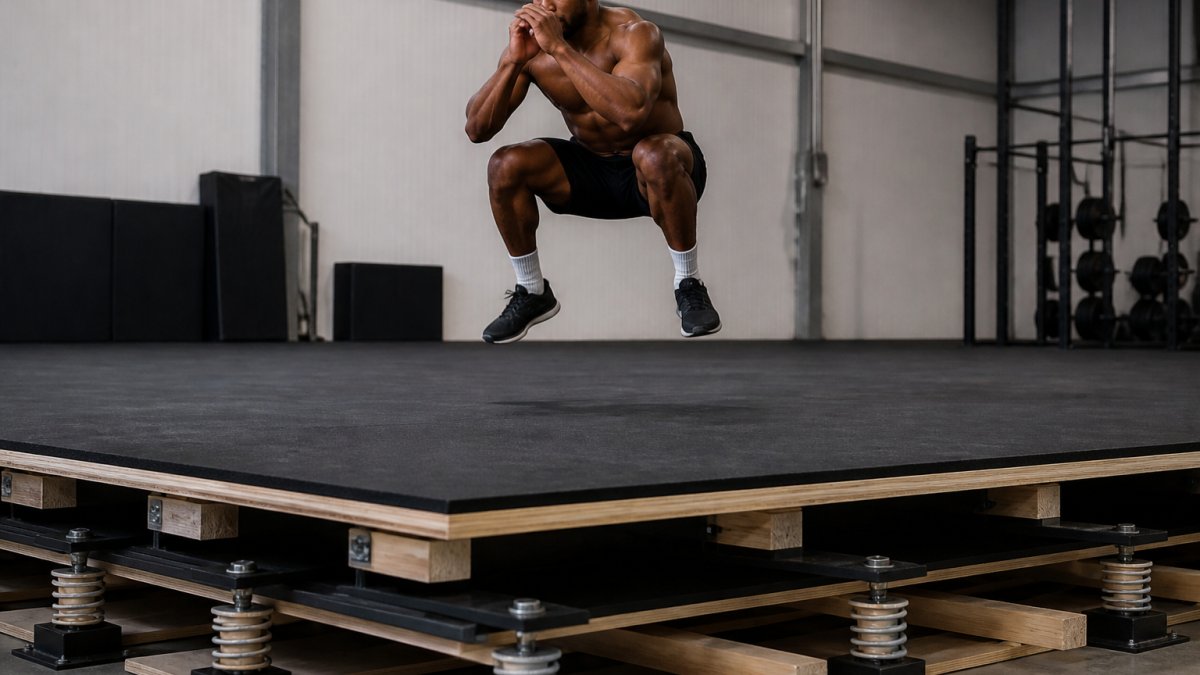
Sprung flooring systems use power springs beneath the surface layer to absorb and dissipate impact energy, reducing force transmitted to the subfloor by 60-80% compared to solid flooring.
Foam-bonded carpet provides moderate shock absorption at lower cost but degrades after 2-3 years of heavy use, reducing impact protection measurably over time.
Plywood subfloors with resilient underlayment reduce vibration transmission by 20-35 dB depending on material type. Cork underlayment (1/2 inch) provides 22 dB reduction for 5-7 years; rubber underlayment (1/2 inch) delivers 28-32 dB reduction for 8-10 years.
The Role of Acoustic Underlayment and Vibration Isolation
Acoustic underlayment sits between your flooring and the subfloor to stop vibration from traveling downward into the building structure.
Without underlayment, impact vibration travels through the subfloor and into the ceiling of the space below, creating thudding sounds and vibration for residents or businesses underneath.
Underlayment materials vary: rubber (excellent damping, durable), cork (good absorption, moderate cost, degrades over time), foam (affordable, loses effectiveness quickly), and fiberglass (professional-grade, maintains performance for years).
Professional installations use 1/2 inch or thicker underlayment to achieve meaningful vibration isolation.
Vibration isolation systems use damping platforms with springs, elastomers, or fluid dampers to convert impact energy into heat dissipation.
Combined with shock-absorbing flooring, acoustic underlayment creates layered defense: the floor absorbs initial impact, and the underlayment isolates remaining vibration from the structure.
Gym Flooring Thickness Guide: Choosing the Right Protection Level
Thickness directly affects impact protection. Thicker flooring absorbs more energy before transmitting it downward.
Standard thickness ranges:
- 3/8 inch: light-duty use (stretching, light cardio, yoga)
- 1/2 inch: moderate impact (strength training, aerobics)
- 3/4 inch: heavy impact (Olympic lifting, plyometrics, gymnastics)
- 1 inch or thicker: professional competition and extreme impact
Home gyms with occasional deadlifts need 1/2 inch rubber flooring; CrossFit boxes or Olympic lifting clubs require 3/4 inch minimum.
Sprung flooring systems typically run 1.5 to 2 inches thick, allowing the spring mechanism room to compress and rebound for superior impact reduction.
Consider your equipment type when choosing thickness. A deadlift platform needs more protection than an aerobics area. Heavy dumbbells and barbells create sharper, more concentrated impact forces than body-weight exercises.
Glory and Power Enterprises sprung floors are engineered to specific thickness standards for different sports. Gymnastics floors require different spring tension and thickness than dance floors. The customizable design ensures appropriate protection for your activity level.
Sprung Dance Floor Benefits for Impact Reduction
Sprung flooring transforms how impact forces travel through a gym. Instead of a hard surface that sends shock straight down, the spring mechanism catches the impact and dissipates it gradually.
How sprung floors work:
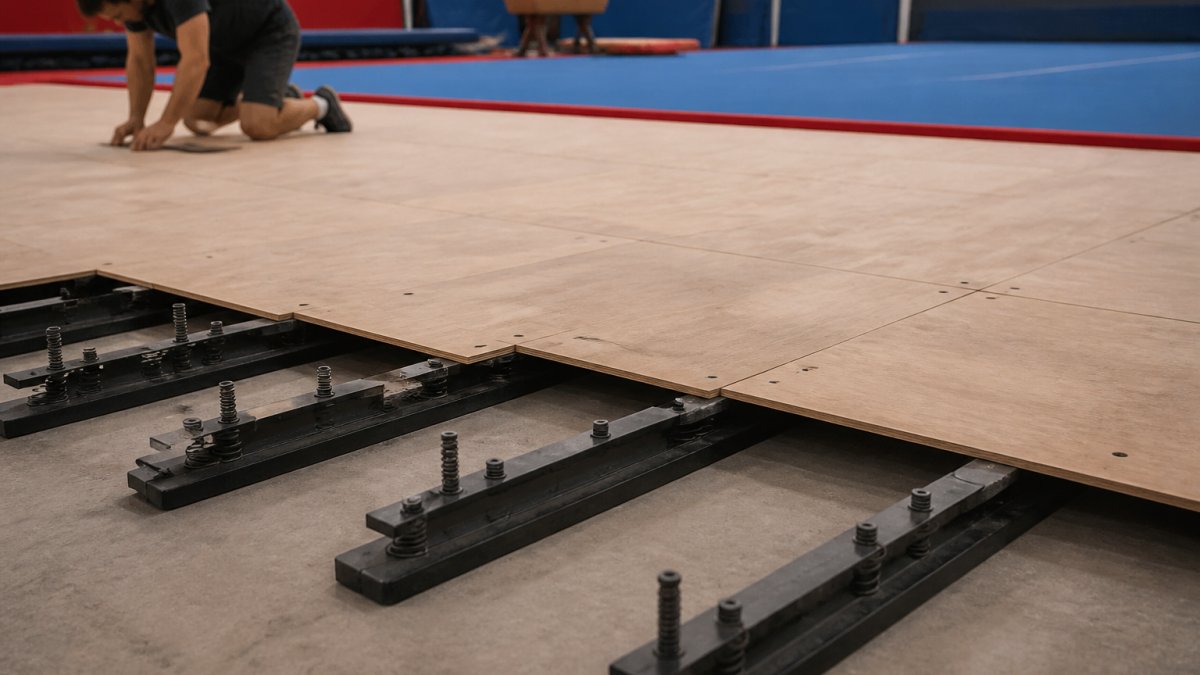
The power springs beneath the surface layer compress when weight lands on them. This compression absorbs the impact energy. As the springs rebound, they return the absorbed energy back into the athlete's body, improving jump height, reducing landing stress, and protecting joints.
This creates a feedback loop. Athletes jump higher because the floor returns more energy. Higher jumps mean greater impact on landing. The springs handle this increased force without degradation.
Benefits for specific activities:
Dancers benefit from consistent rebound. A sprung floor allows dancers to execute movements with less joint stress and greater precision. The predictable spring response helps with timing and technique.
Gymnasts performing tumbling passes gain confidence. The floor absorbs the force of dismounts and landings, reducing injury risk. Repeated high-impact skills become safer over years of training.
Cheerleaders executing stunts rely on the stable, responsive surface. Bases need a floor that won't shift or absorb energy unpredictably. Sprung flooring provides the stability required for safe partner stunts.
Installing Damping Platforms and Vibration Control Systems
Installation of damping platforms requires careful planning and precise execution.
Step-by-step installation process:
-
Assess the subfloor - Inspect for damage, moisture, and levelness. Uneven subfloors cause premature wear and uneven impact absorption.
-
Install the base isolation layer - Place acoustic underlayment across the entire floor area. Ensure no gaps. Overlap seams by at least 6 inches.
-
Position damping platforms - If using dedicated vibration platforms, space them according to load distribution. Platforms should support the weight of equipment plus athletes.
-
Add the spring system - For sprung floors, install power springs in a grid pattern. Spacing affects performance. Closer spacing increases support and reduces deflection.
-
Install the wearing surface - Attach the top layer (rubber, wood, or specialized flooring) to the spring system. Secure fasteners must be appropriate for your flooring type.
-
Test the system - Walk, jump, and apply weight across the floor. Check for uneven response or soft spots. The floor should feel consistent across all areas.
Glory and Power Enterprises provides detailed installation specifications with each order, including customized guidance for your facility's specific layout.
Maintaining Impact-Absorbing Floors for Long-Term Performance
Proper maintenance preserves impact protection over years of use.
Regular maintenance tasks:
- Inspect springs and fasteners quarterly for looseness or corrosion
- Clean the surface with pH-neutral cleaner (avoid harsh chemicals that degrade rubber or wood)
- Check underlayment for moisture or compression
- Monitor for uneven wear patterns that indicate alignment issues
Common maintenance issues:
Rubber flooring can develop surface cracks from UV exposure or temperature extremes. These are cosmetic initially but can worsen if moisture seeps underneath.
Sprung floors occasionally develop squeaking sounds. This usually indicates loose fasteners. Tighten bolts and apply thread-locker compound to prevent recurrence.
Foam underlayment compresses over time under heavy loads. If the floor begins feeling softer or less responsive, the underlayment may need replacement.
Seasonal considerations:
Temperature fluctuations cause materials to expand and contract. In winter, rubber may stiffen. In summer, it softens. This is normal. However, extreme temperature swings can stress fasteners and joints. Maintain consistent climate control when possible.
Moisture is the primary enemy of impact-absorbing floors. Water degrades foam, rusts springs, and causes wood to warp. Ensure proper drainage around the facility and address any water intrusion immediately.
Apartment and Condo Considerations for Impact Noise Control
Renters and condo owners face unique challenges that homeowners do not. Lease agreements often restrict modifications, and building codes limit acceptable noise transmission. Understanding these constraints before purchasing flooring prevents costly mistakes and neighbor disputes.
Lease and legal considerations:
Most residential leases prohibit permanent flooring changes without written landlord approval. Installing a sprung floor system or thick rubber mats may violate your agreement. Check your lease for language around "alterations," "structural modifications," or "flooring changes." Many leases require landlord consent for anything beyond temporary floor coverings.
Building codes in many jurisdictions specify maximum impact noise transmission. The Sound Transmission Class (STC) rating measures airborne sound transmission; the Impact Isolation Class (IIC) measures impact noise specifically.
Practical steps before installing flooring:
-
Request written approval from your landlord. Explain the flooring type, installation method, and that it will be removed when you move (if applicable). Provide product specifications and installation documentation. Landlords are more likely to approve temporary solutions than permanent ones.
-
Check local building codes. Contact your city or county building department and ask about residential impact noise requirements. Some jurisdictions have stricter standards than others. Knowing the requirement helps you choose flooring that complies.
-
Review your condo association bylaws (if applicable). Condo owners often have more freedom than renters, but many associations still restrict modifications to common areas or require approval for structural changes.
-
Document baseline noise levels. Before installing flooring, record noise from your gym activities on a smartphone or with a decibel meter app. This creates a reference point and helps you measure improvement after installation.
Solutions for renters:
Interlocking rubber mats offer the most flexibility for renters.
Managing neighbor relationships and noise complaints:
Documentation for dispute resolution:
Frequently Asked Questions
What materials are best for reducing gym floor impact?
High-density rubber, sprung flooring systems with power springs, and acoustic underlayment are the most effective materials. Rubber flooring tiles absorb shock through their dense composition, while sprung floors distribute impact energy across secured springs. Acoustic underlayment beneath any flooring layer adds vibration isolation and reduces sound transmission to lower levels. The best solution combines multiple layers: a resilient base, shock-absorbing middle layer, and durable top surface rated for your specific activities.
How does a sprung floor help reduce impact for athletes?
Sprung dance floors use power springs secured beneath a two-layer structure to absorb and distribute impact energy. When an athlete lands, the springs compress and release, reducing the force transmitted to joints and bones. This vibration isolation protects against repetitive stress injuries common in gymnastics, cheerleading, and martial arts. The spring system also improves athletic performance by providing responsive feedback during training, allowing athletes to generate more power with less risk of injury.
What do you put under gym flooring to reduce impact noise?
Acoustic underlayment is the primary layer placed beneath gym flooring to reduce impact noise and vibration transmission. Common options include rubber underlayment, foam padding, and cork-based materials. For maximum noise attenuation, use high-density rubber at least 1/2 inch thick. Some facilities use interlocking mats with built-in dampening to simplify installation.
How do I know if my gym floor is providing enough impact protection?
Test your floor by dropping a weighted object from a standard height and listening for vibration transmission to lower levels. If you hear significant noise below the gym or feel vibration through the floor during high-impact activities like deadlifts or jumping, your current flooring needs reinforcement. Consider having a professional acoustic assessment done, especially in multi-unit buildings where impact noise affects neighbors.