 ultimate-guide
Buy Competition Grade Spring Floors: 2026 Buyer's Guide
Table of Contents
- Why Competition Grade Spring Floors Are a Different Investment
- Spring Floor System Components and Materials That Matter
- Baltic Birch Spring Floor Benefits for Competitive Gyms
- Spring Floor Installation Requirements and Space Planning
- Kits vs. Deck Only: What to Buy and What to Skip
- Spring Floor Maintenance Tips for Long-Term Performance
- Safety Standards, Certification, and Impact Control
- Conclusion
- Frequently Asked Questions
Last Updated: September 18, 2026
Why Competition Grade Spring Floors Are a Different Investment
Competition grade spring floors are engineered systems built to absorb landing impact and return energy to the athlete, and they cost more than a standard foam-and-vinyl setup for one reason: the deck underneath. This guide from Glory and Power Enterprises covers what separates a competition floor from a training-grade mat, so the purchase decision rests on specifications rather than marketing language.
Spring Floor System Components and Materials That Matter
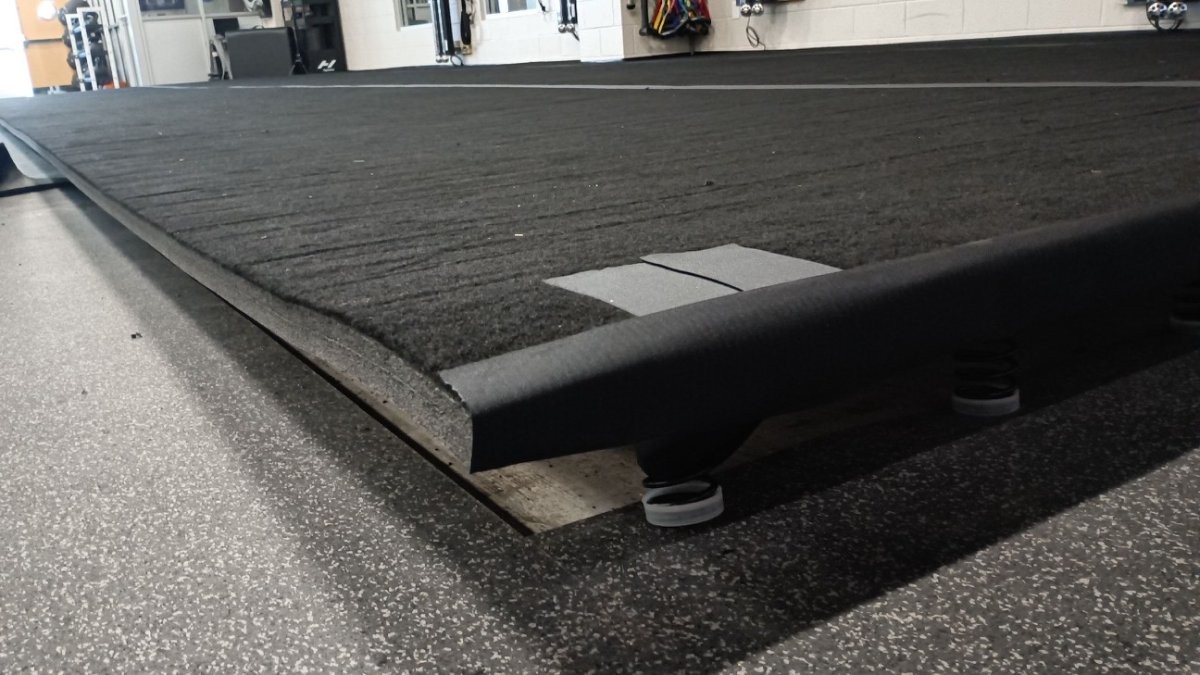
A spring floor system is a layered assembly: a structural deck, a spring or foam suspension layer, and a performance surface. Weakening any one layer degrades the whole floor.
Diagram showing the assembly layers and spring placement for competition grade spring floors
Baltic Birch Plywood: The Backbone of a Durable Deck
Baltic birch plywood is a multi-ply hardwood panel prized in floor deck construction for its tight, void-free core and consistent thickness. Those properties matter more than raw strength: a deck that flexes unevenly under a tumbling pass creates dead spots, where injuries and premature panel failure originate.
Power Springs, Carpet Bonded Foam, and Landing Mats
Power springs are the coiled steel elements that give a competition deck its energy return. Spring density, meaning how many springs sit per square foot, determines how firm or soft the floor feels, and density should be specified against the athlete level the floor serves.
Baltic Birch Spring Floor Benefits for Competitive Gyms
The headline benefit of a Baltic birch spring floor is consistency: the same energy return on panel one and panel forty. Competitive programs depend on that repeatability because athletes rehearse the same pass hundreds of times.
Spring Floor Installation Requirements and Space Planning
Spring floor installation requirements start with the room, not the floor. Deck height, ceiling clearance, subfloor flatness, and freight access all constrain what can be built, and discovering a constraint after the panels arrive is expensive.
Room Dimensions, Ceiling Height, and Subfloor Prep
A sprung system's finished height is typically several inches above the bare subfloor, stacking on any existing surface. Ceiling height must clear the floor build plus the athlete's full working envelope, including tumbling height and any apparatus above.
Assembly Timeline and Freight Logistics
Assembly is sequenced: subfloor prep, deck layout, spring attachment, panel fastening, then surface installation. An experienced crew moves quickly; a first-time crew should budget extra days for layout and adjustment.
Kits vs. Deck Only: What to Buy and What to Skip
The kit versus deck-only decision comes down to how much of the assembly the buyer wants to own. A full kit ships the deck, springs, fasteners, and surface together, matched to each other; deck-only purchasing ships the structural layer and leaves the buyer to source springs and surface separately.
Option | What Ships | Best For | Main Trade-Off |
|---|---|---|---|
Full spring floor kit | Deck, springs, fasteners, surface | First-time buyers, single-source accountability | Higher upfront commitment |
Deck only | Baltic birch deck panels | Buyers with existing springs or surface | Must verify component compatibility |
Deck plus springs | Deck and spring assemblies | Facilities reusing an existing surface | Surface wear may not match new deck |
Surface replacement only | Floors with a sound deck | Does not address spring fatigue |
Spring Floor Maintenance Tips for Long-Term Performance
Spring floor maintenance tips boil down to inspection frequency and fast response. Most failures start small, a loose fastener, a lifted edge, a compressed foam section. Caught early, each is a minor repair; left alone, each becomes a panel replacement.
The Inspection Schedule That Actually Works
- Weekly: Walk the perimeter and the high-traffic tumbling lanes. Check for lifted carpet edges, exposed fasteners, and any panel that sounds hollow when tapped.
- Monthly: Inspect spring attachment points for loosening, corrosion, or bent coils. A single failed spring shifts load to its neighbors, which accelerates their fatigue.
- Seasonally: Pull landing mats and check the surface underneath for moisture staining, foam compression, or delamination at panel seams.
- Annually: Photograph and log every panel, spring cluster, and seam. Compare against the prior year to spot progressive wear before it becomes structural.
Replacing Individual Springs
Springs are the most serviceable component, and replacing one does not require pulling the deck. Locate the failed spring from underneath or through an access panel, relieve tension on adjacent fasteners, unbolt it from deck and subframe, install the replacement with the same bolt and thread-locker specification, then re-torque the neighbors.
Repairing Plywood Deck Panels
Deck damage falls into three categories, and each has a different repair path:
- Surface delamination (top ply separating): Usually caused by moisture. The panel must be replaced, because the void will spread under load.
- Edge damage (chipped or crushed edges from freight or foot traffic): Can sometimes be repaired with a structural filler and sanded flush, but only if the damage does not reach the glue line.
- Fastener pull-through (bolts or screws tearing through the ply): Indicates the panel is compromised at that point. Sister a new panel alongside it or replace the panel outright.
Carpet Bonded Foam Repair
Carpet bonded foam fails two ways: the foam compresses permanently, or the foam-to-carpet bond separates. Compression is not repairable, the section must be replaced. Bond separation can sometimes be re-glued with the manufacturer's specified adhesive if the foam underneath is sound. Most practitioners replace foam in full-width strips rather than patching, because a patch creates a seam athletes feel.
Logging and Spare Parts
Keep a repair log with date, location, component, and action taken. It reveals recurring problem zones (often a sign of subfloor issues rather than floor issues) and supports warranty claims by showing the floor was maintained to specification. Stock spare springs, fasteners, and at least one spare deck panel.
Safety Standards, Certification, and Impact Control
Safety standards for competition flooring come from consensus standards developed by organizations such as ASTM International, plus the equipment and facility rules published by each sport's governing bodies. Confirm which standard a supplier's floor is tested against rather than accepting a general claim of "competition grade", the verification gap is where most purchase mistakes happen.
The Standards That Matter
ASTM International publishes test methods for shock absorption and vertical deformation of sports surfaces. The two numbers buyers should request are:
- Shock absorption (force reduction): The percentage of impact force the floor absorbs versus a rigid concrete reference. Higher numbers mean a softer floor.
- Vertical deformation: How far the surface deflects under a standardized impact. This is the number that correlates with energy return and with how the floor feels underfoot.
What Certification Documentation Should Include
When a supplier claims a floor is "competition grade" or "certified," ask for:
- The specific test standard and the year of the standard
- The tested configuration (deck thickness, spring density, surface type), a certification for one configuration does not transfer to another
- Whether the certification covers the deck-and-surface combination being sold, or only one layer
- The testing laboratory and the date of the most recent test
Shock Absorption vs. Energy Return
Impact control has two components that pull against each other. Shock absorption limits peak force reaching the athlete's joints; energy return gives back part of the landing force to help the next movement. A floor tuned entirely for softness feels dead and slows athletes down; one tuned entirely for bounce raises injury risk on awkward landings.
Impact Control at the Surface Layer
Carpet bonded foam controls the top layer of impact. Foam thickness and density determine how much additional shock absorption the surface contributes beyond the deck and springs, and landing mats at dismount and tumbling exit points add a final layer where athletes land hardest. Specify the three layers, deck, springs, surface, together, because changing one changes the others.
What to Ask Before Signing
- Which standard is this floor tested against, and can I see the test report?
- Does the certification cover the exact configuration I am buying?
- What is the shock absorption and vertical deformation of this configuration?
- How does the floor perform at the edges and corners, not just the center?
Buyers who ask these questions get a floor that meets the specification they thought they were buying. Buyers who accept "competition grade" as a standalone claim get whatever the supplier ships.
Conclusion
Specifying a competition floor means specifying the deck, spring density, surface, and installation conditions together. Buyers who treat the floor as a single product rather than a layered system end up paying for it in repairs and dead spots.
Frequently Asked Questions
What are the standard dimensions for a competition grade spring floor?
Competition grade spring floors are typically custom-built to fit your facility. Standard gymnastics competition floors measure 12 meters by 12 meters (about 40 feet by 40 feet), but most gyms order custom dimensions based on available space, training needs, and whether the floor will host official meets. When you buy competition grade spring floors, confirm the exact dimensions with your supplier before ordering because shipping and assembly depend on board count and layout.
How long do competition grade spring floors typically last?
A well-maintained spring floor system with two-layer Baltic birch construction and quality power springs can last for many years in a busy gym. Longevity depends on spring density, daily usage hours, proper installation, and how consistently you follow spring floor maintenance tips such as inspecting fasteners, rotating landing mats, and keeping moisture away from the plywood deck.
What is the difference between carpet bonded foam and a full spring floor system?
Carpet bonded foam is a foam layer bonded to a carpet surface, offering shock absorption for tumbling and cheer routines without a raised deck. A full spring floor system adds a Baltic birch plywood deck on top of springs, delivering greater energy return and resilience for high-impact gymnastics. Many facilities use carpet bonded foam for warm-up areas and a full spring floor system for competition and advanced training.
What maintenance is required for professional gymnastics flooring?
Regular maintenance includes vacuuming the carpet surface weekly, checking spring bolts and hook-and-loop fasteners for tightness, inspecting the plywood deck for moisture damage, and replacing worn landing mats. Schedule a deeper inspection every six months to verify structural integrity and spring density. Following spring floor maintenance tips from your manufacturer helps you avoid costly repairs and keeps the performance surface consistent for athletes.